0%

Choosing among Pallet Rack Systems in 2026 is not just a question of how many pallets fit. The right design must match inventory, picking speed, equipment, and available floor space. A selective rack may offer direct access to each pallet, while drive-in, push-back, and pallet-flow systems can increase storage density. Each choice brings trade-offs. More density can mean less flexibility, and a layout that looks efficient on paper may slow a forklift in a busy aisle.

Supply-chain expert Yossi Sheffi’s work offers a useful, paraphrased reminder: warehouse design should support real operating conditions, not just an ideal plan. That matters when comparing rack types, load capacities, installation needs, and future expansion. Check pallet dimensions, turning clearances, and handling patterns against the actual site. A tape measure can catch what a spreadsheet misses. So can a walk-through during a typical shift.

This guide compares common systems by access, density, adaptability, and practical fit. It also considers inspection and maintenance, because racks face daily impacts and changing loads. No single system is best for every warehouse. Even a well-planned layout may need revision after workers use it. The goal is a sound, usable choice—not the highest capacity figure in a product brochure.
What Are the Best Pallet Rack Systems in 2026?

What Pallet Rack Systems Are and How They Work

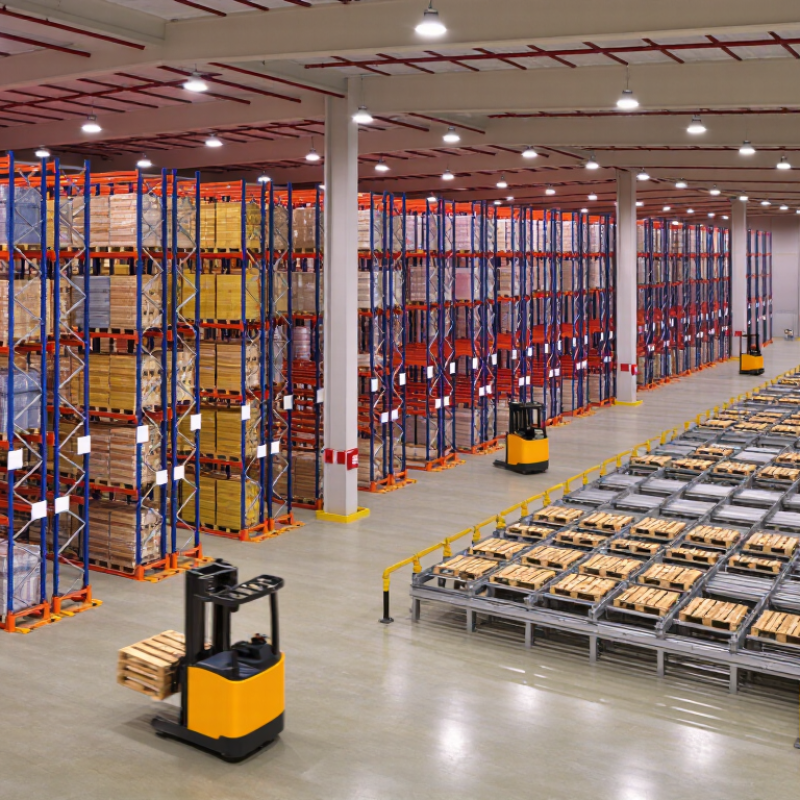
A pallet rack system is a steel frame that stores palletized goods above the floor. Upright frames support horizontal beams, and each beam level forms a shelf. Forklifts place pallets onto the beams, leaving aisles for picking and replenishment. Selective rack gives direct access to each pallet position, which suits varied stock. Simple, but not foolproof. Drive-in rack uses deeper lanes to increase storage density, though access is usually first-in, last-out. That can complicate stock rotation when product dates matter.

Rack choice depends on pallet dimensions, load weight, forklift type, and how often inventory moves. MHI’s 2024 Annual Industry Report found that 55% of respondents planned to invest more than $1 million in supply-chain innovation over the next two years. This is not a rack-specific statistic, but it reflects a wider shift toward connected warehouse operations. Check the rack’s stated load limits, secure uprights as specified, and inspect beams for dents or movement. A practical flaw is easy to miss: layout drawings often assume tidy pallet placement, while real loads can overhang and forklifts need turning room. Allow for both before installation.

The Main Types of Pallet Rack Systems in 2026

What Are the Best Pallet Rack Systems in 2026?
The Main Types of Pallet Rack Systems in 2026

Selective rack gives forklift operators direct access to every pallet, making it practical for varied inventory and frequent picking. It needs wider aisles, though, so a high SKU count can consume valuable floor space. Double-deep rack stores pallets two positions deep and reduces aisle requirements, but needs compatible reach equipment and tighter stock rotation.

Space matters. Drive-in and drive-through systems suit large quantities of similar goods, using deep lanes to increase storage density. The trade-off is reduced access to individual pallets. Push-back rack loads several pallets deep on carts, while pallet-flow rack uses gravity rollers to move pallets toward the picking face. Both can improve space use and stock rotation, but require careful attention to pallet condition and lane maintenance.

MHI’s 2024 Annual Industry Report found that 55% of surveyed organizations planned to increase supply-chain technology investment. That broader shift makes rack layout, handling equipment, and inventory systems worth planning together; the report does not rank rack types. Not every warehouse needs automation. Before choosing, measure clear height, aisle widths, floor condition, pallet dimensions, and daily throughput. A slightly uneven floor or damaged pallet can disrupt a flow lane, so the densest design is not automatically the best fit.

What Are the Best Pallet Rack Systems in 2026? — The Main Types of Pallet Rack Systems in 2026

The best system depends on inventory rotation, SKU variety, available space, handling equipment, and required pallet access. The comparisons below describe common system characteristics; actual capacity and layout must be engineered for the specific facility.

Pallet Rack System Storage Density Pallet Selectivity Typical Inventory Rotation Best Suited For Main Advantages Key Trade-Offs
Selective Pallet Racking Low to moderate Very high; each pallet is directly accessible FIFO or LIFO, depending on stock handling Warehouses with many SKUs, frequent order picking, or varied product turnover Simple layout; direct access to every pallet; easy to adapt to different load sizes Requires more aisles than high-density systems, so it uses floor space less efficiently
Double-Deep Racking Moderate to high Moderate; pallets are stored two deep Usually LIFO within each lane Facilities with several pallets per SKU and a suitable deep-reach truck fleet Stores more pallets in fewer aisles than single-deep selective racking Rear pallets are less accessible; requires compatible equipment and careful inventory planning
Drive-In Racking High Low; access is generally by lane Typically LIFO Large quantities of similar products with limited SKU variety Reduces aisle space and supports deep storage of repeated pallet loads Forklifts enter the rack structure; lane access is limited and product rotation can be less flexible
Drive-Through Racking High Low to moderate; access is through the lane ends Can support FIFO when loading and picking occur at opposite ends High-volume products where stock rotation is important and both ends of the rack are accessible Combines dense lane storage with the option of a first-in, first-out flow Needs access aisles at both ends and is most effective with multiple pallets per SKU
Push-Back Racking Moderate to high Moderate; each lane holds a limited number of pallets deep LIFO within each lane Multiple pallets per SKU where faster access and density are both priorities Uses inclined carts to move pallets within a lane and reduces the number of forklift travel aisles Last-in, first-out access may not suit products requiring strict FIFO rotation; carts need maintenance
Pallet Flow Racking High Lane-based; pallets move to the picking face FIFO High-throughput goods, date-sensitive inventory, and products with several pallets per SKU Gravity rollers move pallets from the loading side to the picking side, supporting stock rotation Higher initial complexity; pallets and loads must be suitable for the flow equipment
Mobile Pallet Racking High floor-space utilization High when the required aisle is opened Usually FIFO or LIFO, depending on the selected layout Facilities with limited floor area, moderate access frequency, or costly cold-storage space Rack rows move to create an operating aisle, reducing the need for permanent aisles Only one or a limited number of aisles may be available at a time; access can be slower than fixed selective racking
Pallet Shuttle Racking High Lane-based; a powered shuttle transfers pallets within a lane Can be configured for LIFO or FIFO operation High-volume storage with many pallets per SKU and a focus on reducing forklift entry into lanes Shuttle movement can increase lane handling speed and limit forklift travel inside the rack Requires shuttle equipment, controls, charging or battery management, and a compatible operating process

Selection note: Confirm pallet dimensions and weight, building clearances, floor capacity, fire-protection requirements, seismic conditions, forklift specifications, and local safety rules with qualified professionals before designing or modifying a rack system.

How to Evaluate Pallet Rack Systems for a Warehouse

What Are the Best Pallet Rack Systems in 2026?

How to Evaluate Pallet Rack Systems for a Warehouse

A suitable rack system starts with the work it must support, not its price per bay. Record pallet dimensions, loaded weights, SKU counts, and daily picks. Then measure clear ceiling height, aisle widths, column locations, and floor condition. A narrow aisle looks efficient on paper. It may leave little room for turning forklifts. Walk the proposed layout with operators before approving it.

MHI’s 2024 Annual Industry Report found that 55% of surveyed supply-chain leaders expect disruptions to increase over the next five years. That outlook makes adjustability worth assessing, especially if inventory or throughput may change. Compare selective, drive-in, and other layouts by access needs, storage density, and handling equipment—not density alone. Check design calculations against the applicable rack standard, such as ANSI MH16.1, and confirm load plaques match the installed configuration. Also review sprinkler clearance and site-specific seismic requirements with qualified professionals. Small details matter.

A row can look tidy in a drawing and still block a staging lane. Recheck the layout against actual pallet overhangs and turning paths. That step is easy to skip. It is not always obvious which trade-off will hurt most until the warehouse is busy.

Best Pallet Rack Systems in 2026 by Storage Need

Selective pallet rack suits operations handling many SKUs with frequent picking. Every pallet remains accessible, and forklift operators can reach individual loads without moving others. It uses more aisle space than dense systems, though. For slow-moving, uniform products, double-deep or drive-in rack can increase storage density. MHI and Deloitte’s 2024 Annual Industry Report found that 55% of surveyed organizations planned to invest more than $1 million in supply-chain technology over the following two years. That investment trend makes automated storage worth evaluating, but automation is not a fit for every building.

For high-volume items with few SKUs, drive-in rack stores pallets several positions deep. It can reduce aisle requirements, but the last pallet loaded is often the first one retrieved. Push-back rack offers another dense option while keeping loading and retrieval at the aisle face. For case picking, carton-flow lanes use gravity-fed rollers to bring cartons forward. Smooth replenishment matters here. Check carton sizes and replenishment patterns before specifying the lane; a poor fit can create jams and wasted space.

Long, awkward loads call for cantilever rack, while automated storage and retrieval systems may suit operations seeking tighter control of inventory and space. The right choice depends on SKU count, turnover, load dimensions, ceiling height, and handling equipment. Aisle width must match actual forklift turning paths, not just a drawing. Floor testing helps. I would also review rack protection and inspection needs with a qualified storage professional; these details are easy to underestimate.

Safety and Operational Factors That Affect System Choice

Choosing a pallet rack system in 2026 means weighing safe movement against storage density. OSHA’s Powered Industrial Trucks guidance estimates that forklift incidents cause about 85 work-related deaths and 34,900 serious injuries annually in the United States. These figures are not rack-specific, but they show why clear sightlines, adequate turning space, and protected uprights matter. The Rack Manufacturers Institute’s ANSI MH16.1 standard addresses rack design, configuration, and loading. Check beam capacity against the heaviest pallet, not the average one. Small details matter.

Daily operations should shape the choice. Selective racks offer direct access to each pallet; denser drive-in layouts can constrain forklift movement and make inspections less convenient. Match aisle width to the actual truck, pallet dimensions, and turning path. Include changing inventory, floor condition, sprinkler clearance, and impact protection in the review. A layout may look sound on paper and still leave a blind corner near the dock. That deserves another look. Plan routine checks for bent uprights, loose connections, and damaged beams, and ensure workers know how to report damage.

Tips: Measure loaded pallets and trucks on site. Mark turning paths with tape before installation. Keep load signs visible, and reassess the layout after major inventory or equipment changes.

What Are the Best Pallet Rack Systems in 2026?

Typical access-face configurations help explain how rack design affects pallet flow and selectivity.

Selective, double-deep, drive-in, and push-back racks are typically accessed from one face. Drive-through and pallet-flow racks use opposite ends for loading and unloading, supporting FIFO flows. Selective racks provide direct access to every pallet; deeper-lane systems can increase storage density while reducing selectivity. The best fit depends on SKU variety, throughput, pallet dimensions, handling equipment, and applicable safety and building requirements. Counts shown are typical configurations, not a measure of performance.

FAQS

Which rack type gives direct access to every pallet?

Selective rack lets forklift operators reach each pallet directly. It suits varied inventory and frequent picking, but requires wider aisles.

When does double-deep racking make sense?

It stores pallets two positions deep and can reduce aisle requirements. It needs compatible reach equipment and tighter stock rotation.

Which systems suit large quantities of similar goods?

Drive-in and drive-through racks use deep lanes to increase storage density. Individual pallet access is more limited. Space is tight.

How do push-back and pallet-flow racks differ?

Push-back racks move pallets on carts. Pallet-flow racks use gravity rollers to move pallets toward the picking face. Both need lane maintenance and sound pallets.

What should a warehouse measure before choosing a rack system?

Check clear height, aisle widths, floor condition, pallet dimensions, loaded weights, SKU counts, and daily picks. Map columns and turning paths, too.

Is the densest layout always the best choice?

No. Density can reduce access or block staging lanes. Walk the plan with operators and check actual pallet overhangs. A neat drawing can still mislead.

Why assess whether a rack layout can adapt?

Inventory and throughput may change. A 2024 industry report found 55% of surveyed supply-chain leaders expected disruptions to increase over five years. Plans can still miss things.

What installation details should be reviewed?

Check load calculations against the applicable rack standard. Confirm load plaques match the installed setup, and review sprinkler clearance and site-specific seismic needs with qualified professionals.

Conclusion

Pallet Rack Systems are structures designed to store palletized goods vertically while keeping inventory organized and accessible. Common options include selective racks for direct access to each pallet, drive-in and drive-through racks for high-density storage, push-back and pallet-flow systems for managing product rotation, and cantilever racks for long or irregular items. Each system works differently, so the right choice depends on the goods being stored, how quickly they need to be retrieved, and the available warehouse space.

To evaluate a system, consider storage capacity, access requirements, inventory turnover, equipment compatibility, layout, and the potential for future changes. Selective racks may suit operations that prioritize easy access, while denser systems can make better use of limited floor space when inventory patterns allow. Safety and daily operations also matter: assess load requirements, aisle design, rack condition, clear signage, and staff training. A well-matched system can improve space use, support efficient workflows, and help maintain a safer, more adaptable warehouse.

Ethan

Ethan

Ethan is a professional marketing specialist who brings a strong understanding of the company’s products and the needs of the customers they serve. He regularly contributes expert articles to the company website, sharing practical insights, clear product information, and helpful guidance to support......