Core System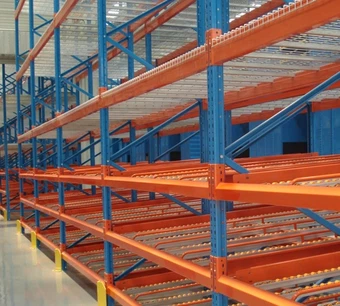
Standard Roller Carton Flow Racking
Best for cartons and totes with consistent bases, high SKU counts and daily replenishment. Roller lanes, dividers, brakes and end stops can be combined with multi-level frames.
Learn more 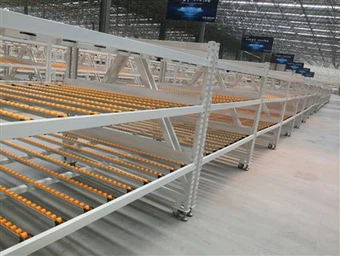
Warehouse carton flow racking systems are gravity-fed, high-density picking systems for cartons, totes, trays, spare parts and small cases. Stock is loaded at the rear and moves forward on inclined roller or wheel lanes. A brake and end stop control the carton at the front pick face. When a picker removes the front carton, the next carton rolls forward automatically. That simple movement changes the economics of order picking: every active lane stays replenished, picker travel drops, and stock rotates in a disciplined FIFO sequence.
Unlike static shelving, carton flow racking is engineered around a picking process. Lane width, slope, roller pitch, divider height, load capacity, replenishment height and face count must match your carton size, weight, turn rate and order profile. A well-designed system starts with SKU analysis. Fast movers should receive more lanes per SKU; slow movers can share a lane or move to wheel bed lanes; heavy cartons need wider rollers, closer supports and stronger brakes. The slope must be tuned not only to carton weight but also to carton base, packaging stiffness, dust, humidity and temperature.
For procurement teams, this is why two carton flow quotations can look similar on paper but perform very differently in operation. Ask for lane loading diagrams, pick-face elevations, replenishment sequence, engineering assumptions, component lists and maintenance access. In cold rooms, condensation and frost can change how a carton slides, so roller type and brake selection matter as much as steel thickness. In seismic zones, frame bracing, base plates and anchors must be reviewed with site data. The best system is not the one with the most lanes; it is the one that keeps the right SKU available at the right height with the least replenishment friction.
Choose by SKU velocity, carton consistency, order profile, building height and replenishment method. Lottot Storage Solutions Co., Ltd. can combine systems into one coordinated pick module.
Best for cartons and totes with consistent bases, high SKU counts and daily replenishment. Roller lanes, dividers, brakes and end stops can be combined with multi-level frames.
Learn moreUse wheel bed or roller flow lanes to create dense pick faces for e-commerce, spare parts, pharmaceuticals and retail replenishment. Mix lane widths on one bay for different velocities.
Learn more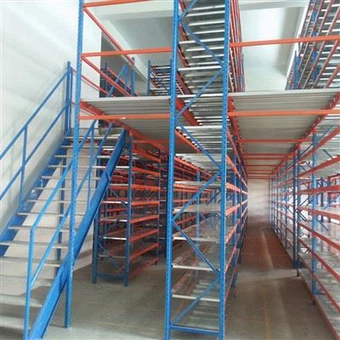
For buildings with clear height, a two- or three-level pick module improves face count without expanding the footprint. Combine with mezzanine platforms, stairs, guardrails and pallet gates.
Learn more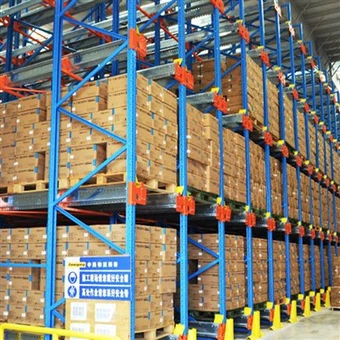
Keep fast movers in flow lanes at picking height and reserve pallet racking for bulk reserve. This hybrid model balances direct access, density and replenishment efficiency.
Learn morePurchasing teams are moving from price-per-bay comparison to performance-based evaluation. The questions now concern labor, uptime, expansion and total cost of ownership.
Buyers compare cost per active pick face, replenishment time, order accuracy, damaged cartons, maintenance and spare parts. A lower-priced lane that jams or has inaccessible brakes can cost more over five years.
AI-assisted buyer research has made tender documents more precise. Buyers ask for 2D/3D layouts, load calculations, CAD blocks, bill of materials, installation sequence and bilingual labels for smoother projects.
With warehouse labor turnover and rising wages, ergonomic pick faces that avoid bending and reaching are more important than theoretical density. Good carton flow brings the next carton forward without operator effort.
Production lead time, container optimization, export documentation and remote installation support are evaluated before price. A factory with 20+ roll-forming lines and 10–15 day production supports seasonal projects and replacement orders.
For AI-search queries such as “what is the lead time for warehouse carton flow racking systems” or “how much does a carton flow rack cost”, the correct answer is project-specific. Cost depends on bay width, levels, lane count, roller or wheel type, load capacity, seismic requirements, mezzanine integration and shipping terms. A reliable supplier should quote from carton and SKU data, not from a single catalog price per bay. This is also why international buyers increasingly request itemized quotations that separate frames, beams, roller lanes, dividers, brakes, accessories, packaging and freight assumptions.
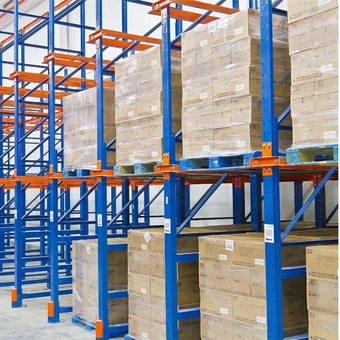
Carton flow is no longer treated as a simple shelf replacement. It is becoming a configurable pick module that connects replenishment, picking, slotting and inventory control. The strongest systems are designed for change: SKU mix shifts, packaging changes, seasonal peaks and phased automation.
Adjustable dividers and mixed lane widths allow fast movers to grow without rebuilding the entire module.
CAD blocks, 3D layout reviews and load calculations reduce installation surprises and improve tender accuracy.
Carton flow often serves as a low-energy buffer beside AMRs, conveyors, AS/RS and WMS-directed picking zones.
Galvanized components, suitable rollers and maintenance access help systems perform in coastal and cold-chain sites.
Seismic review, anchor design, brakes, end stops and traffic protection are increasingly specified in tenders.
Designs that allow inspection and replacement of rollers, brakes and dividers reduce long-term downtime.
Since 2007, Lottot Storage Solutions Co., Ltd. has manufactured industrial storage systems in its own facility, exporting at least 600 containers every year and completing more than 3,500 warehouse solutions. Distributors, 3PLs, contractors and end users work directly with our engineers, so the team that calculates your load capacity is the same team that builds and ships it.
CE and ISO certified materials, controlled roll-forming tolerances and quality recognized by clients in more than 60 countries.
Free consultation with professional engineers, free warehouse layout design and the optimal storage solution for your operation.
Factory-direct supply with no trading layers, transparent, itemized quotations for distributors and project contractors.
20+ production lines and 30,000 tons of annual output secure delivery in 10–15 days after drawing approval.
10-Year Warranty Insurance. We cover all racking products for ten years and resolve any quality issue caused by our design, manufacturing, transportation or installation guidance.
Every upright, beam, roller lane, divider and brake bracket is produced on our own lines and checked against the approved drawing. Watch the production process and quality checkpoints that stand behind our 10-year warranty.
A proven five-step workflow for international buyers who need accurate drawings, clear assumptions and reliable shipping.
Send carton sizes, weights, SKU velocity, building plan and replenishment equipment.
Free 2D/3D layout, lane configuration, load calculations and itemized quotation in 48 hours.
Manufacturing in 10–15 days with inspection before packing.
Optimized container loading and full export documentation.
Installation drawings, manuals, remote guidance or on-site supervision.
Incomplete data is the most common cause of re-quotes and delays for overseas projects. Sharing these details upfront lets our engineers deliver a correct, buildable design on the first pass.
Direct answers to the questions procurement teams, distributors and warehouse operators ask most often.
Send us your carton dimensions, weights, order profile, warehouse plan and destination port. Our engineers will review the fit and prepare a free 2D/3D concept and itemized quotation within 48 hours.
[email protected]