A practical 2025–2030 guide for procurement teams evaluating capacity, FIFO and LIFO design, cold-chain engineering, ROI, supplier due diligence and future warehouse automation.
From pallet load verification and floor slab review to low-temperature batteries, galvanized protection and WMS integration, Lottot Storage Solutions Co., Ltd. engineers the system around your operating reality.
What Global Buyers Need to Know Before Specifying a High-Density Radio Shuttle Racking System
A high-density radio shuttle racking system is not simply a racking product. It is a storage process that changes how pallets enter, travel, buffer and leave the warehouse.
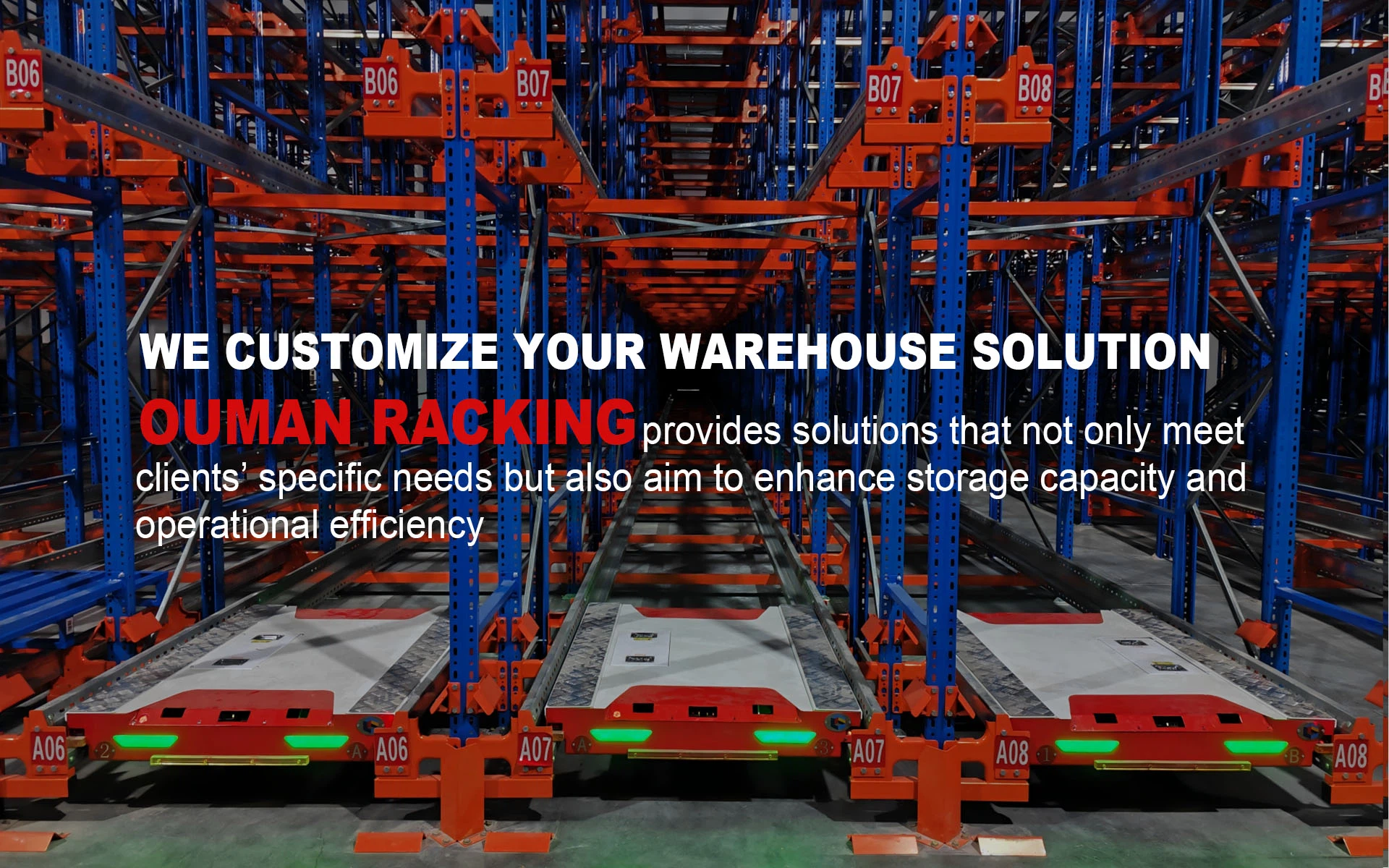
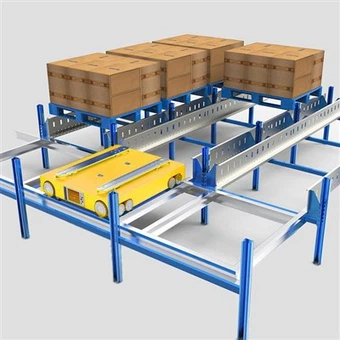
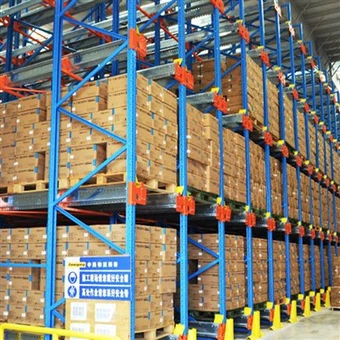
Procurement teams searching for a high-density radio shuttle racking system usually share the same challenge: the warehouse needs more pallet positions, but the building footprint, labor model, cold-chain temperature or capital budget cannot expand easily. Radio shuttle racking solves that challenge by turning long pallet lanes into a compact storage block. Instead of a forklift entering every lane and every level, a battery-powered shuttle travels inside the racking rails and moves pallets between the lane end and the deep storage position. The forklift remains at the service aisle, placing pallets on the first position or retrieving them when the shuttle delivers them forward.
The result is a semi-automated, high-density storage system that can be designed for LIFO or FIFO operation, ambient or cold-chain environments, and either manual or WMS-integrated workflows. It is especially relevant when SKUs are relatively stable, pallet counts are high, land or building costs are significant, and management wants less forklift travel inside the rack structure. For global buyers, however, the technical and commercial case depends on details that catalogs often omit: pallet quality, lane depth, floor slab tolerance, fire protection, battery strategy, local seismic codes, spare-parts support and the actual peak throughput at the lane end.
How the System Works in Daily Operation
In a typical high-density radio shuttle racking system, the racking consists of deep lanes formed by rails on each level. Pallets are stored two, three or many positions deep. A radio-controlled shuttle runs along the rails, lifts the pallet slightly, moves it to the target position and lowers it into place. The operator uses a handheld remote or a warehouse control system to command the shuttle. In LIFO layouts, the same face can be used for inbound and outbound; in FIFO layouts, in-rack pallet flow, transfer cars or other lane-management arrangements are used so that older stock can be retrieved first.
The shuttle is not a replacement for a forklift, and it is not a full AS/RS crane. It is a flexible, scalable device that reduces forklift travel inside the rack. That distinction matters during procurement: shuttle count, charging strategy, lane length, safety logic and operator training all influence productivity. A system with a low shuttle-to-lane ratio may have excellent storage density but weak peak throughput; a system with more shuttles and transfer equipment may cost more but handle faster turnover. The correct answer is found by modeling SKU velocity, inbound and outbound peaks, batch size and truck appointment patterns.
Information gain for buyers: ask every supplier to show the calculation behind the proposed pallet count, aisle layout, shuttle quantity, charging schedule and throughput assumption. A high-density layout is only valuable if the handling rate, fire protection and safety clearances remain workable during peak shifts.
Where Radio Shuttle Racking Fits Best
The strongest applications usually have a moderate SKU count, a high number of pallets per SKU, and enough buffer space to decouple forklift handling from shuttle movement. Food and beverage producers, cold-chain operators, 3PL warehouses, paper and packaging distributors, and importers of fast-moving consumer goods often benefit. For operations with thousands of slow-moving SKUs that require direct access to every pallet, selective pallet racking may still be better. For very low-throughput homogeneous stock, drive-in racking can be cost-effective. Radio shuttle racking sits between those models: denser than selective racking, safer and more controllable than forklifts entering deep drive-in tunnels, and more flexible than a fully automated AS/RS when the project does not yet justify that investment.
Recommended Product Configurations
Which High-Density Radio Shuttle Racking System Fits Your Operation?
Choose by throughput, FIFO requirement, temperature and future automation plan. Lottot Storage Solutions Co., Ltd. can combine shuttle racking with selective racking, staging lanes and conveyor interfaces.
Best for fast-moving, homogeneous pallets where maximum cube storage and lower forklift travel are priorities. Lane depth, shuttle count and charging plan are engineered to the throughput peak.
For food, beverage, pharmaceutical and export loads requiring shelf-life control. FIFO can be supported through dedicated lane arrangements, transfer equipment and WMS-controlled replenishment.
Engineered for chilled and frozen rooms with low-temperature batteries, corrosion protection, condensation management and service access planned around cold-room safety.
Use radio shuttle blocks for stable buffer stock and selective pallet racking for fast-pick or mixed-SKU access. This is often the most practical path to scalable density.
Specify the System Around the Project, Not Around a Catalog
A high-density radio shuttle racking system should be checked against pallet quality, floor tolerance, safety clearances, fire protection and the real handling flow.
For engineering-led procurement, the first stage is not to select a shuttle brand. It is to verify the storage block against the building. Upright frames, beams, rail supports, base plates, anchors and bracing must be calculated for the load, rack height, seismic demand, floor slab and local code. In projects across Latin America and other active seismic regions, seismic design may require heavier bracing, reinforced base plates, row spacers, chemical anchors and a review by a locally licensed structural engineer. The supplier should provide drawings, load assumptions and anchor data so the buyer's consultant can check them.
Floor tolerance is another decisive factor. A shuttle runs on rails, so level differences, slab joints, repairs and flatness can affect operation. Experienced suppliers will ask for floor flatness data rather than assume it. Fire protection also needs early discussion: the arrangement of flue spaces, sprinkler positioning, aisle access and fire shutters can change the racking layout and the dry or wet pipe design. Buyers should include the fire consultant in the layout review before the racking order is released.
Pallet quality is equally important. Damaged boards, protruding nails, broken blocks, soft wood, uneven loads and unstable wrapping can interrupt shuttle operation or increase downtime. A high-density system may require a pallet inspection routine, stricter loading standards and a spare-pallet policy. For cold-chain projects, moisture and frost change pallet condition and rail friction, so operators should plan inspection and cleaning routines that suit the temperature.
Typical Engineering Inputs and What They Change
Input
Why It Matters
Typical Design Response
Pallet size, load and condition
Determines beam spacing, rail width, shuttle size and lane capacity.
Custom lane geometry, pallet guide rails, load signage and inspection criteria.
FIFO or LIFO
Changes lane layout, retrieval logic and control requirements.
Lane-end planning, transfer equipment, WMS rules or dedicated in-rack flow.
Throughput peak and truck schedule
Defines shuttle quantity, charging intervals and staging area size.
More shuttles, fast-charge strategy, buffer lanes and conveyor or transfer cars.
Building height and clear height
Sets the number of beam levels and the economic density of the block.
Multi-level design, top-level handling review and sprinkler coordination.
Seismic zone and slab data
Controls structural safety and anchor design.
Reinforced frames, bracing, base plates, row spacers and local engineer validation.
Temperature and humidity
Affects steel protection, batteries, electronics and maintenance access.
Galvanized or powder-coated components, cold-rated batteries and service intervals.
This table is a planning aid, not a substitute for project-specific engineering, fire approval and local code review.
How to Compare Radio Shuttle Racking With Alternatives
Selective pallet racking offers direct access to every pallet and is easier to reconfigure, but it uses more aisle space. Drive-in racking offers high density but forklifts enter the structure and access is generally LIFO with more risk of damage. Radio shuttle racking separates the forklift from deep-lane storage, increases safety and supports semi-automation, but requires disciplined pallet quality, shuttle management and operator training. Push-back racking is useful for medium-density fast access but not for very deep storage. The right choice is often a hybrid: selective racking at the pick face and shuttle lanes for buffer or seasonal stock.
RFQ Checklist for a High-Density Radio Shuttle Racking System
Incomplete data is a common cause of re-quotes, layout changes and shipping delays. Send these details with your inquiry for an accurate, buildable design.
Warehouse drawing with columns, doors, clear height and existing racking
Pallet length, width, height, load, overhang and pallet condition
SKU profile, average pallets per SKU and seasonal peaks
FIFO or LIFO requirement and traceability rules
Inbound and outbound pallets per hour, shift pattern and truck schedule
Forklift type, lift height, aisle width and future AGV or AMR plan
Floor slab strength, flatness, joints, moisture and repair history
Seismic zone, local code, fire protection and sprinkler requirements
Temperature, humidity, washdown and corrosion expectations
Destination port, Incoterm, installation scope and required delivery date
Procurement Trends 2025–2030
What Global Buyers Are Planning Before They Purchase
The procurement conversation is moving from “how many pallets” to “how much resilient storage capacity per dollar, per square meter and per labor hour.”
Nearshoring and Regional Hubs
As manufacturing and distribution shift closer to end markets, buyers need more pallet positions in existing buildings. Radio shuttle racking helps increase capacity without expanding the lease footprint.
Cold-Chain Expansion
Food safety, pharma distribution and export cold chains are driving demand for high-density racking that can operate reliably in chilled and frozen rooms with tight service windows.
Labor and Safety Pressure
Reducing forklift travel inside the rack lowers damage risk and improves safety. Buyers increasingly request operator training, anti-collision features, shuttle recovery plans and clear maintenance routines.
TCO and Spare-Parts Review
Procurement teams now compare total cost of ownership: shuttle count, battery life, charging infrastructure, spare parts, support response and the cost of future lane reconfiguration.
Another important trend is the integration of semi-automated storage with existing warehouse management systems. Buyers want the shuttle system to fit into a broader material flow that may include ERP, WMS, WCS, conveyor systems, transfer cars, pick-to-light and future autonomous mobile robots. This does not mean every project begins as a fully automated warehouse. It means the racking layout and control architecture should avoid locking the operation into a dead end. A practical supplier will discuss data interfaces, manual fallback, operator screens, shuttle reporting and spare-parts availability before the purchase order is signed.
Sustainability and capital efficiency are also reshaping buying criteria. High-density storage allows more inventory to be held in a smaller building, which can reduce energy use per pallet and avoid new construction. At the same time, buyers are asking for durable coatings, recyclable steel, avoidance of unnecessary packaging, and documents that support environmental and corporate procurement reviews. In cold-chain projects, every cubic meter of unnecessary air volume has an energy cost, so dense storage can support both operating efficiency and sustainability goals when designed correctly.
Finally, suppliers are being evaluated on documentation quality. International buyers need accurate packing lists, commercial invoices, bills of lading, certificates of origin and installation drawings. They also need clear warranty terms and escalation contacts. A low unit price is not a reliable advantage if drawings are late, spare parts are unclear or technical support stops after the container leaves the factory. That is why experienced procurement teams ask for engineering evidence, reference projects, factory capability and a named service process before final selection.
Product Development Trends
How Radio Shuttle Racking Is Evolving Through 2030
The next generation of high-density radio shuttle racking systems will compete on intelligence, serviceability and integration—not only on steel tonnage.
Radio shuttle technology is advancing on several fronts. The first is energy management. Lithium iron phosphate batteries, fast-charging strategies, opportunity charging and battery diagnostics are helping reduce downtime and improve shuttle availability. In cold rooms, battery performance and charging location deserve special attention because low temperature affects capacity and charging efficiency. A well-designed project will define how shuttles are removed for charging, how battery health is monitored and how spare batteries are stored.
The second front is control and data. Shuttle systems are becoming more connected to warehouse software. Instead of treating the shuttle as a standalone remote-controlled device, modern systems can report lane status, shuttle location, battery level, fault codes and task completion. This data can support WMS-directed replenishment, FIFO rule enforcement, maintenance planning and operator accountability. For buyers, the key question is which functions are included, which are optional and how the system behaves if the network or WMS is unavailable.
The third front is mechanical design. Modular rails, replaceable wear parts, improved wheel materials, better cable protection and easier access for service are becoming important differentiators. In tall high-density blocks, maintenance access should be planned before the first pallet is stored. A shuttle that is difficult to remove or inspect can create hidden operating costs. Suppliers should explain recovery procedures for a stalled shuttle, manual override, lifting points and the recommended spare-parts kit.
The fourth front is hybrid automation. Rather than replacing every manual process at once, many warehouses combine radio shuttle racking with conveyor-fed staging, transfer cars, palletizing robots, AGVs or AMRs. The shuttle block acts as a dense buffer, while flexible robots handle order assembly and outbound sorting. This modular path allows companies to invest in stages and to prove the ROI of each step. Over the next decade, the most competitive high-density radio shuttle racking system will likely be the one that integrates cleanly with these adjacent technologies rather than the one with the lowest initial quote.
A fifth trend is safety engineering. Anti-collision logic, lane-end detection, emergency stop, remote diagnostics and clear operating zones help reduce incidents. Safety is not only a product feature; it is a management system that includes training, floor marking, pedestrian separation, pallet inspection and lockout procedures during maintenance. Buyers should ask for risk-assessment support and documentation suitable for their local EHS team.
Application Scenarios
Where a High-Density Radio Shuttle Racking System Creates the Most Value
The system is most compelling when storage density, safety and medium-to-high pallet volume matter more than direct access to every individual pallet. The final configuration should always be tested against SKU velocity and peak handling.
Cold Chain & Food
Fruit, dairy, meat, seafood and frozen food where dense storage and FIFO control support shelf-life management.
3PL & Distribution
Buffer stock and seasonal inventory, often combined with selective racking for fast-pick SKUs and value-added services.
Beverage & FMCG
High-volume pallet flows where deep lanes reduce aisle demand and support truck-loading peaks.
Automotive & Parts
Stable palletized components and export packaging where density and protection from handling damage matter.
Paper & Packaging
Heavy, uniform loads where lane storage can reduce forklift travel and improve cube utilization.
Pharma & Export
Traceability, temperature control and FIFO logic for regulated products and export consignments.
Factory-Direct Expertise
Why Choose Lottot Storage Solutions Co., Ltd.
Engineering experience, manufacturing control and export discipline matter when the racking system must perform for years after installation.
18+Years of Manufacturing
E-E-A-T in Practice
Direct Manufacturer, Practical Engineering and Export Support
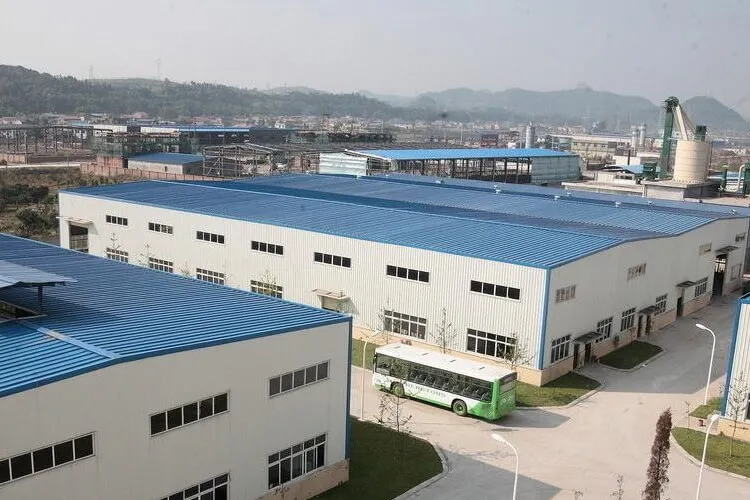
Lottot Storage Solutions Co., Ltd. has manufactured industrial storage systems since 2007. Our team supports distributors, contractors and end users with warehouse layout, load calculation, racking production, export packing, installation guidance and after-sales documentation. For a high-density radio shuttle racking system, our engineers review pallet data, lane depth, shuttle quantity, seismic requirements, corrosion protection and future integration before finalizing the proposal.
Factory-direct production with 20+ automatic roll-forming lines and about 30,000 tons of annual capacity
More than 3,500 delivered projects and 600+ export containers per year
Free 2D/3D layout, load calculation and itemized quotation response within 48 hours
CE and ISO quality management, 10-year racking warranty and installation support documentation
Export documentation, container loading planning and English, Spanish or Portuguese communication support
Project-specific calculations for loads, seismic inputs, floor data, shuttle count and handling flow.
Global Communication
Clear drawings, itemized quotations and export documents for international procurement teams.
Manufacturing Control
Roll-forming, welding, surface treatment and packing checked against the approved project drawing.
Delivery Planning
Production scheduling, container loading and documentation aligned with your target installation date.
10-Year Warranty and Long-Term Support. Lottot Storage Solutions Co., Ltd. covers racking products against quality issues caused by our design, manufacturing, transportation or installation guidance. Contact us at [email protected] for drawings, spare-parts planning and project review.
Frequently Asked Questions
High-Density Radio Shuttle Racking System FAQ for Global Buyers
These are the questions procurement teams, warehouse managers and engineering consultants ask most often during supplier evaluation.
What is a high-density radio shuttle racking system?
A high-density radio shuttle racking system is a deep-lane pallet storage solution in which a battery-powered shuttle moves pallets inside the racking on rails under radio control. Forklifts place and retrieve pallets at the lane end, while the shuttle handles movement inside the lane. The result is a compact storage block with less forklift travel inside the rack and better use of building height and floor area.
How much more storage capacity can it create compared with selective racking?
There is no responsible single percentage that applies to every building. Capacity depends on lane depth, pallet size, building height, aisle width, fire protection, forklift type and the number of SKUs. Radio shuttle racking usually reduces aisle space compared with selective pallet racking, so more pallet positions can fit in the same footprint, but the exact gain must be calculated from your plan and verified against safety and fire requirements.
Does radio shuttle racking support FIFO stock rotation?
Yes. FIFO can be designed through dedicated lane arrangements, transfer equipment, in-rack flow concepts or controlled replenishment rules. FIFO projects need a clear operational definition: at what point is stock considered first-in, how are lot codes tracked, how are partial pallets handled and how does the WMS confirm retrieval sequence? LIFO remains simpler and is often used for homogeneous fast-moving products.
Can the system operate in chilled and frozen warehouses?
Yes, but cold-chain design needs more than a standard shuttle. Low-temperature batteries, charging strategy, condensation management, corrosion protection, anti-slip surfaces, service access and maintenance routines all need review. Pallet moisture and frost can also affect rail friction and pallet condition, so the operating plan should include inspection and cleaning procedures suitable for the room temperature.
What pallet conditions are suitable for a radio shuttle system?
The pallet should be structurally sound and suitable for automated handling. Broken boards, protruding nails, loose blocks, excessive overhang and unstable loads can cause faults. Before installation, define pallet acceptance criteria, load wrapping standards, inspection frequency and a plan for removing damaged pallets. This is especially important in cold-chain and multi-shift operations.
How do buyers calculate ROI for a high-density radio shuttle racking system?
A practical ROI model compares the project cost with the value of additional pallet positions, avoided building expansion, reduced forklift travel, improved safety, labor productivity and future scalability. Include shuttle count, charging infrastructure, spare parts, training, installation support and maintenance. Do not compare only the racking steel price; compare the total operating cost over the planned service life.
What is the typical production and delivery lead time?
Production for standard racking projects is commonly around 10 to 15 days after drawing approval, while shuttle quantity, special coatings and project scope can affect the schedule. Ocean transit varies by destination, carrier, transshipment and season. The total project timeline should also include local customs clearance, delivery to site, installation and commissioning.
How is seismic safety addressed for high-density racking?
Seismic design requires site-specific information, including the seismic zone, soil class, floor slab data, rack height and local code. Engineers may specify heavier uprights, additional bracing, reinforced base plates, row spacers, chemical anchors and other measures. Because building codes differ by country and region, final validation by a locally licensed structural engineer is recommended.
Can radio shuttle racking integrate with WMS, WCS or future automation?
Yes, integration should be defined during the design stage. A project may include manual remote control, WMS-directed tasks, WCS coordination, transfer cars, conveyor interfaces or future AGV and AMR connections. Buyers should clarify data ownership, interface scope, network requirements, manual fallback and cyber-security responsibilities before the equipment is ordered.
What support and warranty does Lottot Storage Solutions Co., Ltd. provide?
Lottot Storage Solutions Co., Ltd. provides layout drawings, load calculations, itemized quotations, production inspection, export packing documentation and installation guidance. Racking products are covered by a 10-year warranty against quality issues caused by our design, manufacturing, transportation or installation guidance. For project-specific support, contact [email protected].
Plan a High-Density Radio Shuttle Racking System With Lottot Storage Solutions Co., Ltd.
Send your pallet data, warehouse drawing, FIFO or LIFO requirement, temperature profile and destination. Our engineers will review the layout concept and respond with a project-specific recommendation and itemized quotation.