High Pallet Density
Deep-lane storage reduces the number of service aisles and makes better use of available building height. The right configuration can deliver significantly more pallet positions than selective racking in the same footprint.
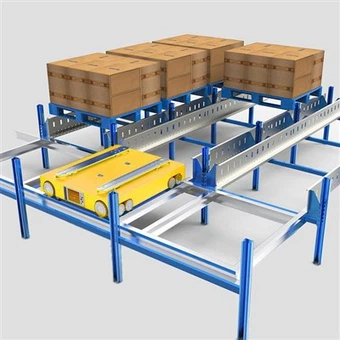
Lottot Storage Solutions Co., Ltd. manufactures radio shuttle racking for importers, distributors, 3PL providers and food producers who need more pallet positions without expanding their building. The radio-controlled shuttle car runs on rails inside each storage lane, carrying pallets to the deepest available position. Forklifts remain in the service aisle, so lanes can be deeper and aisles narrower than with conventional selective racking.
Every project starts with a technical review of pallet size, load weight, forklift type, clear height, floor slab, seismic zone, operating temperature and destination port. This allows our engineers to recommend a safe, buildable configuration and provide a clear quotation for factory-direct supply.
Radio shuttle racking is most valuable when storage density, pallet throughput and site conditions are planned together. Our engineers focus on the details that affect safety, installation and long-term performance.
Deep-lane storage reduces the number of service aisles and makes better use of available building height. The right configuration can deliver significantly more pallet positions than selective racking in the same footprint.
Upright, beam, bracing and anchor requirements are reviewed against your site seismic zone, floor slab data and local design requirements. Final seismic validation should be provided by a locally licensed structural engineer.
Lane layouts, shuttle components, batteries and controls can be specified for chilled and frozen warehouses. We confirm the operating temperature and equipment package during the engineering review.
Electrostatic powder coating is standard. Galvanized or hot-dip galvanized options are available for coastal, humid, cold-chain and high-humidity environments where corrosion resistance is critical.
Choose the lane depth and operating mode that match your inventory profile. Our engineers will confirm the shuttle quantity, rail layout, charging strategy and safety clearances.
The pallet shuttle travels along the rail to store and retrieve pallets, while the forklift remains in the aisle for faster cycles.
First-in, first-out lanes help manage shelf-life-sensitive products and support inventory rotation in food, beverage and cold-chain operations.
Last-in, first-out storage is efficient for high-volume, homogeneous pallet loads where maximum density matters more than strict rotation.
For freezers and chillers, we review steel specification, clearance, low-temperature components and maintenance access before the layout is finalized.
Final specifications are project-specific and confirmed after engineering review. The table below shows the main parameters buyers should prepare for discussion.
| Parameter | Typical Planning Range | Information Required |
|---|---|---|
| Pallet load | 500–1,500 kg per pallet typical; project-specific heavier loads possible | Pallet dimensions, goods weight and load pattern |
| Racking height | Up to 12–15 m typical; high-bay options available | Building clear height, roof structure and sprinkler clearance |
| Lane depth | 4–15 pallets deep per storage side | Forklift reach, throughput target and inventory rotation |
| Storage mode | FIFO or LIFO | Product shelf life, SKU profile and dispatch pattern |
| Shuttle control | Wireless remote control or semi-automated interface | Operating staff, traffic flow and desired automation level |
| Operating temperature | Ambient, chilled and frozen applications | Temperature range, humidity and cold-room access conditions |
| Finish | Electrostatic powder coating; galvanized options | Coastal, humid or cold-store exposure |
| Safety accessories | Rail end stops, anti-drop devices, fork guides and upright protectors | Forklift type, traffic routes and local safety requirements |
| Design basis | FEM/EN/RMI principles and local seismic requirements | Seismic zone, slab strength and local structural engineer details |
Shuttle racking works best for high-volume pallets, deep inventory buffers and operations that need to reduce aisle space while maintaining controlled access.
Fruit, vegetables, seafood, meat and dairy stored in chilled or frozen rooms where space and temperature control matter.
Bottled drinks, packaged food, ingredients and seasonal products requiring dense reserve storage.
High-density reserve storage with fast replenishment to pick faces for regional distribution hubs.
Seasonal stock, fast-moving consumer goods and import containers waiting for allocation.
Components, spare parts and raw materials in high-volume buffer storage for production lines.
Import and export buffer zones where container loads must be stored densely before onward movement.
A clear process reduces re-quotes, shipping delays and installation risk. Our engineers work from the information you provide and confirm the layout before production.
Send warehouse drawings, pallet information, loads and handling equipment.
We review seismic zone, slab data, temperature, throughput and destination port.
Receive a project-specific layout, technical description and itemized quotation.
Production typically takes 10–15 days after drawing approval, with inspection before packing.
Container loading plans, export documents and installation guidance are provided.
Complete data helps our engineers prepare a safe, accurate and buildable radio shuttle racking design. Incomplete information is the most common reason for project delays and re-quotes.
Lottot Storage Solutions Co., Ltd. has manufactured industrial storage systems since 2007. Components are produced on controlled roll-forming lines, inspected before packing and prepared for container shipment. We focus on consistent profiles, correct load capacities and clear installation documentation for overseas projects.
For radios shuttle racking, quality is not only about steel thickness. It also depends on shuttle compatibility, rail alignment, anchor design, pallet condition, battery management and operator training. Our team reviews these points with you before shipment.
Send your warehouse plan, pallet dimensions, load weight, handling equipment and destination port to [email protected]. Our engineering team will review the project and prepare a tailored radio shuttle racking proposal based on Lottot Storage Solutions Co., Ltd. factory-direct supply.