Will it fit my actual building?
Useful answers depend on clear height, roof trusses, columns, doors, sprinkler clearance, forklift turning radius and pallet overhang. A catalog bay size is not a layout.
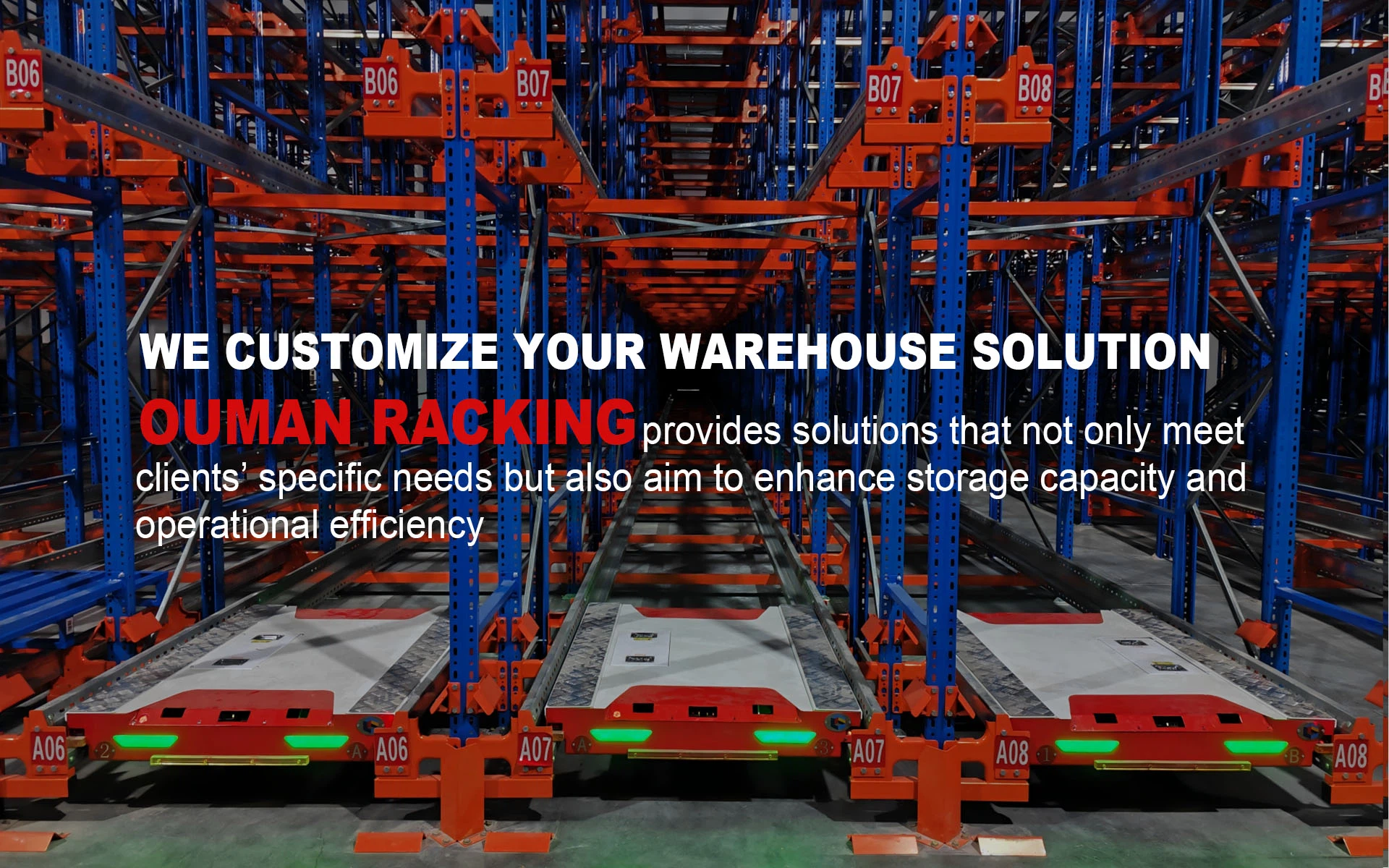
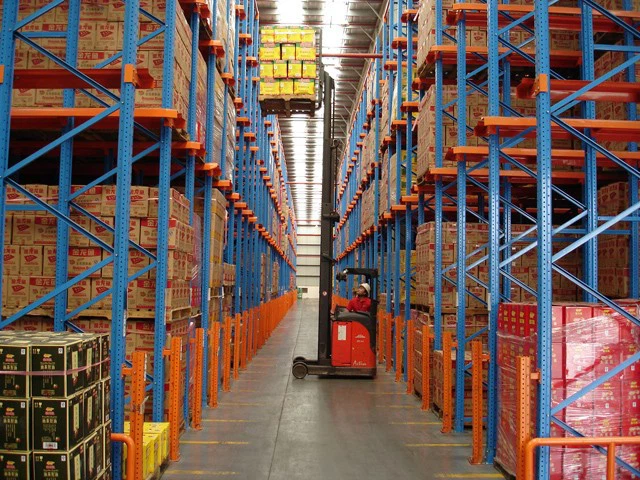
A selective pallet racking system is a pallet storage structure that gives forklift operators direct access to every pallet position from a working aisle. It is assembled from upright frames, horizontal beams, beam safety locks, base plates, anchors and optional accessories such as row spacers, upright protectors, wire decks, pallet supports and load signs. The word “selective” is the key commercial advantage: one pallet can be picked without moving another, making the system suitable for mixed-SKU inventories, fast-moving consumer goods, spare parts, retail distribution and third-party logistics.
Global procurement teams now ask more sophisticated questions than “what is the price per bay?” In AI-assisted sourcing, buyers ask whether a selective pallet racking system can meet local seismic rules, how aisle width changes with forklift type, how container loading affects freight cost, whether hot-dip galvanizing is needed for coastal humidity, and what documentation proves the steel grade and load capacity. A credible supplier should answer these questions with drawings, calculations and a transparent bill of materials — not only a catalog photo.
Purchase intent for this product is rarely just “cheapest rack.” AI-era buyers are comparing design risk, freight cost, local code compliance, installation support and long-term expansion. The four questions below appear repeatedly in real sourcing conversations.
Useful answers depend on clear height, roof trusses, columns, doors, sprinkler clearance, forklift turning radius and pallet overhang. A catalog bay size is not a layout.
Buyers now compare racking cost plus freight, duties, anchors, installation, spare parts and future reconfiguration — not only FOB price per ton.
Seismic and permitting requirements vary by country. Buyers ask for load calculations, anchor data, steel specifications, drawings and third-party inspection documents.
Container loading, packing sequence, part labeling, installation manuals and remote or on-site supervision often determine whether a project finishes on schedule.
The right configuration depends on pallet load, SKU velocity, clear height, handling equipment and the local environment. These are the four configurations most often specified by global buyers.
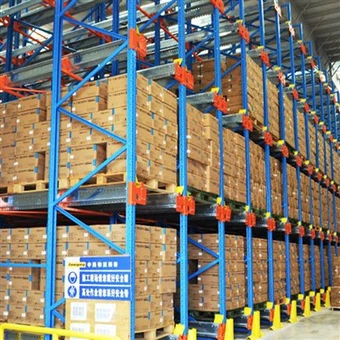
Best first choice for distributors, retail DCs and 3PL warehouses with many SKUs and frequent pallet extraction. Supports direct access, simple expansion and straightforward inspection.
Learn more
For projects in Chile, Peru, Mexico, Central America and other seismic zones. Reinforced base plates, heavier bracing, row spacers and chemical anchors can be specified after site data review.
Learn more
For chilled, frozen, tropical or coastal warehouses. Finish options include phosphated powder coating, pre-galvanized or hot-dip galvanized components depending on humidity and washdown needs.
Learn more
For warehouses with 8 m, 10 m or greater usable height. Can be combined with reach trucks or very narrow aisle equipment to balance pallet count, aisle width and selectivity.
Learn moreTwo suppliers can quote the same number of “bays” and deliver very different pallet counts, safety margins and freight costs. Use this input model to compare offers on equal terms.
| Buyer Input | Why It Changes the Design | What to Send |
|---|---|---|
| Pallet footprint | Determines beam span, bay width, pallet overhang and access clearance. | Length × width × height, with load overhang if any. |
| Pallet load | Drives beam profile, upright section, shelf support and anchor requirements. | Maximum and average load per pallet, plus load distribution. |
| Clear height | Defines the number of beam levels and top clearance under sprinklers or roof structure. | Building section drawing, roof truss height and sprinkler clearance. |
| Forklift and aisle | Sets aisle width, turning radius, rack protection and throughput. | Forklift model, lift height, mast type and load length. |
| Floor slab | Affects anchor specification and whether the slab must be verified before installation. | Concrete thickness, strength and reinforcement details. |
| Seismic and code | Changes bracing, base plates, row spacers and connection details. | Site location, seismic zone, local code and engineer notes. |
| Environment | Determines powder coating, galvanizing and cold-room material choices. | Ambient, chilled, frozen, coastal, washdown or chemical exposure. |
| Throughput and SKU | Confirms whether selective racking is correct or should be combined with high-density storage. | Pallets in/out per hour, SKU count, FIFO/LIFO and seasonality. |
Example: for 4,000 pallets at 4 beam levels and 2 pallet positions per level per bay, the layout may need approximately 500 bays before obstructions and aisle loss are added. Final bay count must be verified in a 2D/3D layout.
A professional selective pallet racking system quotation should include more than a total price. Ask every supplier to provide the following evidence so your team can compare safety, lifetime cost and project risk.
Procurement is moving from price-per-bay purchasing toward performance-based sourcing. These trends are shaping RFQs, supplier scorecards and board approvals for warehouse projects.
Buyers are scoring suppliers on freight optimization, installation time, spare-part availability and future reconfiguration potential, not only FOB price.
More projects require documented calculations, anchor schedules and local engineer approval before purchase orders are released.
International buyers increasingly request CFR, CIF or DDP options, loading plans and milestone reporting so finance and operations teams can plan around ocean transit.
A single warehouse may combine selective racking for fast SKUs with drive-in or shuttle lanes for slow-moving, homogeneous stock to reduce total storage cost.
Cold rooms, tropical humidity and coastal ports are pushing buyers to specify galvanizing, coating systems and maintenance schedules earlier in the project.
Distributors and contractors prefer fewer qualified suppliers who can coordinate selective racking, mezzanines, accessories and installation documentation across multiple projects.
Racking remains a steel structure, but the commercial product is becoming more engineered, more modular and more integrated with warehouse operations.
Roll-forming tolerances and optimized steel sections help achieve required capacity with efficient material use, which matters as freight and steel costs fluctuate.
Beam locks, upright protectors, row spacers, load signs and inspection accessories are increasingly specified as standard project scope rather than optional extras.
Uprights, beams and accessories are designed for container efficiency, clear labeling and faster site sorting, reducing unpacking mistakes and installation time.
Selective racks are being prepared for WMS location labels, conveyor interfaces, mezzanine integration and future AS/RS or shuttle expansion.
Procurement advantage: designing for future growth now avoids costly re-engineering later. Lottot Storage Solutions Co., Ltd. can quote selective racking as a standalone system or as part of a phased warehouse master plan.
These are the questions procurement teams, importers and project engineers ask most often when evaluating a selective pallet racking system supplier.
Experienced manufacturing, transparent engineering and export-ready documentation reduce the risk of buying racking from a distant supplier.
Since 2007, Lottot Storage Solutions Co., Ltd. has designed and manufactured industrial storage systems in its own facility, exporting at least 600 containers per year and completing more than 3,000 warehouse solutions.
Free consultation with professional engineers, free warehouse layout design and itemized quotation within 48 hours. The person calculating your load capacity works directly with the manufacturing team.
Patented racking products with independent intellectual property, CE and ISO certified materials, controlled roll-forming tolerances and quality checks before packing.
More than 20 automatic roll-forming lines and 30,000 tons of annual output support 10–15 day production, optimized container loading and export documentation for global projects.
10-Year Warranty. We cover all racking products for ten years and resolve any quality issue caused by our design, manufacturing, transportation or installation guidance. Installation drawings, manuals, remote guidance and on-site supervision options are available.
Our engineers can return a practical layout direction, preliminary pallet count and itemized quotation faster when the project brief is complete.
Send your warehouse plan, pallet data and destination port. Lottot Storage Solutions Co., Ltd. will review the storage profile and prepare a free 2D/3D layout, load calculation direction and itemized quotation within 48 hours.
[email protected]