LIFO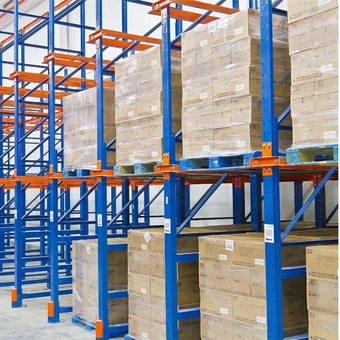
Warehouse Drive-In Racking System
Best when many pallets share the same SKU and direct access to every pallet is not required. The forklift enters deep lanes to store and retrieve pallets on support rails.
Learn more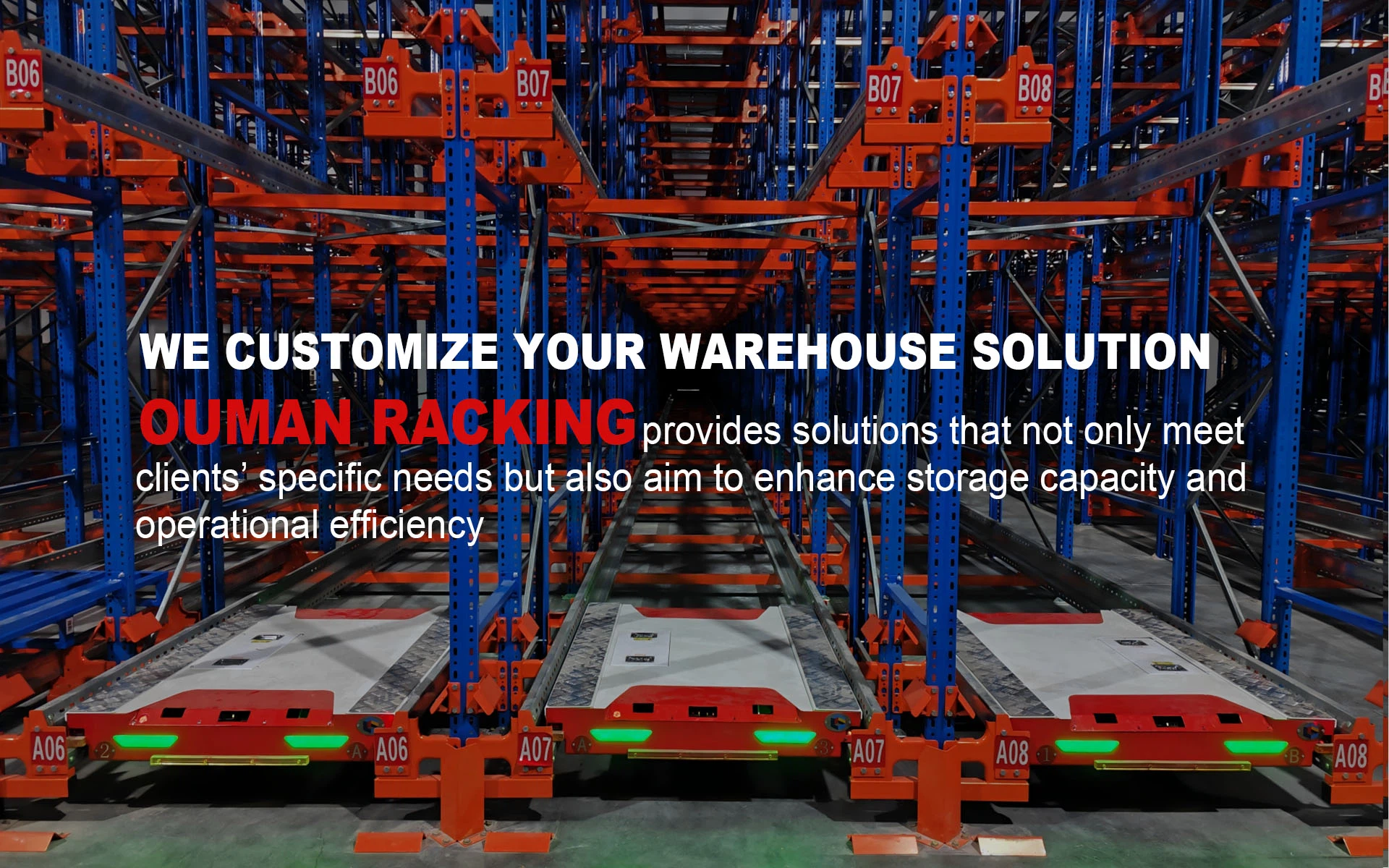
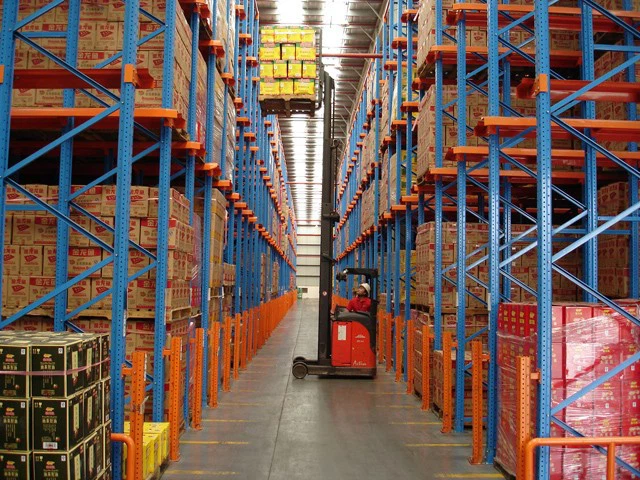
A warehouse drive-in racking system is a high-density pallet storage structure built from upright frames, horizontal beams and continuous pallet support rails that form deep storage lanes. Instead of giving every pallet row its own picking aisle, a forklift enters the lane and places pallets one behind another on the rails. This dramatically reduces aisle space and can raise pallet storage density in the same building footprint.
The standard drive-in configuration is a LIFO system: the last pallet loaded into a lane is usually the first one retrieved. A drive-through version has access from both ends, allowing FIFO rotation but requiring aisle space at both sides. Neither system is a universal replacement for selective pallet racking. They are best used when the inventory profile is narrow and deep — a limited number of SKUs with many pallets per SKU — rather than a wide mix of fast-moving items that need direct access.
For global buyers, the important questions are not only lane depth and price per pallet position. The specification must match pallet quality, forklift type, clear height, floor slab strength, temperature, humidity, seismic zone, local safety practice and future expansion. A drive-in racking system that looks inexpensive at quotation stage can become costly if it slows picking, blocks FIFO control or fails a local engineering review.
Do not begin with a product name. Begin with your SKU profile, pallet movement, pickup method, building height and compliance requirements. The right warehouse drive-in racking system is the one that improves density without creating a hidden operating constraint.
Best when many pallets share the same SKU and direct access to every pallet is not required. The forklift enters deep lanes to store and retrieve pallets on support rails.
Learn more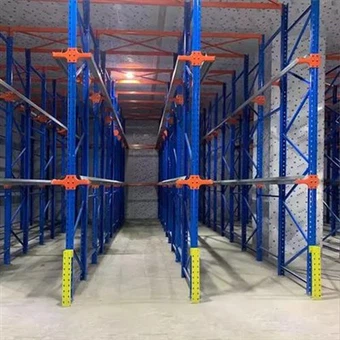
An efficient choice for seasonal stock, sugar, flour, paper, bottled drinks and other high-volume goods where floor utilization matters more than direct selectivity.
Learn more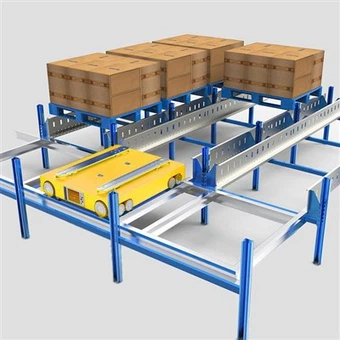
Choose shuttle racking when you need deep-lane density, better throughput control, FIFO or LIFO options, and reduced forklift travel inside the rack structure.
Learn more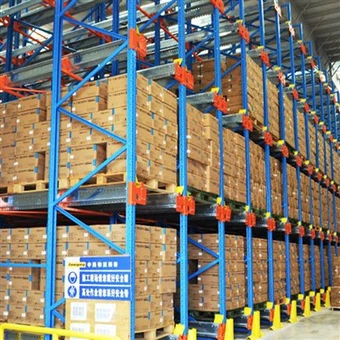
If you need 100% direct access, frequent picking and a large SKU mix, selective pallet racking usually beats drive-in racking on operating flexibility.
Learn more| Buyer Question | Recommended System | Why It Fits |
|---|---|---|
| We have few SKUs, many pallets per SKU and can accept LIFO rotation. | Warehouse drive-in racking system | Deep lanes remove most internal aisles and deliver high pallet density for homogeneous stock. |
| We need FIFO rotation with high density but cannot accept LIFO. | Drive-through racking or radio shuttle racking | Drive-through allows load at one end and retrieve at the other; shuttle systems add semi-automated control for higher throughput. |
| Our warehouse handles fast-moving products with many SKUs and direct access requirements. | Selective pallet racking or a hybrid layout | Selective racking gives direct access to every pallet, which protects picking speed and inventory flexibility. |
| We are building a freezer or cold-storage distribution centre. | Drive-in racking, shuttle racking or a combined design | Cold rooms reward maximum cube utilization, but condensation, safety and corrosion protection must be engineered early. |
| We expect product profiles to change within two to three years. | Modular selective racking with future drive-in zones | A phased plan protects capital while allowing high-density zones to be added as inventory stabilizes. |
| Our site is in a high-seismic region and local approval is required. | Seismic-engineered racking with local validation | Base plates, bracing, anchors and row spacers must respond to the site’s seismic zone and slab data. |
Recommendation matrix prepared for early-stage buyer education. Final design should be based on pallet drawings, load calculations, building plans, forklift data and local code review.
Procurement teams are becoming more sophisticated. Search engines and AI assistants now help buyers compare lane depth, LIFO risk, seismic design, coating systems, shipping terms and total landed cost before they ever speak with a supplier. For a warehouse drive-in racking system, the winning supplier is not simply the lowest price per pallet position; it is the partner who can prove the design is buildable, shippable and safe for the buyer’s operating context.
Across Mexico, Central America, South America, Southeast Asia, Africa, the Middle East and Eastern Europe, we see several procurement trends shaping 2025–2030:
The basic concept of deep-lane pallet storage is mature, but materials, controls, engineering workflows and safety expectations are evolving. These developments directly affect specification, lifetime cost and resale or expansion flexibility.
Engineers are optimizing upright and beam sections for higher load capacity per kilogram of steel. The goal is not simply heavier racking; it is predictable performance under vertical loads, impact loads and seismic combinations while keeping freight cost under control.
Projects in Chile, Peru, Ecuador, Mexico, Central America and other active zones require reinforced base plates, bracing, row spacers and chemically anchored systems. Local engineer validation is increasingly requested, and suppliers must provide assumptions and calculation documentation clearly.
Rather than choosing entirely drive-in or entirely radio shuttle, buyers are creating hybrid layouts. Fast-moving SKUs may use shuttle lanes or selective racking, while slow-moving high-volume goods use drive-in lanes. This balances density, throughput and capital cost.
Cold-room racking must be designed for condensation, ice, hygiene and low-temperature steel behavior. Coastal warehouses need galvanized or enhanced coating options. Buyers increasingly ask for coating specifications, salt-spray expectations and long-term maintenance plans.
3D layouts, BIM coordination and load simulations reduce installation uncertainty. Future drive-in racking will connect more closely with WMS location logic, forklift guidance, damage monitoring and predictive maintenance for guide rails and pallets.
Warehouse leases change, product lines shift and expansions happen. Modular beams, bolted connections and relocatable layouts allow buyers to adapt rather than abandon racking. Steel recyclability and powder-coated finishes also support sustainability reporting.
These are the questions global buyers ask most often during technical review, budgeting and supplier comparison.
Lottot Storage Solutions Co., Ltd. has manufactured industrial pallet racking and warehouse storage systems since 2007, serving distributors, contractors and end users across global markets. Our experience, engineering depth and documentation standards are designed to reduce risk for overseas buyers.
With an owned manufacturing facility, more than 20 automatic roll-forming lines and annual capacity exceeding 30,000 tons, Lottot Storage Solutions Co., Ltd. controls the critical steps that affect racking quality: profile forming, welding, pre-treatment, powder coating, packing and container loading. More than 3,000 warehouse solutions and at least 600 exported containers per year have built practical experience in seismic zones, humid ports, cold storage, high-bay warehouses and fast-moving distribution centres.
Our documentation and support are structured for international buyers. Engineers prepare 2D/3D layouts, load calculations and itemized quotations within 48 hours. Production usually takes 10–15 days after drawing approval. We also prepare customs-ready export documents and can provide Spanish or Portuguese part labels on request. This is how we practice E-E-A-T in a practical, commercial way: experienced people, verifiable processes, authoritative engineering and trustworthy communication.
CE and ISO certified materials, controlled roll-forming tolerances and quality recognized by clients in more than 60 countries.
Free consultation with professional engineers, free warehouse layout design and an optimal storage solution for your operation.
Factory-direct supply with no trading layers — transparent, itemized quotations for distributors and project contractors.
20+ production lines and 30,000 tons of annual output secure delivery in 10–15 days after drawing approval.
10-Year Warranty Coverage. Lottot Storage Solutions Co., Ltd. covers all racking products for ten years and resolves quality issues caused by our design, manufacturing, transportation or installation guidance. For project-specific documents, write to [email protected].
Send your warehouse drawing, pallet size, maximum load, required storage height, forklift model, temperature conditions, seismic zone and destination port. Our engineers will recommend a practical warehouse drive-in racking system and prepare a free layout with an itemized quotation within 48 hours.
[email protected]