Free Layout, Load Calculation and Quotation Within 48 Hours
Lottot Storage Solutions Co., Ltd. supports global buyers from pallet data review and 2D/3D design through production, export packing and installation guidance.
What Is Space-Saving Drive-In Racking—and When Is It the Right Investment?
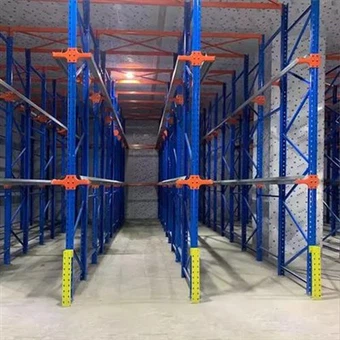
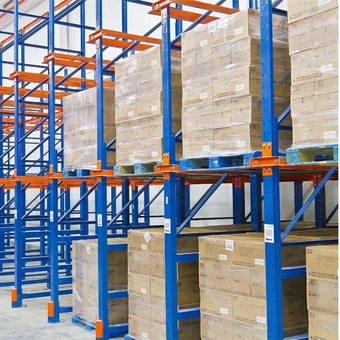
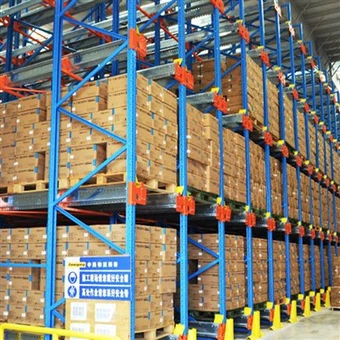
Space-saving drive-in racking is a high-density pallet storage system in which forklifts drive directly into the rack structure to place and retrieve pallets. Instead of reserving a working aisle for every bay or pair of bays, drive-in racking creates deep storage lanes using upright frames, pallet rails and support arms. Pallets are stored several positions deep, so the same building footprint can hold significantly more product than conventional selective pallet racking. For warehouses where real estate is expensive, expansion is constrained, or cold-chain volume must be maximized, this design can convert unused cubic space into productive pallet positions.
The trade-off is selectivity. Standard drive-in racking usually operates on a LIFO basis: the first pallet loaded into a lane is often the last pallet retrieved. That makes it ideal for homogeneous, low-to-medium-turnover SKUs, seasonal inventory and stable product families rather than fast-moving assortments with many SKUs. Global buyers should therefore compare drive-in racking against selective racking, radio shuttle racking, double-deep racking and push-back racking before committing to a layout. The right answer depends on pallet dimensions, load weight, SKU count, turnover velocity, forklift fleet, building height, floor slab, fire protection strategy, humidity and seismic zone.
Designed for homogeneous palletized goods with reduced selectivity requirements
Can raise usable floor utilization to approximately 75–85% in suitable buildings
Available with corrosion protection for cold stores, coastal warehouses and humid climates
Engineered to project-specific loads, slab conditions and local structural requirements
Why Space-Saving Drive-In Racking Can Deliver a Strong Return on Investment
Drive-in racking is not simply a smaller version of selective racking. It changes the geometry of the warehouse, reduces working aisles and turns deep storage lanes into a high-capacity buffer for the right inventory profile.
More Pallets per Square Meter
By eliminating most forklift aisles, drive-in lanes can dramatically increase pallet positions per square meter. Buyers who would otherwise lease additional warehouse space can often postpone expansion, improve building ROI and reduce the cost per stored pallet.
Effective for Cold-Chain Capacity
Cold stores and frozen warehouses are expensive to build and operate. Drive-in racking helps maximize pallet positions within a controlled-temperature envelope, making it attractive for fruit, seafood, dairy, frozen food and beverage distribution when SKU selectivity is not the primary constraint.
Lower Capital Cost Than Automation
When compared with automated storage and retrieval systems or high-throughput shuttle installations, drive-in racking can provide a lower initial capital requirement. It is a practical high-density solution for buyers who need capacity quickly but are not yet ready for fully automated operations.
Buildable for Local Conditions
Export projects require more than a catalog product. Drive-in racking can be engineered with hot-dip galvanized finishes, reinforced frames, row spacers, chemical anchors and installation drawings so that the system performs in humid, coastal or seismic environments.
Product Recommendation
Which Storage System Should Global Buyers Compare with Drive-In Racking?
Use this shortlist to frame an RFQ. The best solution may be drive-in racking alone, or a combination of drive-in, shuttle, selective and mezzanine storage across different product families.
The primary choice for deep-lane, LIFO storage where floor utilization matters more than 100% pallet selectivity. Ideal for stable SKUs, seasonal volume and cold-chain buffers.
Space-Saving Drive-In Racking vs Selective Racking vs Radio Shuttle Racking
Use this comparison to identify the likely system for each inventory profile before requesting a detailed layout and itemized quotation.
Decision Factor
Space-Saving Drive-In Racking
Selective Pallet Racking
Radio Shuttle Racking
Storage density
High; often 75–85% floor utilization in suitable layouts
Moderate; typically around 40–50% because every pallet needs access
Very high; suitable for deep lanes and semi-automated pallet movement
Selectivity
Low to medium; LIFO lane access
100% direct access to every pallet
Medium to high depending on lane design, FIFO/LIFO configuration and shuttle control
Inventory rotation
Best for LIFO, single-batch or slow-to-medium-moving stock
Supports any rotation pattern, including FIFO with multiple access aisles
Supports FIFO or LIFO depending on system configuration
Best product profile
Homogeneous pallets, beverages, food, paper, building materials, cold-chain reserves
Mixed SKUs, fast movers, retail distribution, spare parts and high-service warehouses
High-volume pallets with better throughput requirements and higher automation budget
Forklift access
Forklifts enter the lane; pallet stability and driver training are essential
Forklift works from an aisle and accesses each level directly
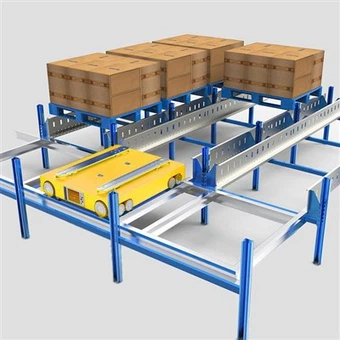
Forklift remains at the lane face while the shuttle moves pallets inside
Capital and operating profile
Cost-effective high-density storage with moderate equipment requirements
Lower structural density but higher speed and flexibility
Higher initial investment; strong labor savings and throughput potential
Final selection should be confirmed by a load calculation and layout simulation using your pallet list, forklift specifications, building height, floor slab and local safety requirements.
Future Procurement Trends
Global Procurement Trends Influencing Space-Saving Drive-In Racking Projects
Buyers are no longer comparing racking as a simple commodity. They are evaluating total capacity, freight efficiency, supplier risk, compliance and the ability to adapt the warehouse over the next five to ten years.
Nearshoring and Constrained Footprints
Nearshoring, urban distribution and rising industrial land costs are pushing buyers to extract more capacity from existing buildings. Drive-in racking is increasingly specified for regional distribution centers, food buffers and seasonal inventory where additional square meters are unavailable or too expensive. Procurement teams increasingly ask suppliers to model multiple lane depths and mixed layouts rather than quoting a single catalog configuration.
Cold-Chain Investment and Food Security
Global demand for chilled and frozen food, pharmaceutical logistics and agricultural exports continues to grow. Because every cubic meter inside a cold store carries a high construction and energy cost, buyers are asking for high-density pallet storage that can be engineered for corrosion protection, low-temperature steel performance and practical forklift access. Drive-in racking remains a strong baseline technology for high-volume frozen and chilled inventory with stable batch profiles.
Total Landed Cost and Freight Efficiency
International buyers now compare total landed cost rather than unit price alone. Container loading plans, component nesting, steel weight optimization, packaging protection and mixed-container efficiency can materially affect the project budget. A supplier that can engineer the rack, prepare export packing and coordinate FOB, CFR or CIF shipment reduces hidden costs and installation delays at the destination.
Compliance, Seismic Design and Supplier Risk
Procurement teams increasingly require documented load calculations, material specifications, coating standards, anchor details and installation manuals. In seismic regions, drive-in racking must be evaluated with the same structural discipline as any high-density system. Buyers are also reducing supplier risk by choosing manufacturers with in-house engineering, export experience, spare-parts support and a verifiable warranty process rather than relying only on trading intermediaries.
What Global Buyers Are Adding to Drive-In Racking RFQs
Modern tenders are more detailed than a request for uprights and beams. To compare suppliers fairly, buyers should require the same data from every bidder and ask for project-specific assumptions, not only product brochures.
Pallet dimensions, maximum load, overhang and stacking pattern
Required lane depth and acceptable LIFO/FIFO operating rules
Forklift model, mast height, turning radius and aisle restrictions
Building plan, clear height, floor slab data and concrete strength
Seismic zone, local code, fire protection and insurance requirements
Humidity, temperature range, washdown and ,>
Product Development Trends
How Space-Saving Drive-In Racking Is Evolving for the Next Decade
Drive-in racking continues to evolve from a basic high-density structure into a more engineered, safety-conscious and data-driven storage system. Global buyers should expect suppliers to discuss not only steel sections and pallet positions, but also installation tolerances, coating durability, damage protection and future reconfiguration.
Taller and More Precisely Engineered Lanes
Better rail geometry, tighter roll-forming tolerances and higher-bay engineering allow more levels within the same building height.
Hybrid High-Density Layouts
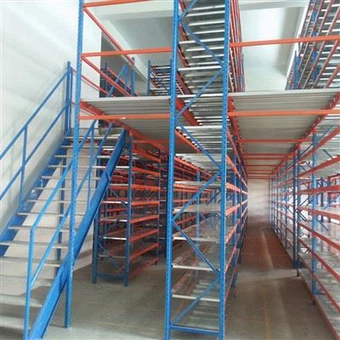
Drive-in, shuttle, selective and mezzanine racking are increasingly combined in one facility to balance density and service levels.
Corrosion and Hygiene Upgrades
Hot-dip galvanizing, pre-galvanized steel and improved powder coatings support cold rooms, coastal sites and hygienic food storage.
Safety Accessories as Standard
Upright protectors, guide rails, lane entry markers, back stops and seismic bracing are specified earlier in the project design phase.
Data-Driven Design and Simulation
2D/3D layouts, load calculations and pallet-flow analysis help buyers test lane depth, height and forklift routes before purchase.
Modular Export and Expansion
Components are designed for container efficiency, predictable installation and future extension as storage demand grows.
FAQ
Space-Saving Drive-In Racking FAQ for Global Procurement Teams
These are the questions buyers, distributors, project contractors and warehouse engineers most often ask during the early specification stage.
What is space-saving drive-in racking and how does it work?
Space-saving drive-in racking is a high-density pallet storage system where forklifts drive into deep lanes formed by upright frames and pallet rails. Pallets are stored several positions deep, eliminating most working aisles and increasing floor utilization. It normally operates on a LIFO basis because the first pallet loaded into a lane is often the last one retrieved.
How much space can drive-in racking save compared with selective pallet racking?
Depending on lane depth, pallet size and forklift access, drive-in racking can raise storage utilization to approximately 75 to 85 percent of the available floor area, compared with around 40 to 50 percent for conventional selective pallet racking. The exact result depends on building geometry, fire protection requirements and pallet configuration.
Is drive-in racking suitable for FIFO inventory?
Standard drive-in racking is most suitable for LIFO inventory. If strict FIFO is required, buyers should consider live pallet racking, carton flow or a radio shuttle system designed for FIFO operation. Lottot Storage Solutions Co., Ltd. can compare these options against the actual SKU profile and turnover rate.
Which products are best suited to space-saving drive-in racking?
It works best for homogeneous, slow to medium-moving palletized goods, such as beverages, packaged food, flour, sugar, paper, building materials, seasonal retail stock and cold-chain products. The pallets should be stable and consistent because forklifts enter the rack structure.
Can drive-in racking be designed for seismic zones?
Yes. The structural design can be adjusted for seismic zones using reinforced upright frames, heavier bracing, row spacers, larger base plates and project-specific anchors. Lottot Storage Solutions Co., Ltd. uses the building location, soil class, slab data and local code requirements as design inputs, with final validation by a locally licensed structural engineer recommended.
Can drive-in racking be used in cold storage and humid coastal warehouses?
Yes, provided the coating system and steel specification match the environment. Standard components can receive phosphating and electrostatic powder coating, while hot-dip galvanized or pre-galvanized options are available for coastal sites, high-humidity facilities, cold rooms and hygienic food storage. Drainage, condensation and washdown practices should also be reviewed.
What forklift and aisle requirements apply to drive-in racking?
Forklift type, mast height, load dimensions and driver visibility all affect lane design. Reach trucks, counterbalance trucks or specialized equipment may be used depending on the layout. The final design should account for pallet stability, entry clearances, guide rails, upright protection and operator training because the forklift enters the storage structure itself.
How do you calculate load capacity for a drive-in racking project?
Load capacity is confirmed from pallet weight, load dimensions, beam span, level spacing, upright capacity, rail loading, floor slab strength and local design standards. The calculation must consider both static pallet loads and operational impacts. Buyers should provide an accurate pallet list and floor information rather than relying on a generic load label.
How long does production and shipping take for an export order?
Production typically takes 10 to 15 days after drawing approval. Ocean transit varies by destination and carrier, generally about 18 to 30 days to major Mexican Pacific ports and 25 to 45 days to many South American, Central American, European, African and Middle East ports. Final schedules are confirmed with each quotation.
What warranty and engineering support are included?
Lottot Storage Solutions Co., Ltd. provides a 10-year warranty against quality issues caused by its design, manufacturing, transportation or installation guidance. Support includes free 2D/3D layout design, load calculations, itemized quotation, packing plans, installation drawings and after-sales technical assistance.
Why Lottot Storage Solutions Co., Ltd.
Factory-Direct Engineering Support for Global Procurement Teams
Lottot Storage Solutions Co., Ltd. has manufactured industrial pallet racking and warehouse storage systems since 2007, supporting distributors, contractors, 3PLs and end users across more than 60 countries.
High Quality
CE and ISO certified materials, controlled roll-forming tolerances and quality recognized by clients in 60+ countries. Patented racking products support independent intellectual property and stable project performance.
Engineering Service
Free consultation with professional engineers, free warehouse layout design and practical storage recommendations based on pallet data, SKU profile, forklift fleet, floor slab and local conditions.
Competitive Price
Factory-direct supply with no unnecessary trading layers, transparent itemized quotations and export packing designed to reduce shipping waste for distributors and project contractors.
Fast Delivery
20+ production lines and 30,000 tons of annual output support delivery in 10–15 days after drawing approval, with comprehensive export documentation and container loading plans.
10-Year Warranty Insurance. All racking products are covered for ten years against quality issues caused by our design, manufacturing, transportation or installation guidance. The company also prepares layout drawings and itemized quotations within 48 hours, exports at least 600 containers per year and has completed more than 3,500 warehouse solutions.
How We Work
From RFQ to Delivery: A Clear Procurement Workflow for Global Buyers
A structured process reduces re-quotes, protects project timelines and ensures that the racking system can be installed safely when it arrives at the destination.
01
Share Requirements
Send your building plan, pallet data, forklift information and destination port.
02
Layout & Quote
Receive a free 2D/3D layout, load calculation assumptions and itemized quotation in 48 hours.
03
Structural Review
Confirm lane depth, upright capacity, seismic requirements, coating system and safety accessories.
04
Production & QC
Manufacturing takes 10–15 days after drawing approval, with inspection before packing and loading.
RFQ Checklist for an Accurate Space-Saving Drive-In Racking Quotation
Incomplete project data is the most common cause of re-quotes and delayed shipments. Share the following details so our engineers can produce a buildable design on the first pass.
Warehouse CAD or PDF drawing with columns, doors and clear height
Pallet dimensions, maximum load weight, stacking pattern and quantity
Forklift type, lift height, battery or fuel type and turning aisle width
Floor slab thickness, concrete strength and any existing anchor issues
Seismic zone, local code requirements and fire protection requirements
Temperature, humidity and washdown environment for coating selection
Destination port and preferred Incoterm or delivery arrangement
Required color, installation schedule and spare-parts expectations
Need a Practical Space-Saving Drive-In Racking Layout for Your Next Warehouse Project?
Send your pallet data, building plan and destination port. Lottot Storage Solutions Co., Ltd. will review the storage profile, recommend the right high-density configuration and prepare a free layout plus itemized quotation within 48 hours.