8 Industrial Warehouse Racking Products for Real Storage Profiles
The right racking decision begins with throughput, SKU count, pallet access, building height, floor slab, climate and local code. The eight product families below are proven starting points for distributors, 3PLs, e-commerce warehouses, tire operations, chemical plants and general industrial storage.
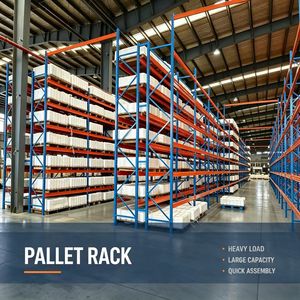
Selective Pallet Racking with Adjustable Steel Beams
Best for distributors with many SKUs and direct pallet access. OEM beam profiles support forklift palletized goods and can be engineered around your load, aisle and seismic data.
View specification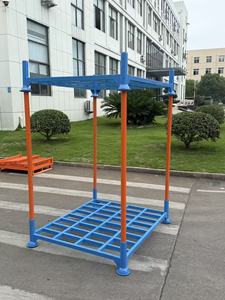
RB1006SR Collapsible Warehouse Tire Rack
Best for tire distributors, automotive aftermarket warehouses and container consolidation. Detachable, stackable and powder coated for efficient tire handling and return logistics.
View specification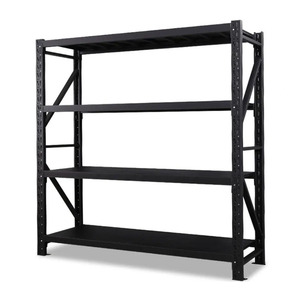
200kg Light Duty Adjustable Steel Shelving Rack
Best for spare parts, retail backrooms, pharmacy storage and e-commerce pick bins. Cold-rolled steel, adjustable levels and anti-rust finishing for organized small-item storage.
View specification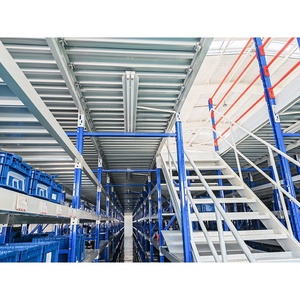
E-commerce & Chemical Plant Mezzanine Shelving Rack
Best for urban warehouses that need vertical capacity without expanding the building. Designed for 500 kg per square meter storage, with mezzanine planning support for safety and workflow.
View specification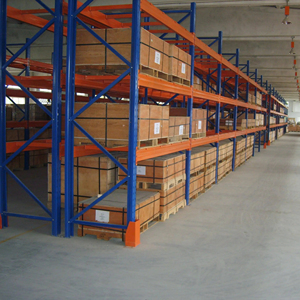
Industrial Warehouse Pallet Racking System
Best for general warehouse pallet storage where robust uprights and beams are required. Suitable for multi-level storage, forklift operations and future reconfiguration.
View specification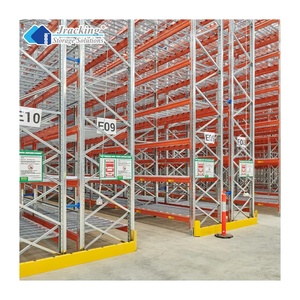
Multi-Layer Heavy Duty Pallet Shelving Rack
Best for export projects that need dependable multi-layer pallet storage. Layouts can be customized to local loading assumptions, Australian standard requests and site conditions.
View specification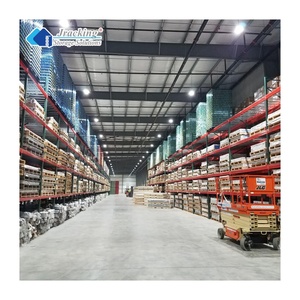
US Standard Heavy Duty Teardrop Pallet Racking System
Best for buyers standardized on teardrop beam connections and rapid deployment. A familiar profile for many U.S.-influenced warehouse projects and distribution centers.
View specification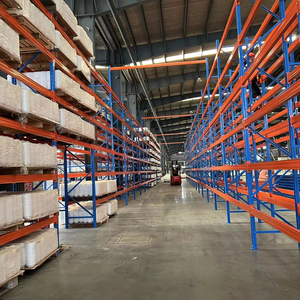
Heavy Duty Selective Pallet Rack — Custom Size
Best for greenfield warehouses and logistics centers needing project-specific dimensions. Engineering can match beam spans, upright heights, accessories and future automation needs.
View specificationWhat CE Certified Industrial Warehouse Racking Means in Practice
This guide is written for importers, 3PL operators, warehouse directors, project contractors and distributors evaluating CE certified industrial warehouse racking manufacturers and factory partners. A racking system is a structural asset. Its performance depends on the upright section, beam profile, connector design, anchors, concrete slab, seismic acceleration, forklift impact exposure, fire strategy and installation quality. A certificate alone does not prove that a layout is safe for a specific building.
In international procurement, “CE certified racking” is often used as shorthand for a factory’s ability to supply CE-aligned products and documentation. The more valuable questions are: Which standards were used for design calculations? Which components carry declarations or certificates? Who validates the final installed layout? How will the system be inspected after forklift damage? At Lottot Storage Solutions Co., Ltd., we treat racking as engineered equipment — not a pile of steel listed by the kilogram.
For projects in Latin America, Europe, the Middle East, Africa and Asia-Pacific, a compliant package can reference recognized racking standards such as EN 15512, EN 15620, EN 15629, EN 15635, FEM 10.2.02, RMI/ANSI MH16.1, AS/NZS 4084 and local building regulations. Where CE marking or declarations apply to products or components, the documentation should be read together with the project-specific structural package. Final approval in seismic zones should be confirmed by a locally licensed structural engineer.
Verification Stack for a Serious Racking Project
- Design calculations to the project-specified standard, including seismic zone, soil class and floor slab assumptions.
- Material certificates, section properties, coating specification and traceable production batch records.
- Anchor type, embedment, slab strength and installation torque written into the drawing package.
- Load signs, installation drawings, maintenance manual and post-installation inspection checklist.
- CE-related declarations or certificates where applicable, plus a clear statement of what is and is not covered.
Recommended Racking by Operating Profile
Use this buyer’s decision model to shortlist the right product family before requesting a layout. A mixed system is often the best answer: selective racking for fast movers, high-density storage for slow movers, and mezzanine space for order picking or light production.
| Operating Signal | Recommended Starting Point | Why It Fits | Verify Before Ordering |
|---|---|---|---|
| High SKU count, frequent access | Selective pallet racking | Direct access to each pallet position with flexible beam levels and familiar forklift workflow. | Pallet overhang, beam span, upright capacity and aisle width. |
| Low SKU count, high volume, cold chain | Radio shuttle or drive-in racking | Reduces aisles and increases pallet density for homogeneous inventory and seasonal peaks. | FIFO/LIFO rules, shuttle charging plan, fire strategy and forklift type. |
| Urban e-commerce, limited footprint | Mezzanine shelving plus carton flow | Uses vertical space for picking, packing, spare parts or light production without new rent. | Floor loading, stair/guardrail layout, sprinkler coverage and evacuation routes. |
| Tire distributors and automotive aftermarket | Collapsible tire rack | Stackable and detachable structure improves tire handling, storage density and return logistics. | Tire size mix, stack height, coating durability and container loading plan. |
| Spare parts, retail backroom, pharmacy | Light duty shelving rack | Organized adjustable levels for small items with fast picking and clean inventory control. | Shelf load, bin size, humidity protection and picking cart clearance. |
| U.S.-influenced distribution centre | Teardrop pallet racking | Familiar beam connection style supports standardization across multiple facilities and maintenance teams. | Beam lock type, seismic accessories, load signage and spare part availability. |
Future Procurement Trends for CE Certified Industrial Warehouse Racking
Buyers are shifting from “price per bay” to “risk-adjusted cost per usable pallet position.” The strongest racking manufacturers will increasingly compete on engineering transparency, delivery certainty and the ability to support automation, cold chain and seismic compliance.
Total Cost of Ownership Replaces Lowest Price
Procurement teams now model freight, installation labour, local permits, spare parts, inspection and downtime. A slightly higher factory price can be cheaper when it reduces container voids, rework and maintenance risk.
Automation-Ready Layouts
Warehouses are being planned for AMRs, shuttles and AS/RS interfaces even when the first phase is manual. Upright tolerances, aisle dimensions and future beam levels matter more than a single low-cost quote.
Climate-Specific Durability
Coastal ports, tropical humidity and cold rooms require different coating and preparation specifications. Buyers are moving away from one-size-fits-all powder coating toward hot-dip galvanizing or pre-galvanized options.
Nearshoring and Mixed Containers
Mexico and nearby markets are attracting more distribution investment. Importers want factory partners who can combine pallet racking, shelving, tire racks and accessories in one optimized container shipment.
Indicative Buyer Priorities in Racking Scorecards
Illustrative weighting based on recurring themes in Lottot’s 2024–2025 export project consultations; each buyer should set its own criteria.
What the Next Generation of Racking Must Deliver
The warehouse racking factory of the next decade will not be judged only by steel strength. It will be judged by documentation quality, installation repeatability, corrosion performance and how easily the system can adapt to new automation and compliance requirements.
Hybrid Rack Structures
Future-ready racking combines selective access with shuttle zones, pick modules and mezzanine platforms. The objective is to protect the initial budget while allowing phased automation.
Digital Asset Records
QR-coded uprights, batch traceability and electronic load signs make inspection and spare-part planning easier. Future sensors may monitor impact and deformation without manual surveys.
Cold Chain and Coastal Packages
High-humidity, frozen and port-side facilities demand tighter coating control. Hot-dip galvanized or pre-galvanized components are increasingly specified where corrosion risk is high.
Mezzanines as Revenue Space
E-commerce and urban logistics are turning mezzanines into order-picking and value-added-service floors. Integrated stairs, guardrails, pallet gates and lighting are now part of the product plan.
Factory Direct Manufacturing, Not a Middleman
Lottot Storage Solutions Co., Ltd. has designed and manufactured industrial storage systems since 2007. Engineering, roll-forming, welding, coating, inspection and export packing are coordinated as one factory supply chain — so the team calculating capacity is accountable to the team building and shipping it.
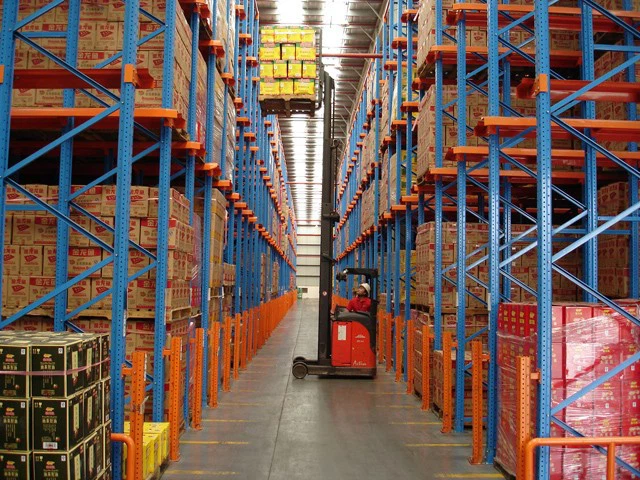
With at least 600 containers exported every year and more than 3,500 warehouse projects completed, our factory serves distributors, project contractors, 3PLs and end users in more than 60 countries. Standard production is typically completed in 10–15 days after drawing approval, supported by 20+ automatic roll-forming lines and 30,000 tons of annual capacity.
Our engineering service includes free consultation, free warehouse layout design, load calculations and an itemized quotation within 48 hours. We provide installation drawings, manuals, remote guidance or on-site supervision depending on project scope. CE-aligned documentation and ISO quality management support the factory’s export process, while patented racking products and independent intellectual property protect long-term product continuity.
Factory-direct supply removes trading layers, which improves price transparency and change-order control. That matters when a project mixes selective pallet racking, tire racks, light-duty shelving, mezzanines and accessories in one shipment.
High Quality
CE-aligned manufacturing documentation, ISO quality controls, controlled roll-forming tolerances and materials recognized by customers in 60+ countries.
Engineering Service
Free consultation with professional engineers, warehouse layout design, load calculation and the optimal storage solution for your operation — usually within 48 hours.
Competitive Price
Factory-direct supply with no trading layers. Transparent, itemized quotations help distributors and project contractors compare scope, not just a lump-sum figure.
Fast Delivery
20+ production lines and 30,000 tons of annual output support delivery in 10–15 days after drawing approval, with container loading plans prepared for export efficiency.
10-Year Warranty Insurance. We cover racking products for ten years against quality issues caused by our design, manufacturing, transportation or installation guidance. Buyers should still maintain periodic inspection after forklift impact or layout changes.
A Practical Checklist for Overseas Racking Purchasing
Most re-quotes, customs delays and installation problems come from incomplete inputs. The checklist below helps buyers create a bid package that factory engineers can price accurately and build without assumptions.
Send These Inputs for an Accurate Layout
- Warehouse CAD/PDF with columns, doors, clear height and fire exits.
- Pallet length, width, height, maximum load and load pattern.
- Forklift type, lift height, aisle requirement and turning radius.
- Floor slab thickness, concrete strength, anchor condition and seismic zone.
- Temperature, humidity, wash-down and corrosion exposure.
- Destination port, preferred Incoterm, RAL colour and installation target date.
Model These Hidden Costs Before Awarding
- Container loading efficiency, mixed-item packing and protection of powder-coated parts.
- Customs documentation, certificate of origin and part labeling in the destination language.
- Local structural sign-off, permits and inspection requirements.
- Installation labour, tooling, anchor epoxy and site supervision.
- Spare uprights, beams, safety clips and future expansion compatibility.
- Annual rack inspection and repair budget after forklift activity begins.
Illustrative TCO Composition for an Export Racking Project
Percentages are illustrative and must be recalculated for each port, building, labour market and compliance path.
Common Questions from Racking Buyers and Project Contractors
These are the questions our engineering and export teams answer most often during factory-direct racking projects. Answers are written for practical procurement decisions, not catalogue copy.
What does CE certification mean for industrial warehouse racking?
CE certification is usually requested as a supplier qualification. For racking, verify the scope of the certificate, the standards used for structural calculation, component declarations and who validates the final installed layout. A CE-related document should support an engineered design and local code approval — not replace them.
Can racking be designed for seismic zones?
Yes. Upright, beam, bracing and anchor requirements can be calculated using the site seismic zone, soil class and floor slab data. Typical upgrades include reinforced base plates, heavier bracing, row spacers, chemical anchors and additional frame ties. Final validation by a locally licensed structural engineer is strongly recommended.
How is load capacity calculated?
Rack capacity is a system calculation, not a single beam figure. We need maximum pallet weight, dimensions, load pattern, beam span, upright frame height, number of levels, floor slab strength and impact assumptions. The approved layout should include load signs or drawings so warehouse teams know the permitted limits.
Can different products share one container?
Yes, many export projects combine selective racking, tire racks, shelving, mezzanine components and accessories in one shipment. We prepare a container loading plan that respects payload limits, protects powder-coated parts and improves freight utilization without compromising installation sequence.
What lead time and shipping terms are typical?
Production usually takes 10–15 days after drawing approval. Ocean transit varies by route and season, commonly around 18–30 days to some Mexican Pacific ports and 25–45 days to South American ports. We quote FOB, CFR or CIF, with DDP available on request; total project time should also include customs, inland transport and installation.
What documentation and warranty are provided?
The export package can include commercial invoice, packing list, bill of lading, certificate of origin, installation drawings, load signs, inspection checklist and warranty terms. Our 10-year warranty covers quality issues caused by design, manufacturing, transportation or installation guidance. Periodic inspection remains essential after operations begin.
Planning a CE Certified Industrial Warehouse Racking Project?
Send your building plan, pallet data, forklift details, floor slab information and destination port. Our engineers can review the storage profile, recommend a suitable system, prepare a 2D/3D layout direction and return an itemized quotation — usually within 48 hours.