Why Buyers Search for China Top Industrial Rack Storage Manufacturers & Exporter
The search is high-intent because warehouse racking is not a commodity purchase. It combines structural engineering, safety, logistics, coating performance and long-term operating cost.
The phrase China top industrial rack storage manufacturers & exporter describes a mature, technical sourcing category. Warehouse owners, 3PL operators, contractors and distributors are not simply looking for steel profiles. They need a manufacturing partner that can interpret pallet data, calculate beam and upright capacity, verify floor slab and seismic assumptions, specify corrosion protection, pack containers efficiently and prepare export documents that clear customs without delay.
China's advantage is scale, but scale alone is not a quality argument. The most credible exporters combine roll-forming precision, welding control, phosphating and powder coating, load testing, packaging discipline and export documentation inside one quality system. In practical terms, a strong supplier should shorten the distance between the engineer who calculates the load and the production team responsible for the finished upright. That is why factory-direct manufacturers often outperform trading layers on complex projects involving heavy-duty adjustable steel racking, selective pallet racking, cantilever racks, drive-in systems and high-density radio shuttle storage.
Lottot Storage Solutions Co., Ltd. (Lottot Racks) has manufactured industrial storage systems since 2007. Its experience covers more than 3,500 warehouse projects, exports to 60+ countries, roughly 600 containers per year and a reported annual capacity of 30,000 tons. Engineering, production and export preparation are handled by the same organisation. This matters because it reduces specification drift: the drawing, load calculation, coating requirement and packing list can be checked against one another before shipment.
For procurement teams, the real question is not “Can a Chinese supplier make a rack?” It is “Can this supplier prove that the rack will perform in my building, under my seismic, fire, humidity, throughput and customs conditions?” A useful comparison therefore moves beyond price per kilogram and into engineering evidence, material traceability, container loading, safety accessories, installation support and lifecycle cost.
Five questions to ask before approving a China racking exporter
- Can you show the beam, upright and anchor calculation for my pallet load, floor slab and seismic zone?
- Do you offer hot-dip galvanized or pre-galvanized options for coastal, cold-chain or high-humidity warehouses?
- What is your drawing approval, pre-shipment inspection and container loading process?
- How do you prepare origin documents, packing lists and part labels for my destination country?
- Does the warranty cover design, manufacturing, transportation and installation guidance?
Factory Advantages That Matter in Industrial Rack Storage Projects
A manufacturer's value is visible in material control, engineering speed, commercial transparency and delivery discipline. These four advantages should be tested during the RFP stage.
High-Quality Steel & Coating Control
Reliable production begins with certified steel, documented section thickness, consistent roll-forming and controlled welding. Standard finishes use phosphating and electrostatic powder coating; for coastal, tropical or cold-chain warehouses, hot-dip galvanized or pre-galvanized components extend service life. CE and ISO-oriented procedures help buyers compare suppliers on evidence, not appearance alone.
Engineering Service, Not Only a Quotation
Free 2D/3D layout design, load calculations and itemised quotations within 48 hours are valuable only when they are buildable. A responsible manufacturer asks for building plans, pallet dimensions, maximum load, forklift type, slab thickness, seismic zone, temperature and destination port. This allows a precise recommendation across selective, boltless, cantilever, drive-in or shuttle racking.
Factory-Direct Competitive Price
The lowest quoted price is rarely the lowest landed cost. Factory-direct supply removes trading layers, but larger savings come from correct capacity selection, efficient container loading, environment-matched corrosion protection and fewer site modifications. Itemized quotations should separate uprights, beams, decking, accessories, packing, freight and documentation so competing offers can be compared like-for-like.
Fast Delivery & Export Discipline
With 20+ automatic roll-forming lines and a reported 30,000-ton annual capacity, production can typically be completed in 10–15 days after drawing approval. Export coordination includes packing, container loading plans, commercial invoice, packing list, bill of lading, certificate of origin and, where required, Spanish or Portuguese part labels to reduce clearance and installation friction.
8 Industrial Rack Storage Products Recommended for Export Projects
Product selection should follow pallet turnover, SKU count, building height, load weight, handling equipment and environment. These eight systems cover the most common warehouse and workshop requirements.
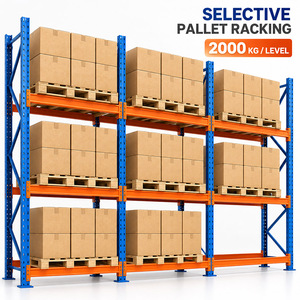
Industrial Heavy Duty Pallet Rack Warehouse Storage Racking System Adjustable Steel Rack
Recommended for distributors and 3PL warehouses that need direct access to every pallet, adjustable beam levels and a proven heavy-duty steel structure.
View product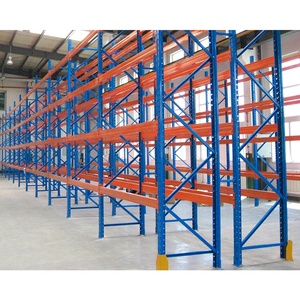
Customized Pallet Rack for Warehouse with Rack Safety
Best for projects requiring project-specific dimensions, protective accessories, guardrails, corner protection and a documented safety layout.
View product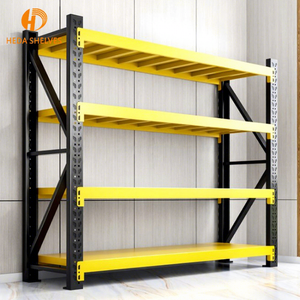
Boltless Adjustable Heavy Duty Load-Bearing 500kg/Layer Steel Racks Warehouse Industrial Stack Storage Racking Shelving System
Suited to spare parts, hand-loaded stock, workshops and warehouses needing fast assembly, flexible shelf heights and 500 kg/layer load capacity.
View product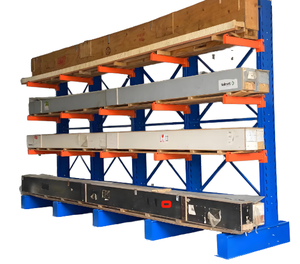
Heavy-Duty Industrial Steel Adjustable Corrosion Protected Cantilever Rack System Large Load Capacity for Warehouse
Recommended for coastal warehouses, pipe yards and building-material storage where long loads and corrosion protection are both important.
View product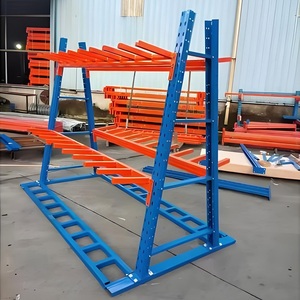
Industrial Warehouse a Shape Cantilever Rack Heavy Duty Steel Long Material Storage
Ideal for timber, steel profiles, pipes and fabricated components that cannot be stored efficiently on standard pallet beams.
View product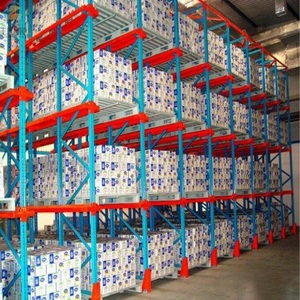
OEM EBILMETAL Selective Pallet Rack System Heavy Duty Modular Design Durable Steel Powder Coated Easy Assembly
Built for importers and distributors seeking OEM production, modular assembly, powder-coated durable steel and repeatable project supply.
View product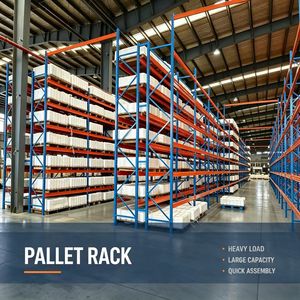
Selective Pallet Racking With Adjustable Steel Beam, OEM for Forklift Palletized Goods Warehouse Storage
Recommended for palletized goods, forklift operations and warehouse layouts that require adjustable beams, clear access and OEM configuration.
View product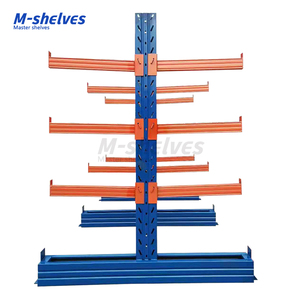
Freestanding Double Arm Storage Racks for Garage Heavy Duty Cantilever Racking for Large Workshop Tools Long Material Storage
Best for garages, workshops and fabrication shops storing long tools, timber, metal sections and heavy materials on double-arm cantilevers.
View productProcurement Trends Shaping Industrial Rack Storage Purchases
Buyers are shifting from “buying steel” to “buying a verified storage outcome.” These six trends are particularly important when comparing Chinese manufacturers and exporters.
Nearshoring and Regional Warehousing
Nearshoring is increasing the number of mid-sized distribution centres in Mexico, Central Europe, Southeast Asia and parts of South America. For racking buyers, this means shorter project cycles, more mixed-SKU operations and greater demand for modular pallet racking that can be expanded in phases. Suppliers that can issue drawing packages quickly and ship replacement components later have a clear advantage.
Automation-Ready Racking
Even buyers not ready for full AS/RS want racking that will not block future automation. That changes the RFP: straight uprights, predictable beam levels, tolerances, floor flatness requirements, shuttle compatibility and interface points for conveyors or AGVs are now discussed earlier. Radio shuttle, carton flow and mezzanine systems are often specified as “automation-ready” rather than purely manual storage.
Total Cost of Ownership
Lowest price per kilogram is a poor measure for warehouse racking. A safer comparison includes freight, duties, installation, inspection, replacement parts, corrosion protection, downtime risk and the cost of reconfiguring the system later. Experienced buyers now score suppliers on total landed cost and lifecycle performance, not only the ex-works quote or container price.
Safety, Seismic and Documentation
In seismic regions such as Chile, Peru, Ecuador, Mexico and parts of Central America, racking must be engineered around site-specific seismic data and approved by local professionals where required. Procurement teams increasingly ask for load calculations, anchor specifications, row spacers, reinforced base plates and installation instructions before awarding the order.
Cold Chain and Corrosion Protection
Humidity, coastal salt, washdowns and condensation in cold rooms attack steel. Powder-coated racking is common, but hot-dip galvanizing or pre-galvanized components may be justified in ports, food processing, seafood, beverage and cold-chain warehouses. ESG procurement also favours durable, repairable systems that reduce replacement frequency and waste.
Data-Driven Layout and Digital Models
Rack design is moving from static CAD drawings to data-rich models. Buyers share pallet SKU data, throughput and pick profiles; suppliers return layouts with aisle widths, beam levels, access patterns and expansion scenarios. This is information gain in practice: a good manufacturer can show why one layout reduces travel time or increases pallet positions, rather than simply offering a price per bay.
Product Development Trends: Where Rack Storage Is Heading
Future-ready racking is not only stronger. It is more modular, easier to inspect, more compatible with automation and better protected against local environmental conditions.
High Density Without Full Automation
Radio shuttle and drive-in racking continue to replace conventional aisles where SKU counts are controlled and floor space is expensive. The development focus is on semi-automation that raises density without the capital intensity of a full AS/RS installation, especially for cold chain, beverage and agro-export warehouses.
Modular Boltless and Adjustable Systems
Boltless heavy-duty shelving and adjustable beam systems are becoming easier to deploy, expand and relocate. For spare-parts warehouses, workshops and multi-site distributors, the value is fast assembly, lower maintenance and the ability to change shelf levels as inventory profiles evolve, such as 500 kg/layer steel storage systems.
Cantilever Engineering for Long Loads
Cantilever racks are being engineered with heavier arms, adjustable spacing and corrosion-protected finishes for pipes, timber, profiles, steel bars and workshop tools. Double-arm and A-shape designs help yards and workshops store long materials safely without blocking access, while custom arm lengths support project-specific loads.
Smarter Safety Accessories
Corner alarms, upright protectors, beam locks, row spacers, guardrails and clear load signage are moving from optional extras to standard specification. The goal is not only to protect steel, but to reduce forklift impact, improve inspection routines and make the racking system easier to manage under real warehouse traffic.
Taller and Narrower Rack Configurations
As industrial land becomes scarcer, warehouses are building upward. Very narrow aisle, high-bay selective and mezzanine-supported layouts allow more pallet positions within the same footprint. This places greater emphasis on floor flatness, upright straightness, beam locking, fire engineering and forklift guidance systems.
Coatings and Steel Grades for Lifecycle Performance
Powder coating remains the mainstream finish, but buyers increasingly request galvanized or pre-galvanized options for ports, food plants and cold rooms. Higher-strength steel sections and tighter process control allow lighter profiles without sacrificing capacity, reducing freight volume and improving total project economics when designed correctly.
Technical Buying Guide: How to Specify a Safer, Lower-TCO Rack System
Complete data upfront prevents re-quotes, installation delays and unsafe assumptions. Treat the following eight items as the minimum information set for a serious quotation.
1. Building and Floor Slab
Share CAD or PDF plans with columns, doors, clear height and obstructions. Floor slab thickness, concrete strength and flatness affect anchor selection, upright capacity and installation method.
2. Pallet and SKU Data
Provide pallet length, width, height, maximum load and quantity. For mixed SKU operations, add pick frequency and product categories so the layout can balance selectivity and density.
3. Seismic and Local Safety Rules
State the site seismic zone, soil class and local authority requirements. Seismic racking may require reinforced base plates, heavier bracing, row spacers, chemical anchors and review by a licensed local engineer.
4. Forklift and Aisle Requirements
Forklift type, lift height, load centre and turning radius determine aisle width, beam clearance and upright protection. Include reach trucks, VNA equipment or AGV plans if automation is expected later.
5. Environment and Coating
Ambient, chilled, frozen, coastal or washdown environments demand different protection. Specify powder coating, hot-dip galvanizing or pre-galvanized steel and identify any temperature-related steel or coating concerns.
6. Throughput and Access Pattern
Pallet turnover and SKU count decide whether selective, drive-in, shuttle, carton flow or mezzanine racking is appropriate. High selectivity and fast access may be more valuable than maximum pallet density.
7. Accessories and Protection
Plan corner protectors, upright guards, beam locks, row spacers, wire decking, guardrails and signage as part of the package. Accessories should be quoted item by item to avoid later omissions.
8. Delivery and Total Landed Cost
Confirm destination port, Incoterm, packing method, container loading plan and documentation. Compare total landed cost, replacement-part availability and warranty support rather than ex-works price alone.
Suggested supplier scorecard for rack storage sourcing
Use weighting that reflects the real risk profile of your project. A low unit price cannot compensate for weak load calculations or unclear seismic responsibility.
Inside the Manufacturer: Lottot Storage Solutions Co., Ltd.
Founded in 2007, Lottot Racks manufactures industrial racking and warehouse storage systems from Nanjing, China, with factory-direct engineering and export support.
Lottot Storage Solutions Co., Ltd. produces selective pallet racking, radio shuttle racking, drive-in racking, mezzanine racking, carton flow racking, cantilever racking, shelving, accessories and material handling equipment. Published capabilities include 20+ automatic roll-forming lines, around 600 containers exported annually, more than 3,500 delivered projects, exports to 60+ countries and a 10-year warranty covering quality issues caused by design, manufacturing, transportation or installation guidance.
Because engineering and production work together, the manufacturer can handle OEM and custom projects: adjustable steel beams, heavy-duty pallet racking, corrosion-protected cantilever systems, rack safety accessories and project-specific colours. For export buyers, this reduces the number of intermediaries between the drawing and the finished steel. The company also prepares export documents and can support Spanish or Portuguese language requirements for Latin American projects, while providing installation drawings, manuals and remote or on-site installation guidance when required.
This operating model is particularly relevant to buyers comparing China top industrial rack storage manufacturers & exporter options. The same organization can respond to a layout request, calculate the load, confirm coating, manufacture the order, inspect the shipment and support arrival at the destination port.
Applications Across the Warehouse Ecosystem
Racking performance depends on the product, the building and the handling method. The same steel structure can be right for one operation and inefficient for another.
Cold Chain & Agro-Export
Fruit, avocados, coffee, seafood and dairy operations need corrosion-aware steel, dense storage and layouts that support fast loading at harvest peaks. Radio shuttle and drive-in systems are often considered for controlled SKU profiles.
E-commerce & 3PL
Multi-client fulfillment centres require flexible selective racking, carton flow, mezzanine floors and clearly protected pick faces. The layout must accommodate changing SKU counts without rebuilding the entire warehouse.
Automotive & Manufacturing
Parts, components and nearshoring plants need durable shelving, pallet racking and cantilever storage for tooling and long materials. OEM consistency and replacement-part availability are critical.
Mining & Building Materials
Pipes, steel bar, timber and heavy profiles are better stored on cantilever racks. Corrosion protection, arm capacity, access clearance and forklift movement should be designed together.
Beverage & FMCG
Bottled drinks, beer and consumer goods often justify high-density drive-in or shuttle lanes. Floor utilization improves, but SKU discipline and pallet quality must be controlled.
Pharma & Retail
Medicine distributors, supermarkets and malls need organised storage, clear labels, clean finishes and good picking access. Light and medium-duty shelving can be combined with pallet racking as volumes grow.
Frequently Asked Questions for Industrial Rack Storage Buyers
These are the questions that most often determine whether a quotation becomes a safe, delivery-ready order.
What should I compare when choosing China industrial rack storage manufacturers and exporters?
Can racking be designed for seismic zones and strict local codes?
How long do production and shipping usually take?
Can I request OEM sizes, colours and private labelling?
How is quality and corrosion protection controlled?
Do you provide layout design, load calculation and installation support?
Planning to compare China industrial rack storage manufacturers?
Send your warehouse drawing, pallet size, load weight, aisle equipment and destination port. The team can review the application and prepare a practical racking layout, load calculation and itemized quotation within 48 hours.