8 Warehouse Racking and Mezzanine Systems Selected for Real Industrial Projects
This is a working shortlist, not a catalog dump. The right system depends on pallet weight, SKU count, pick rate, building clear height, floor slab, seismic zone, forklift type, temperature and destination port. Lottot Racks engineers compare these variables before recommending a single racking system or a hybrid layout that combines mezzanine space, selective pallet access and high-density reserve storage.
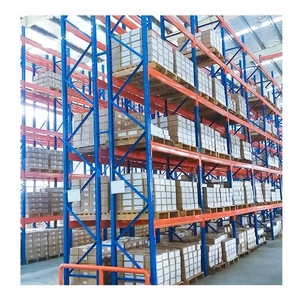
Heavy Duty Industrial Double Deep Stacking Selective Shelving Pallet Racking Warehouse Storage Racks for Sale
A high-density solution for warehouses with repeat pallet patterns. It reduces aisle count by storing pallets two deep and is often used in food, beverage, paper and third-party logistics facilities where selective racking alone consumes too much floor space.
View product details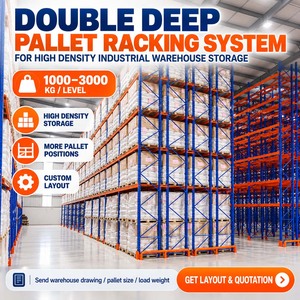
Double Deep Pallet Racking System for High Density Industrial Warehouse Storage
An engineered double-deep pallet racking system for batch stock, seasonal inventory and distributors that accept LIFO storage. It offers faster throughput than drive-in lanes while improving floor utilization for medium SKU counts.
View product details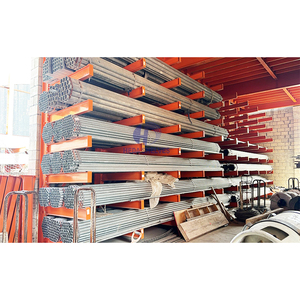
Maximum Storage Rack Heavy Duty Cantilever Racking System for Storing Long Pipes Lumber Adjustable Arms
Ideal for long pipes, lumber, profiles and non-palletized loads. Adjustable arms and open front access make it practical for yards, building-material distributors, steel service centers and manufacturers storing long products without obstructive uprights.
View product details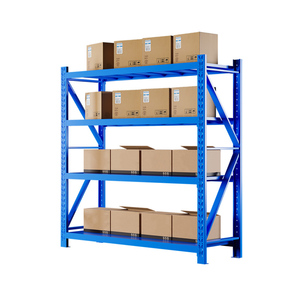
Industrial Warehouse Storage 5-Layer Pallet Racking System with Tire Rack Slotted Angle Rack Stacking Racks & Shelves
A multi-layer pallet racking and slotted-angle shelving combination for mixed pallet and carton storage. It supports tire storage, spare parts and medium-duty industrial SKUs where a single storage type would waste vertical or horizontal space.
View product details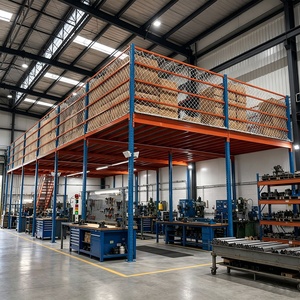
Heavy Duty Steel Mezzanine Platform Modular Multi-Level Warehouse Storage Rack Corrosion Protection
A modular steel mezzanine platform that expands usable floor area without building expansion. It can combine pallet racking below with picking, light storage or compact offices above; corrosion-protection options suit humid, coastal and cold-chain sites.
View product details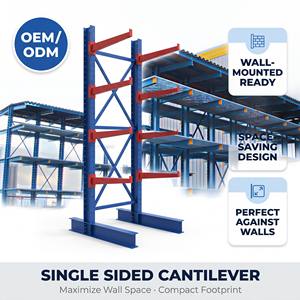
Industrial 5 Layer Heavy Duty Cantilever Rack for Structural Steel Storage Rebar Bar & Tube-Adjustable Warehouse Racking System
A heavy-duty cantilever rack for structural steel, rebar, bar stock and tubes. The five-layer configuration and adjustable arms create stable, accessible long-load storage for steel distributors, construction suppliers and fabrication workshops.
View product details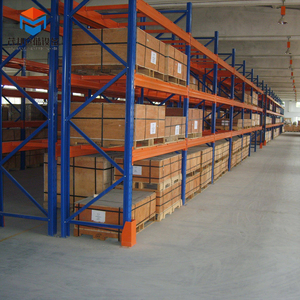
Factory Price Industrial Warehouse Heavy Duty Storage Tray Rack System Pallet Rack Store Shelf
A factory-price industrial tray rack and heavy-duty pallet rack system for dense, organized warehouse storage. It fits spare parts, tooling, packaged goods and mixed pallet loads where a strong shelf platform and simple forklift access are required.
View product details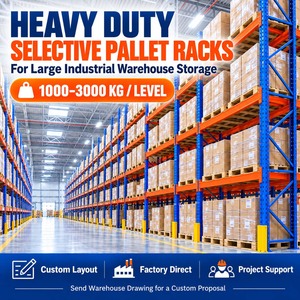
Heavy Duty Selective Pallet Racks for Large Industrial Warehouse Storage
The most flexible system for SKU variety and direct access. Each pallet can be reached without moving another, making selective racking a sound choice for distributors, retail DCs, e-commerce fulfillment and spare-parts warehouses with fast-changing demand.
View product details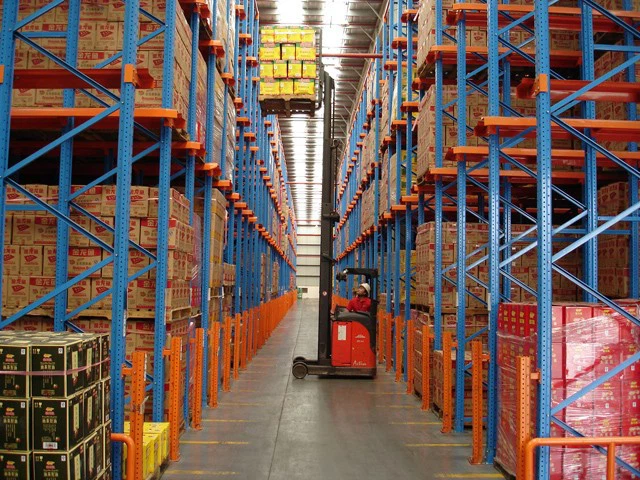
China Warehouse Racking Mezzanine Manufacturer With Verifiable Factory Experience
Lottot Storage Solutions Co., Ltd. has manufactured industrial racking since 2007. The company operates its own production facility, exports at least 600 containers per year and has completed more than 3,500 warehouse projects or 3,000 solutions across 60+ countries. Its 20+ automatic roll-forming lines and 30,000-ton annual capacity support 10–15 day production after drawing approval. Buyers work directly with the engineers who calculate loads, detail the layout and control quality — not with an unexplained trading layer.
For mezzanine and racking projects, the qualification signals that matter are not slogans. They are documented load calculations, CE and ISO material/process control, patented product designs, seismic detailing, powder-coating or galvanized finishes, export documentation and a clear installation scope. Lottot Racks supports each checkpoint and backs its racking products with a 10-year warranty against quality issues caused by design, manufacturing, transportation or installation guidance. That approach is especially relevant for buyers in Mexico, Central America, South America and other seismic or humid markets.
What Smart Buyers Check Before Choosing a China Mezzanine Racking Supplier
Price comparison alone rarely protects a project. The most reliable suppliers make engineering assumptions visible, explain corrosion strategy, optimize container loading and prepare documents that clear customs without repeated follow-up.
Engineering Calculation and Local Code
Ask whether upright capacity, beam deflection, base plates, row spacers and anchors are calculated against your rack height, slab strength, seismic zone and local building rules. A responsible supplier will show assumptions and recommend final validation by a locally licensed structural engineer.
Corrosion Strategy for the Real Site
Powder coating may be sufficient in a dry distribution center, but coastal ports, tropical warehouses and cold rooms need a different finish. Compare phosphating, pre-galvanized, hot-dip galvanized and stainless options against humidity, condensation, cleaning chemicals and food-safety expectations.
Logistics and Landed Cost
Warehouse racking is bulky and freight-sensitive. A competent manufacturer optimizes beam and upright nesting, container payload and unloading sequence. Request FOB, CFR and CIF comparisons, plus DDP advice where local import rules are clear, so the lowest ex-works price does not become the highest landed cost.
Documents and Installation Scope
Commercial invoice, packing list, bill of lading and certificate of origin must match the customs entry. Ask for Spanish or Portuguese part labels when needed, installation drawings, anchor plans, bill of materials and a clear scope for remote or on-site supervision.
Match the Racking or Mezzanine System to the Storage Profile
Use the four comparisons below to narrow the technical conversation before requesting a layout. The objective is not to choose the heaviest-looking steel; it is to choose the system that improves access, safety and cubic utilization at the lowest lifecycle cost.
Many SKUs and Fast Access
Choose selective pallet racking when every pallet must be directly accessible. It suits distributors, retail DCs and spare-parts warehouses where product variety is high, even if floor utilization is lower than deep-lane systems.
Medium Density and Batch Stock
Double-deep pallet racking is a practical compromise for repeat pallets, seasonal stock and LIFO acceptance. It removes aisles and increases pallet positions without the throughput limitations of fully drive-in storage.
Long Loads and Non-Palletized Stock
Cantilever racking is recommended for pipes, lumber, rebar, profiles and structural steel. Adjustable arms and open access improve handling safety and prevent damage from front columns during forklift loading.
Growth Without Building Expansion
Rack-supported mezzanine platforms add picking, storage or office space above the warehouse floor. They are most valuable when land is expensive, building permits are slow, or the operation needs multi-level picking without moving to a new site.
Warehouse Racking and Mezzanine Procurement Trends for 2025–2030
Buyers are becoming more analytical. The strongest procurement teams no longer compare only price per beam or price per upright; they compare speed to operation, freight efficiency, installation risk, seismic evidence and future automation compatibility.
Nearshoring and Regional Distribution
Mexico, Central America and South America continue to attract manufacturing and distribution investment. Buyers will expect suppliers to understand port routes, customs documents and installation support for cross-ocean projects rather than treating export as an afterthought.
Total Cost of Ownership
Procurement will increasingly evaluate landed cost, installation time, spare-parts availability, repair options and future reconfiguration. A slightly higher FOB price can be cheaper if the racking loads faster, installs cleaner and adapts to the next warehouse layout.
Automation-Ready Layouts
Even manual warehouses are being planned for future shuttle, AMR or AS/RS integration. Rack orientation, floor tolerance, column clearance and mezzanine load zones must leave room for automation without rebuilding the entire storage system.
Seismic and Safety Evidence
In Chile, Peru, Ecuador, Mexico and parts of Central America, buyers want calculations, anchor details, row spacers and documentation. Seismic-ready design is moving from a premium option to a standard procurement question.
Cold Chain and Corrosion Control
Fruit, seafood, dairy, beverage and pharmaceutical warehouses need finishes that resist condensation and cleaning cycles. Galvanized and pre-galvanized components will grow in coastal, tropical and temperature-controlled projects.
Sustainability and Repairability
Steel racking is highly recyclable, but sustainability also means avoiding premature replacement. Modular beams, replaceable upright protectors, durable powder coating and compact layouts reduce material use and operational disruption over the asset life.
Product Development Trends in Warehouse Racking Mezzanine Systems
Racking is becoming more integrated with layout engineering, safety accessories and digital planning. The most useful innovation is not cosmetic; it is the ability to deliver a safer, denser and more adaptable storage asset.
Hybrid Rack-Supported Mezzanine
Modern projects increasingly combine pallet racking below with carton picking, light storage or offices above. Integrated guardrails, stair towers, pallet gates and floor deck options make the mezzanine a working extension of the warehouse instead of unused airspace.
Digital Design and Modular Pre-Engineering
2D/3D layouts, load calculations and itemized bills of materials are becoming standard parts of the quotation process. Modular profiles and pre-engineered accessories reduce design errors and help overseas buyers confirm dimensions before production begins.
Sensor-Ready and Safety-Integrated Accessories
Upright protectors, corner alarms, beam locks, row spacers and inspection labels are being specified earlier. Future racking systems will be easier to inspect, monitor and expand, supporting safer forklift movement and lower maintenance costs.
From Requirement to Installation: Lottot’s Engineering and Quality Workflow
A disciplined process protects budget and schedule. Each step below creates a document trail that buyers, installers and local engineers can review before shipment.
Share Requirements
Send building plan, pallet data, forklift information and destination port.
Layout & Quote
Receive free 2D/3D layout, load calculation and itemized quotation in 48 hours.
Production & QC
Manufacture in 10–15 days with material and dimensional checks before packing.
Shipping
Optimized container loading, export documents and port-to-port coordination.
Installation Support
Drawings, manuals, remote guidance or on-site supervision for safe assembly.
What to Send for a Reliable Mezzanine and Racking Quote
Incomplete data is the most common cause of re-quotes, delayed production and installation problems. Sharing these details upfront helps the factory produce a buildable design on the first pass.
Building planCAD or PDF with columns, doors, clear height and obstructions.
Pallet dataLength, width, height, maximum load and quantity by SKU.
ThroughputPallets in/out per hour, shift pattern and FIFO or LIFO needs.
Forklift detailsType, lift height, mast clearance and aisle turning requirements.
Floor slabThickness, concrete strength, flatness and anchor restrictions.
Seismic zoneSite location, soil class and local structural code requirements.
EnvironmentAmbient, chilled, frozen, coastal humidity or washdown conditions.
Commercial termsDestination port, preferred Incoterm and target installation date.
Export Logistics, Documentation and Installation Support
International procurement succeeds when factory, freight and site teams work from the same information. Lottot Racks supports the full export path rather than stopping at the factory gate.
Shipping Terms and Ports
FOB, CFR and CIF terms are available, with DDP on request where import rules allow. Common destinations include Manzanillo, Veracruz, Puerto Quetzal, Puerto Cortés, Colón, Balboa, Cartagena, Buenaventura, Guayaquil, Callao, San Antonio, Valparaíso, Santos and Buenos Aires.
Container Loading Efficiency
Beam nesting, upright bundling and accessory packing are planned to protect components and reduce wasted space. For large projects, loading plans are coordinated with the bill of materials so site crews receive parts in a practical sequence.
Customs-Ready Documents
Commercial invoice, packing list, bill of lading and certificate of origin are prepared to match the order. Spanish or Portuguese labels and clear packing marks can be provided to simplify receiving and local clearance.
Installation Guidance
Each order can include layout drawings, anchor plans, assembly manuals and labeled components. Depending on project scope, the team can provide remote guidance or coordinate on-site supervision to reduce installation risk.
Warehouse Racking Mezzanine Manufacturer and Supplier FAQ
These are the questions international buyers ask most often when comparing China racking manufacturers, mezzanine suppliers and export quotations.
Are you a manufacturer or a trading company?
Lottot Storage Solutions Co., Ltd. is a manufacturer of warehouse racking and mezzanine systems with its own production facility, roll-forming lines and quality-control process. Buyers communicate directly with the engineering and export team, which supports faster technical clarification and clearer accountability.
How do I choose between selective, double-deep, drive-in, shuttle and mezzanine systems?
Selective racking is best for direct access and high SKU variety. Double-deep improves density for repeat pallets and LIFO acceptance. Drive-in and radio shuttle systems suit high-volume, low-SKU storage. Rack-supported mezzanine is recommended when the operation needs more usable floor area without expanding the building. The best answer usually comes from a load and throughput comparison, not from one product alone.
Can you design racking for seismic zones?
Yes. Engineering can account for seismic zone, soil class, rack height, slab data and local code requirements. Typical measures include reinforced base plates, heavier bracing, row spacers and chemical anchors. Final validation by a locally licensed structural engineer is recommended for projects in Chile, Peru, Ecuador, Mexico and other active seismic regions.
How do you protect racking in humid, coastal or cold-chain warehouses?
Standard components receive phosphating pre-treatment and electrostatic powder coating. For coastal, tropical or cold-room facilities, hot-dip galvanized or pre-galvanized components can be specified. The correct finish depends on humidity, condensation, cleaning chemicals and food-safety requirements.
What is the typical lead time and shipping process?
Production usually takes 10–15 days after drawing approval. Ocean transit from China is commonly about 18–30 days to Mexican Pacific ports and about 30–45 days to South American ports, depending on carrier, routing and season. Total lead time includes production, ocean freight and local customs clearance.
What warranty and support do you provide?
Racking products are covered by a 10-year warranty against quality issues caused by design, manufacturing, transportation or installation guidance. Support can include layout drawings, load calculations, packing lists, installation manuals, remote guidance and, when agreed, on-site supervision.
Get an Engineered Mezzanine Layout and Quote in 48 Hours
Share your building plan, pallet load, forklift model, floor slab data and destination port. Lottot Racks will return a free 2D/3D layout, load calculation and itemized quotation within 48 hours. If you are comparing China warehouse racking mezzanine manufacturers and suppliers, use this quote to test engineering depth, clarity and response speed — not only price.