Factory-direct storage engineering · Since 2007 · 60+ export countries
China Top Warehouse Storage Shelving Manufacturer & Supplier
Pallet racking, industrial shelving and high-density warehouse storage systems engineered for importers, distributors and project buyers who need verifiable quality, container-optimized delivery and lower total cost of ownership.
Eight Warehouse Storage Shelving and Pallet Racking Systems
The products below cover the highest-intent procurement paths: heavy-load selective racking, standard pallet rack, outdoor cantilever storage, push-back, industrial selective racks, adjustable powder-coated racking, customized steel pallet systems and double-deep high-density storage. Compare load profile, access pattern and storage density before requesting a layout.
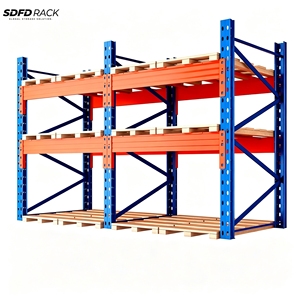
Heavy-Duty Industrial Pallet Racking – 3,000 kg Per Level
A high-load selective pallet racking system for high-bay warehouses, reinforced uprights, box beams and project-specific anchor details for dense pallet storage with direct access.
View product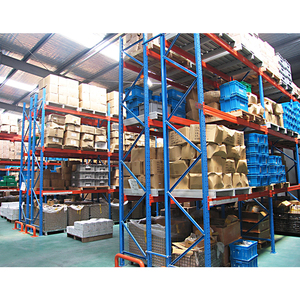
Standard Warehouse Pallet Racking System
A reliable selective rack for distributors that need straightforward assembly, repeatable bay dimensions and fast spare-part availability across multi-site rollouts.
View product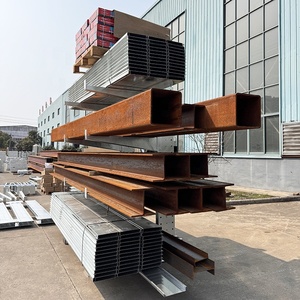
Hot-Dip Galvanized Outdoor Cantilever Rack
Single-sided cantilever storage for pipes, profiles and long loads in outdoor yards. Hot-dip galvanizing supports corrosion protection in coastal, humid and high-rainfall sites.
View product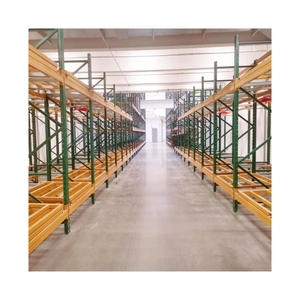
Custom Push-Back Pallet Racking with Guide Rail
High-density LIFO storage using nested carts and guide rails. A practical option for fast-moving SKUs where floor space is tight but pallet access must remain predictable.
View product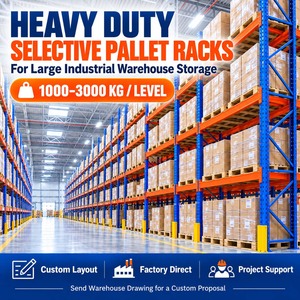
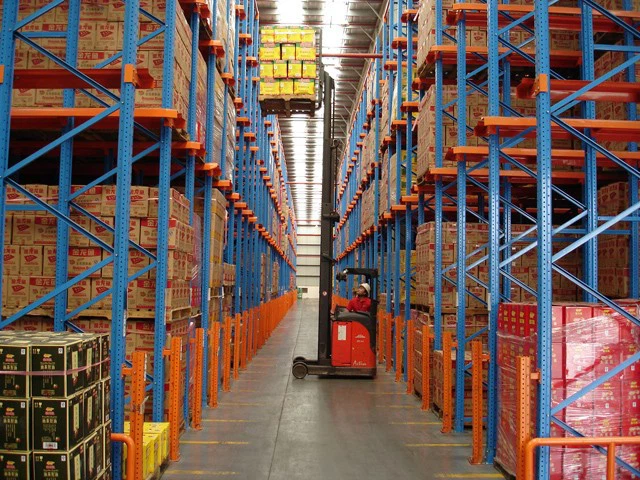
Heavy-Duty Selective Pallet Racks for Industrial Warehouses
A flexible selective racking layout for large industrial warehouses with mixed SKUs. Direct access to every pallet supports fast picking, inventory control and lower handling risk.
View product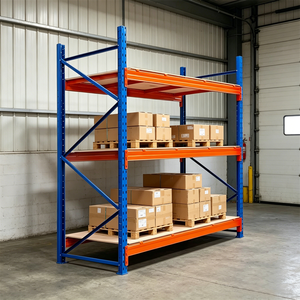
Powder-Coated Adjustable Industrial Pallet Racking
Adjustable beam levels and electrostatic powder coating for warehouses that need a clean finish, corrosion resistance and changing pallet heights over time.
View product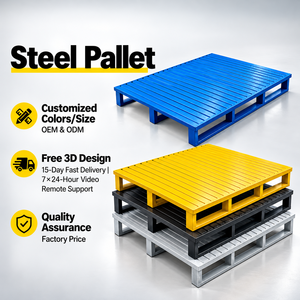
Customized Heavy-Duty Steel Pallet Warehouse Storage System
Engineered-to-order steel pallet storage for non-standard pallets, unusual clear heights or specific seismic and coating requirements. Custom sizing helps avoid wasted cube.
View product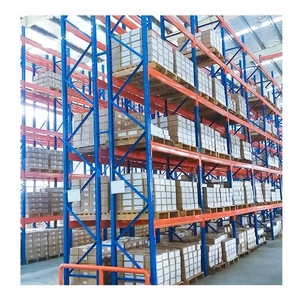
Heavy-Duty Double-Deep Pallet Racking System
Double-deep selective racking increases storage density by reducing aisle count, with rear-position pallets handled by reach trucks. Suited to high-volume SKUs with predictable replenishment.
View productWhat “China Top” Should Mean to a Professional Warehouse Buyer
Industrial storage is structural, operational and commercial at the same time. A low unit price can become expensive if the racking needs redesign after the deposit is paid, fails to match the pallet load, slows down the forklift flow or arrives with documents that delay customs clearance. For serious buyers, the phrase “China top warehouse storage shelving manufacturer” is not a slogan; it is a claim that should be proved through engineering files, factory evidence, export records and a clear warranty position.
This guide is written from the perspective of a manufacturer that has supplied racking and shelving systems since 2007. It is designed for importers, 3PL operators, project contractors and distributors who want to compare suppliers on more than a price per bay. The term warehouse storage shelving is often used broadly in search and tenders. In real projects it may mean light-duty shelving, heavy-duty selective pallet racking, cantilever racks for long loads, carton flow picking or high-density systems such as push-back and double-deep racking.
Information gain matters here because most supplier pages stop at product photos. A useful procurement page should explain system fit, load assumptions, container loading, installation risk, future automation readiness and the questions that separate a factory from a trading layer. That is the standard used in this whitepaper. Where a project depends on local building codes, a licensed local structural engineer should still validate the final design, anchor specification and seismic assumptions.
Engineering evidence
Ask for pallet load data, beam and upright calculations, anchor assumptions, coating specification and installation drawings. These files reveal whether the supplier is engineering a system or only quoting steel weight.
Factory proof
Production lines, annual capacity, export containers and project references provide more confidence than a badge on a homepage. A factory-direct supplier should be able to explain how the racking is roll-formed, welded, coated and inspected.
Commercial clarity
Container loading plans, Incoterms, spare parts, warranty, installation support and documentation should be discussed before production. A clear total cost of ownership is more valuable than a headline discount.
Match the Storage System to the Operating Profile
The right racking system is defined by pallet count, SKU profile, throughput, building height, forklift type and future automation plans. The recommendations below help narrow the shortlist before a formal layout is prepared.
Many SKUs, fast access
Choose selective pallet racking when every pallet must be accessible and inventory turns are high. It is the safest baseline for distributors, retail DCs and mixed-category 3PL warehouses.
High density, limited aisles
Consider push-back or double-deep racking when SKU variety is controlled and floor space is expensive. These systems increase pallet positions by reducing aisle count, but they trade away some selectivity.
Long loads and outdoor yards
Cantilever racking is the better fit for pipes, steel bars, timber and profiles. For coastal or humid sites, specify hot-dip galvanized steel and confirm drainage and yard conditions.
Cold chain and corrosion
Cold rooms, ports and tropical warehouses need coating decisions early. Powder-coated steel is common; hot-dip galvanized or pre-galvanized components may be appropriate for aggressive humidity and salt exposure.
Storage Density and Access Trade-Off at a Glance
High-density racking is not automatically better. The correct choice depends on how much selectivity, FIFO control and forklift productivity your operation can trade for additional pallet positions.
Indicative comparison only. Actual storage density depends on pallet dimensions, aisle width, building height, fire strategy, forklift type and local code requirements. Always confirm with a project-specific layout.
What Buyers Will Demand from Warehouse Shelving Suppliers Next
Procurement from China is moving away from pure price comparison toward risk-managed sourcing. Buyers want repeatable designs, reliable documentation and a supplier who can support the warehouse after the container arrives.
Nearshoring and repeatable rollouts
Mexico, Central America and parts of South America continue to attract nearshoring investment. Buyers opening multiple sites will prefer suppliers that can reuse bay dimensions, bill of materials data and spare-parts lists across projects.
Seismic documentation and local liability
In Chile, Peru, Ecuador, Mexico and the Central American corridor, tenders increasingly require seismic assumptions, anchor details and heavier bracing. A good supplier must provide engineering data that a local engineer can review and validate.
Total cost of ownership
Serious buyers now compare freight, installation time, spare parts, maintenance and downtime alongside the FOB price. A slightly higher quote with complete drawings and an optimized container plan can be cheaper overall.
Cold chain and corrosion specifications
Fruit, seafood, dairy, pharmaceuticals and beverages require tight control of humidity, temperature and washdown conditions. Buyers will ask for coating systems, anchor protection and material traceability rather than accepting a generic “painted blue” description.
Automation-ready but phased
Many warehouses are not ready for full AS/RS today, but they do not want to be locked out tomorrow. Procurement increasingly favors racking layouts that can integrate with radio shuttle, conveyor or future automated storage interfaces.
Customs, ESG and lifecycle support
Accurate export documents, Spanish or Portuguese labels, recyclable steel, lower packaging waste and long warranty coverage are becoming part of supplier selection. Buyers want fewer surprises at the port and fewer maintenance problems after installation.
How the Next Generation of Racking Is Being Engineered
The best racking developments are not decorative. They target safer installation, faster commissioning, more predictable load performance and easier integration with modern warehouse operations.
Refined structural profiles
Upright and beam profiles are being optimized for strength-to-weight ratio, easier assembly and better tolerance control. The objective is to reduce steel waste without compromising load capacity or safety.
Modular, quick-install systems
Bolted and hybrid connection details are becoming more precise so that installation crews can complete work faster. Clear labeling, packing by bay and installation drawings reduce site errors in overseas projects.
Integrated safety accessories
Beam locks, upright protectors, corner guards, row spacers and warning labels are increasingly designed as part of the system. Safety accessories should be quoted with the racking, not added informally after installation.
Automation interfaces
Racking layouts are being designed with clearance zones, conveyor paths, shuttle interfaces and future AS/RS modules in mind. Even a manual first phase can be planned so that later automation does not require a complete rebuild.
Better coating for humid climates
Phosphating, electrostatic powder coating and hot-dip galvanizing options are being specified more precisely. Coastal and cold-chain buyers increasingly ask for coating thickness, surface preparation and touch-up guidance.
Data-rich engineering deliverables
Modern buyers expect more than a drawing. A complete package includes bay-by-bay BOM, load assumptions, anchor plan, installation sequence, packing list and container loading plan so that procurement and site teams work from the same data.
Why Lottot Storage Solutions Co., Ltd. Is a Verifiable Factory-Direct Partner
Lottot Storage Solutions Co., Ltd. has manufactured industrial pallet racking and warehouse storage systems since 2007. The company exports at least 600 containers annually and has completed more than 3,500 warehouse solutions for distributors, contractors and end users in 60+ countries.
 18+ Years of Manufacturing
Manufacturer, Not a Middleman
Working directly with the manufacturing team matters when your project involves load calculations, custom dimensions, seismic details, coating choices and container optimization. Lottot operates with 20+ automatic roll-forming lines and approximately 30,000 tons of annual output capacity, allowing production in 10–15 days after drawing approval for standard racking orders.
The engineering team provides free 2D/3D warehouse layout design and itemized quotations, typically within 48 hours after receiving complete project data. Patented racking products, CE and ISO certified materials and a 10-year warranty provide a stronger basis for due diligence than a price list alone.
- Factory-direct engineering, production, packing and export coordination
- Seismic-ready design support for projects in active earthquake zones
- Powder-coated, pre-galvanized and hot-dip galvanized options for corrosion protection
- Container loading plans, export documents and Spanish or Portuguese labels on request
- Installation drawings, manuals, remote guidance and on-site supervision options
Consistent profile tolerances and repeatable production quality for large racking orders.
Scale that supports distributor stock programs, multi-site rollouts and project deadlines.
Practical experience in container loading, mixed components, export packing and port documentation.
Application knowledge across storage profiles, industries, building heights and export markets.
Free 2D/3D design and itemized quotation after the project data is complete.
Coverage against quality issues caused by design, manufacturing, transportation or installation guidance.
10 Points to Compare China Warehouse Shelving Suppliers
A supplier can look similar on a product page but behave very differently during engineering, production, shipping and installation. Use this checklist to separate a true factory partner from a quotation intermediary.
- Define the load case: share pallet dimensions, maximum weight, load height, overhang and damaged-pallet policy. Rack capacity without operating assumptions is incomplete.
- Confirm the design standard: ask which racking design code, safety factors and seismic assumptions will be used, and who will validate them locally.
- Validate steel and coating: request material specification, coating system, color code and touch-up guidance. For coastal or cold-chain sites, discuss galvanizing early.
- Review bay-by-bay BOM: check uprights, beams, bracing, base plates, anchors, row spacers, protectors and accessories. A low bay price may exclude critical safety components.
- Ask for a container loading plan: beam and upright packing affects freight cost, unloading time and damage risk. Container optimization is part of engineering.
- Check certification scope: a certificate logo is not enough. Confirm which products, materials and processes are covered and how inspection records are maintained.
- Study project references: ask for comparable projects by height, load, industry and destination climate. Reference photos should match the system being quoted.
- Clarify Incoterms and documents: confirm FOB, CFR, CIF or DDP responsibilities, packing list, commercial invoice, bill of lading and certificate of origin requirements.
- Require installation method statements: drawings alone do not prevent site errors. Ask for anchor installation guidance, torque requirements and bracing assembly instructions.
- Plan the lifecycle: confirm spare-part availability, warranty process, replacement lead times and inspection recommendations after handover.
Common Questions About China Warehouse Shelving Procurement
These are the questions project buyers, distributors and importers ask most often when comparing a China racking manufacturer with regional suppliers.
Are you a manufacturer or a trading company?
What information is needed for an accurate racking quotation?
Do you ship warehouse racking to Latin America and other export markets?
Can your pallet racking be designed for seismic zones?
How do you protect racking in coastal, humid or cold-chain warehouses?
What is the typical production and shipping lead time?
What warranty is included?
Can dimensions, color and branding be customized?
Do you provide installation support?
What quality and export documents are available?
Request a Free Warehouse Layout and Itemized Racking Quote
Send your floor plan, pallet dimensions, load weight, forklift details, building height and destination port. Our engineering team will review the storage intent and recommend a practical pallet racking or shelving configuration with a transparent bill of materials.
Inquire NowFree 2D/3D layout · Load and accessory review · Itemized quotation · Export packing plan