Custom OEM Cantilever Racking Supplier & Suppliers
Engineered cantilever storage systems for pipes, lumber, profiles, steel bars and long loads — built to your arm load, upright height, coating, seismic and shipping requirements.
8 Cantilever Racking Products for Immediate Specification Review
Use these configurations as a starting point for custom OEM programs. Every upright, arm, base, coating and packing detail can be engineered around your load schedule, destination climate and installation method.
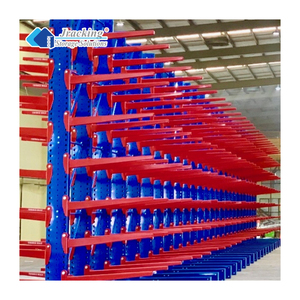
CE-Certified Industrial Warehouse Storage Shelves Heavy-Duty Cantilever Racking System for Cold Storage Pipe Storage
Cold-room-ready cantilever storage for pipe and long materials, with coating and steel specifications selectable for low-temperature facilities.
View product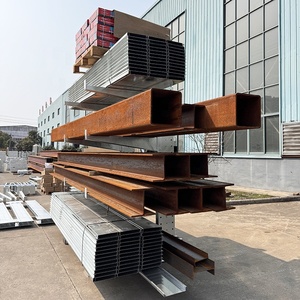
Outdoor Storage Corrosion Protection Hot-dip Galvanized Single Sided Cantilever Rack for Profile Storage
A corrosion-focused single-sided system for outdoor profile yards, coastal depots and humid environments where powder coating alone may be insufficient.
View product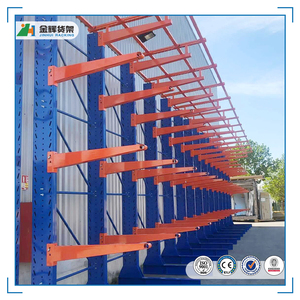
Heavy Duty Industrial Metal Cold Rolled Steel Aluminum Profile Storage Cantilever Pipe Rack Heavy Duty Cantilever Racking
Heavy-duty pipe and profile storage for fabrication shops and distribution yards, with arm spacing and load limits configured to your product mix.
View product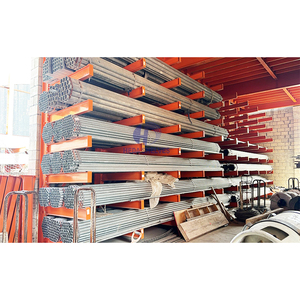
Maximum Storage Rack Heavy Duty Cantilever Racking System for Storing Long Pipes Lumber Adjustable Arms
Adjustable-arm cantilever racking for lumber yards and pipe warehouses where SKU dimensions and inventory profiles change over time.
View product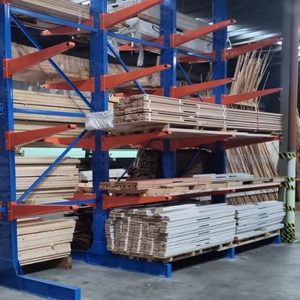
Cantilever Racking Wholesale Double-sided Heavy Pipe Warehouse Rack Industrial Heavy Duty Cantilever Racking Pallet Racking
Double-sided cantilever storage improves island density for high-volume long loads and supports two working faces in one structural footprint.
View product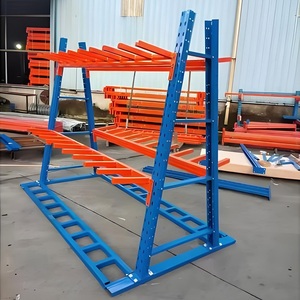
Industrial Warehouse a Shape Cantilever Rack Heavy Duty Steel Long Material Storage
An A-shape cantilever structure for long-material storage where stability, clear access and simple forklift handling are priorities.
View product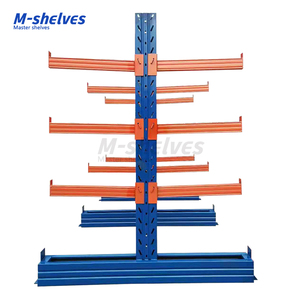
Freestanding Double Arm Storage Racks for Garage Heavy Duty Cantilever Racking for Large Workshop Tools Long Material Storage
Freestanding double-arm racking for workshops, garages and maintenance stores handling timber, metal sections and oversized tools.
View product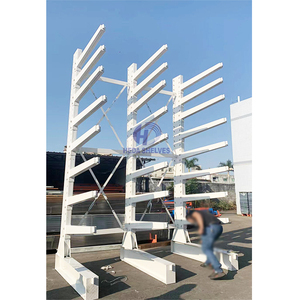
Industrial Storage Rack Heavy Duty Single/Double Side Cantilever Racking System for Car Storage Storing Large and Long Items
A flexible single- or double-sided platform for long items, vehicle components and industrial materials that require unobstructed lifting access.
View productCustom OEM Cantilever Racking: A Load-Path Product, Not a Catalogue Purchase
A credible custom OEM cantilever racking supplier does far more than bend steel and ship pallets. Cantilever racking carries bending moments through arms, uprights, bases and anchors. The design must match the load, the lift equipment, the building slab, the climate and the way operators actually retrieve material.
For buyers comparing suppliers, the most useful information gain is not a lower headline price. It is a verifiable engineering package: arm load capacity at a stated deflection, upright capacity at the required height, base and anchor calculations, coating specification, packing plan and installation documents. These details determine whether a quotation is buildable, insurable and safe after five or ten years of use.
This guide is written for procurement teams, distributors, 3PL operators, OEM contractors and warehouse engineers sourcing heavy-duty cantilever racking for pipes, lumber, profiles, steel bars, aluminium extrusions and other long loads. It explains what to request, how to compare suppliers and where the market is moving.
Information Gain: What to Demand First
Ask every cantilever racking manufacturer or trading company for four documents before approving a design.
Six Engineering Differences That Separate Reliable Suppliers
Cantilever systems look simple from a distance. The differences that matter are in the load path, the coating system, the documentation and the ability to modify a standard design for your exact handling conditions.
Arm-to-Upright Load Matching
The arm connection, weld pattern and upright section must be matched to the actual load center. A supplier that quotes only “two-ton arms” without stating the load position is not giving you engineering data. Ask for capacity at your real arm spacing and load center.
Load pathDeflection and Clear Height
Long loads deflect. If arm deflection is ignored, pipes can roll, lumber can sag and forklift clearance can disappear. Confirm allowed deflection, upright spacing and the clear height required for your lift equipment before approving a layout.
SafetyBase Design and Anchorage
Cantilever racking generates overturning forces that ordinary pallet racking may not. Base length, base plate thickness, anchor type and concrete strength should be coordinated. In seismic zones, additional bracing, row spacers and chemically anchored base plates may be required.
FoundationCoating for the Real Environment
Powder coating is suitable for many indoor warehouses. Coastal yards, cold stores and humid tropical depots often need hot-dip galvanized or pre-galvanized steel. Specify the environment first, then choose the coating; otherwise corrosion becomes a maintenance cost.
CorrosionAdjustability and Future SKU Changes
Long-load inventories change. Adjustable arms, multiple arm levels and bolt-on accessories can extend the life of the rack. The best suppliers design modularity into the first project so buyers are not forced to replace the entire system when profiles change.
ModularityDocumentation and Installation Support
Factory drawings, packing lists, anchor plans and installation manuals reduce site errors. For overseas projects, remote installation guidance or on-site supervision can be more valuable than a small discount. Ask who will answer technical questions during assembly.
HandoverRecommended Cantilever Configurations by Load Profile
Use this practical selector to narrow the product type before requesting a custom OEM quotation. The final design should still be validated with your load schedule, floor data and local requirements.
Cold Storage Pipe Racks
For chilled or frozen rooms, specify low-temperature-tolerant powder coating or galvanized components, minimize moisture traps and confirm that the slab and anchors are suitable for the cold environment.
Cold chainOutdoor Galvanized Yards
For profile yards and coastal depots, hot-dip galvanized single-sided cantilever racking provides corrosion resistance and straightforward forklift access. Confirm drainage and base ventilation to avoid standing water.
OutdoorPipe and Tube Fabrication
Double-sided or single-sided heavy-duty cantilever racking supports organized pipe storage near cutting and welding stations. Arm spacing should match pipe diameters and bundle weights.
PipeLumber and Long Boards
Lumber yards benefit from adjustable-arm cantilever racking with wide arm spacing and stable base design. For high-turnover retail yards, consider clear labels and safe operator access at each level.
LumberHigh-Density Double-Sided Aisles
Double-sided cantilever racking creates two storage faces within a compact structural footprint. It suits warehouses with enough aisle width for safe lifting and a steady flow of long products.
DensityWorkshop and Maintenance Stores
Freestanding double-arm racks organize metal sections, timber and oversized tools in workshops and maintenance stores where building columns are limited and access must remain flexible.
Workshop8 Data Points That Should Appear in Every Cantilever Racking Quotation
A complete technical quotation reduces rework. Use this checklist to compare suppliers on engineering quality, not just steel weight.
How Buyers Will Purchase Custom OEM Cantilever Racking Through 2030
Procurement is shifting from unit-price comparison to risk-adjusted total cost of ownership. These six trends are already visible in warehousing, cold chain, infrastructure and industrial distribution projects.
Total Cost of Ownership Bids
Buyers increasingly compare installation time, coating life, maintenance frequency, spare-part availability and downtime risk. A slightly higher racking price can be cheaper overall if it avoids corrosion repairs or production interruptions.
TCO modelBIM and Digital Layout Handover
Layouts are moving from PDF-only proposals to coordinated drawing files and digital handover packages. Suppliers who can provide clear 2D/3D layouts and revision-controlled drawings make facility planning easier.
Digital firstSeismic and Code Documentation
Projects in seismic regions require traceable design assumptions. Procurement teams will ask for zone data, slab assumptions, anchor schedules and a clear note on final validation by locally licensed engineers.
ComplianceESG and Durability Evidence
Longer service life, repairability and lower maintenance are becoming part of supplier scorecards. Hot-dip galvanizing and modular design help reduce material replacement and site waste over the asset lifecycle.
ESGNearshoring and Mixed Containers
As supply chains regionalize, buyers want flexible container loading, mixed SKU shipments and port-specific documentation. Suppliers with export experience can consolidate uprights, arms, bases and accessories efficiently.
LogisticsAutomation-Ready Interfaces
Even manually loaded cantilever racks should be designed with future automation in mind: clean load faces, predictable arm levels, safe sensor mounting points and stable base geometry.
Future fitIllustrative Procurement Cost Model
This illustrative model shows why the lowest steel price is not always the lowest project cost. Actual percentages vary by region, coating, installation scope and project risk.
What the Next Generation of Cantilever Racking Will Require
The product itself is evolving from welded steel structures into engineered storage assets with better durability, modularity and data-ready interfaces.
High-Strength Steel and Lean Sections
Optimized roll-formed sections and engineered weld details can improve stiffness while reducing unnecessary weight. Buyers should ask for section drawings and capacity calculations, not just total tonnage.
MaterialsHybrid Coating Systems
Pre-galvanized steel, phosphating, powder coating and hot-dip galvanizing will be specified in combinations based on environment. Coastal and cold-chain projects will increasingly demand documented corrosion protection.
CoatingsModular Adjustable Arms
Adjustable arm levels, bolt-on brackets and reusable components allow warehouses to adapt as pipe diameters, lumber lengths and customer profiles change. Modularity lowers future retrofit costs.
FlexibilitySensor-Ready Safety Design
Cantilever racks may be upgraded with load indicators, impact sensors or digital inspection tags. Product design should leave clean mounting points and avoid creating new hazards during retrofit.
Safety techFire and Cold-Chain Engineering
Refrigerated warehouses and high-piled storage demand tighter coordination with fire protection and building codes. Rack layout, flue spaces and sprinkler clearance should be reviewed early with local experts.
CodeCircular Design and Repairability
Bolted connections, replaceable arms and clear labeling make inspection, repair and relocation easier. A racking asset that can be reconfigured has more long-term value than a welded one-way structure.
LifecycleFactory-Direct OEM Capability for Cantilever Racking Projects
Lottot Storage Solutions Co., Ltd. has manufactured industrial racking since 2007, supplying distributors, contractors and end users with engineered storage systems and export-ready documentation.
Own Manufacturing Base
20+ automatic roll-forming lines, 30,000+ tons of annual capacity and about 600+ containers exported per year support stable OEM supply and consistent profile quality.
CapacityFree Engineering Support
Professional engineers provide layout design, product selection and itemized quotations, typically within 48 hours after receiving usable project data.
48h responseCE / ISO Quality Systems
CE and ISO certified materials and quality management, patented racking products and controlled production tolerances support demanding export projects.
QualityFast Production Cycles
Standard production is commonly 10–15 days after drawing approval. Factory-direct supply removes trading layers and keeps technical communication direct.
Lead time10-Year Warranty Coverage
Racking products are covered by a 10-year warranty against quality issues caused by design, manufacturing, transportation or installation guidance, subject to proper use and maintenance.
WarrantyExport Packing and Documents
Container loading plans, labels, packing lists, commercial invoices and installation documents help reduce site confusion and customs friction for overseas buyers.
Export readyIndicative Ocean Lead Times for Latin American Buyers
For projects in Mexico, Central America and South America, total lead time combines production, ocean transit and local customs clearance. Figures below are indicative and should be confirmed with each quotation.
Cantilever Racking Questions Buyers Ask Most
Clear answers to the technical and commercial questions that commonly appear during supplier comparison.
What is custom OEM cantilever racking?
It is a cantilever storage system manufactured to a buyer’s load schedule, dimensions, coating requirement, branding or project specification rather than supplied only from a fixed catalogue size.
How is load capacity determined?
Capacity depends on arm section, arm length, load center, upright section, base size, anchor condition and height. A proper supplier states capacity at the actual load position and checks deflection.
Should I choose single-sided or double-sided racking?
Single-sided racking is efficient against a wall or yard boundary. Double-sided racking creates two storage faces and higher density in an island layout, provided aisle width and forklift access are suitable.
When is hot-dip galvanizing recommended?
For coastal yards, high-humidity environments, outdoor storage and some cold-chain facilities, hot-dip galvanized or pre-galvanized components provide better corrosion resistance than standard powder coating.
Can cantilever racks be used outdoors?
Yes, with the correct coating, base design, drainage and anchor specification. Outdoor installations should also consider wind, water accumulation, site traffic and local building requirements.
Can you design for seismic zones?
Yes. We calculate upright, beam and anchor requirements using the seismic zone, soil class and floor slab data supplied for the site. Final validation by a locally licensed structural engineer is recommended.
What is the typical lead time?
Production is commonly 10–15 days after drawing approval. Ocean transit varies by destination and shipping schedule. For Latin America, indicative transit is about 18–30 days to Mexico and 30–45 days to some South American ports.
What should I send for a fast quotation?
Send your floor plan, clear height, load lengths and weights, pallet or bundle pattern, forklift type, slab data, destination port, coating preference, seismic zone and target installation date. Our team can then prepare a layout and itemized quotation.
Prepare a Buildable Cantilever Racking Quotation
Share your load schedule, warehouse plan, destination port and coating requirements. Our engineering team can review the application and recommend a custom OEM cantilever racking configuration with drawings, packing notes and an itemized quotation.
Include: load length and weight • arm spacing • building height • floor slab • forklift type • indoor/outdoor use • destination port.