OEM/ODM Pallet Warehouse Racking Product Portfolio
Start with storage physics, not a catalogue photo. The systems below cover selective access, high-density bulk, multi-level platforms and mobile storage so distributors and project buyers can match racking architecture to pallet profile, aisle width, throughput and building height.
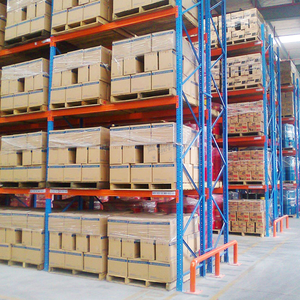
Combined Load-Row Connected Industrial Pallet Racking System Heavy Duty Warehouse Storage Racks 2000kg Steel
Best for continuous row layouts where connected load rows reduce aisle waste while keeping heavy-duty pallet access.
View product →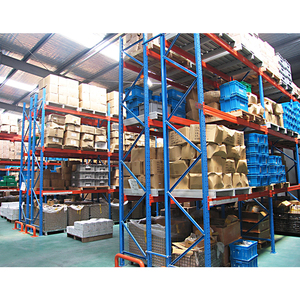
Standard Pallet Rack Warehouse Pallet Rack Assemble Racks Reliable Quality Heavy Duty Warehouse Pallet Racking System
A reliable selective pallet rack for distributors that need direct SKU access, simple expansion and fast installation.
View product →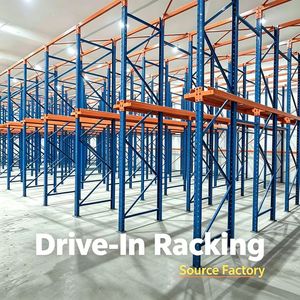
Drive-in Pallet Storage Racking System for Bulk Goods in Industrial Warehouse
Deep-lane bulk storage for homogeneous pallets in industrial warehouses where floor space utilisation matters more than instant selectivity.
View product →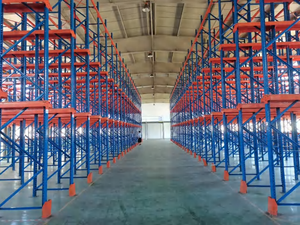
Custom Drive-in Pallet Racking System Industrial Steel Rack Electrostatic Powder Coating Forklift Access Storage Rack
Custom drive-in racking with electrostatic powder coating and forklift access for special loads and OEM/ODM branding.
View product →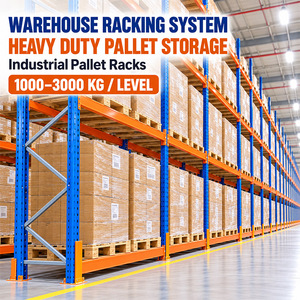
Warehouse Racking System for Heavy Duty Pallet Storage Industrial Pallet Racks
Heavy-duty industrial pallet racking for 2,000kg-class storage, multi-shift operations and 3PL distribution centres.
View product →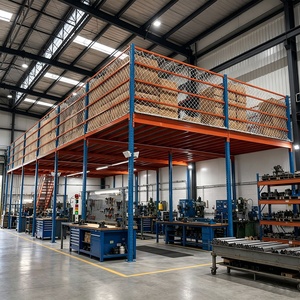
Heavy Duty Steel Mezzanine Platform Modular Multi-Level Warehouse Storage Rack Corrosion Protection
Modular mezzanine platforms add multi-level storage, picking and office space without expanding the building footprint.
View product →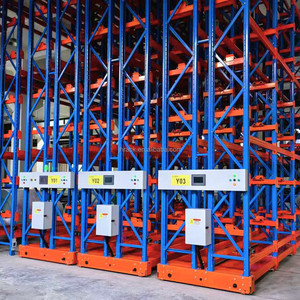
Industrial Heavy Duty High Efficiency Warehouse Electric Mobile Storage Shelf Automatic Mobile Racking System Pallet Rack
Electric mobile racking increases density and selectivity for high-efficiency warehouses with constrained floor space.
View product →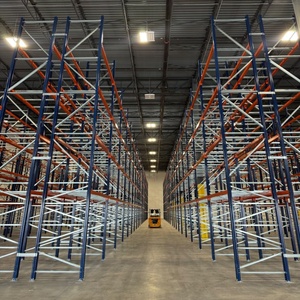
Multi-Tier Adjustable 5-Layer Durable Industrial Steel Beam Rack Pallet Storage Warehouse Heavy Duty 2000kg Custom
Adjustable five-layer beam racking for flexible multi-tier storage and custom warehouse planning in wholesale programmes.
View product →Why OEM/ODM Pallet Warehouse Racking Is an Engineering Decision, Not a Catalogue Purchase
Pallet racking is often bought as if it were a commodity: a pallet, a beam, an upright and a price per bay. In reality, it is a structural installation that interacts with the concrete slab, forklift aisle geometry, fire strategy, sprinkler clearance, seismic demand, humidity, roof height and the variability of incoming pallets.
That is why a credible OEM/ODM pallet warehouse racking manufacturer and wholesaler should begin with engineering data—not a stock photo. For distributors, 3PLs, contractors and end users, the most valuable information gain in the buying journey is a clear explanation of how load capacity, safety and total cost change when pallet weight, slab strength or local code requirements change. A quotation that lists only uprights, beams and quantities is incomplete unless it also states the design assumptions behind the load rating.
Three forces are reshaping procurement in 2025 and beyond. First, nearshoring is accelerating new plants and distribution centres in Mexico, Central America and parts of South America, creating demand for racking that can be shipped in standard containers, installed quickly and expanded in phases. Second, e-commerce and omnichannel retail are mixing pallet, carton and piece-picking profiles in the same building, so selective racking, carton flow, mezzanine platforms and mobile systems increasingly appear in one integrated layout. Third, buyers are becoming more professional: they ask for itemised BOMs, seismic calculations, powder-coating specifications, container loading plans and installation documentation. A wholesaler that cannot provide these details is effectively selling uncertainty.
The practical response is a modular OEM/ODM approach. Our engineering team at Lottot Storage Solutions Co., Ltd. has supported 3,500+ projects and exports at least 600 containers per year from our own production base. That volume matters because it produces repeatable engineering knowledge: which upright profiles carry heavy loads efficiently, where drive-in lanes need reinforcement, how to specify galvanising for coastal warehouses, and how to sequence container loading so large projects arrive complete. The objective is not simply to sell pallet racks; it is to reduce the risk of rework, under-designed anchors, blocked sprinklers or a layout that cannot be expanded when the business grows.
Product Recommendations by Operating Profile
Use this buyer-oriented matrix to narrow the system family before an RFQ is issued. Final selection still depends on pallet load, beam span, slab data, seismic zone and throughput.
High-SKU distribution
Choose selective pallet racking or connected load-row racking when every SKU needs direct access. Add carton flow at the pick face if piece picking is growing.
High-volume bulk storage
Drive-in, custom drive-in and mobile racking suit homogeneous pallets, seasonal inventory, beverages, paper and raw materials where storage density is critical.
Multi-level urban warehouses
Mezzanine platforms, modular multi-level racks and adjustable five-layer systems increase usable area without buying land or extending the building.
Cold chain and heavy duty
Powder-coated or galvanised heavy-duty racks support chilled, frozen, coastal and high-humidity environments where corrosion control is a design variable.
What Smart Wholesale Buyers Will Ask for in the Next Procurement Cycle
Price comparison is shifting toward evidence comparison. The racking supplier that can document load logic, installation sequence and lifecycle cost will win projects that used to be decided by a per-bay quote alone.
Seismic and slab-based engineering evidence
Buyers increasingly request seismic-zone assumptions, anchor specifications, slab strength and base-plate details before approving a racking layout. Generic catalogue capacities are no longer sufficient.
Total cost of ownership
Purchase price is only one line. Installation time, spare-part availability, damage repair, reconfiguration and warranty response are becoming part of the evaluation.
Container-optimised wholesale supply
Freight volatility makes loading plans important. A wholesaler that can optimise container payload and mixed SKU packing protects project margin and delivery certainty.
Modular and retrofit-ready systems
Warehouses no longer buy for a fixed five-year plan. Racking must be expandable, relocatable and compatible with future carton flow, shuttle or automation modules.
Corrosion specifications
Coastal ports, tropical humidity and cold rooms require more than standard paint. Buyers ask for phosphating, powder-coating thickness and galvanised options in writing.
Digital submittals and installation quality
3D layouts, anchor plans, parts lists, packing lists and bilingual installation manuals reduce site delays and make third-party inspections easier to pass.
From Static Steel to Connected Storage Infrastructure
Racking development is moving in two directions at once: stronger, simpler steel structures for conventional warehouses, and sensor-ready, automation-compatible designs for high-throughput facilities.
Higher-strength profiles and 2,000kg+ loads
Optimised roll-formed uprights and beams allow higher load ratings without wasteful over-engineering, especially for 2,000kg-class pallet storage and multi-tier racks.
Hybrid storage layouts
Selective racking, drive-in lanes, mobile bases and mezzanine platforms are increasingly combined inside one warehouse to balance selectivity, density and picking speed.
Smart safety and damage visibility
Corner alarms, impact protection, QR-coded uprights and digital inspection records are becoming practical tools for reducing rack damage and unplanned downtime.
Sustainable coatings and galvanising
Longer-life surface treatment reduces repainting and replacement. Hot-dip galvanised or pre-galvanised components are increasingly specified for humid and cold-chain sites.
Design for disassembly and reuse
Bolt-together racking is being valued not only for installation speed but also for relocation, reuse and end-of-project flexibility in leased warehouses.
BIM, 3D layout and digital twins
OEM/ODM buyers expect layout drawings that can be checked against columns, doors, sprinklers and forklift paths before production begins, reducing site clashes.
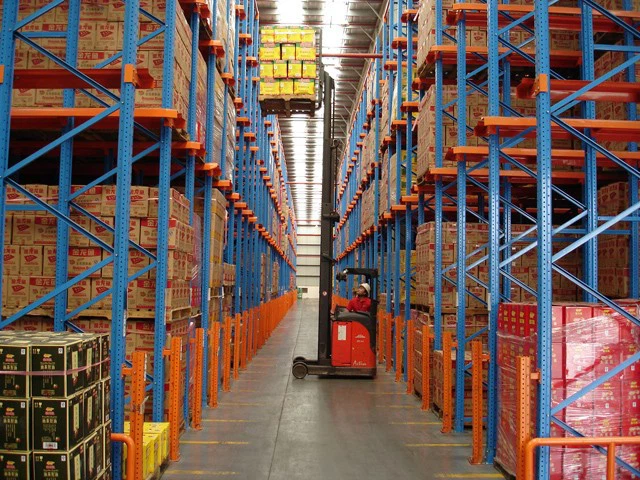
Factory-Direct OEM/ODM Experience You Can Verify
Lottot Storage Solutions Co., Ltd. has manufactured industrial pallet racking and warehouse storage systems since 2007. The person who calculates your load capacity sits within the same manufacturing organisation that builds, checks and ships the racking—so engineering assumptions, production tolerances and container loading are not disconnected from the sales quotation.
With 3,500+ projects delivered, exports to 60+ countries and at least 600 containers shipped each year, our team has worked through the practical failures that overseas buyers care about: short container loads, missing accessories, coating damage, unclear anchor plans and layouts that ignore local seismic requirements.
- Patented racking products with independent intellectual property
- 20+ automatic roll-forming lines for consistent profiles
- CE and ISO certified materials and quality management
- Free 2D/3D layout and itemised quotation within 48 hours
High Quality
CE and ISO certified materials, controlled roll-forming tolerances and quality recognised by clients in 60+ countries.
Engineering Service
Free consultation with professional engineers, warehouse layout design and an optimal storage solution for your operation.
Competitive Price
Factory-direct supply without trading layers—transparent, itemised quotations for distributors and project contractors.
Fast Delivery
20+ production lines and 30,000 tons of annual output secure delivery in 10–15 days after drawing approval.
What a Serious OEM/ODM Wholesale RFQ Should Include
Incomplete data is the most common cause of re-quotes, delays and site problems for overseas racking projects. Sharing the right information upfront lets the manufacturer produce a buildable design on the first pass.
Warehouse CAD/PDF showing columns, doors, clear height and obstructions.
Pallet size, maximum load weight, overhang and expected quantity.
Forklift type, lift height, turning aisle and handling attachments.
Floor slab thickness, concrete strength and flatness data.
Seismic zone, local code requirements and permit conditions.
Temperature, humidity, washdown and corrosion exposure.
Destination port, preferred Incoterm and target installation date.
RAL colour, branding, label language and documentation requirements.
Indicative Storage-System Selection Weighting
Typical project criteria used to shortlist system families. Actual design depends on pallet load, slab, seismic, throughput and fire strategy.
Pallet Warehouse Racking Purchasing Questions
Direct answers for distributors, contractors and warehouse owners comparing an OEM/ODM manufacturer and wholesaler.
Do you ship warehouse racking to Central and South America?
Yes. We ship full-container and consolidated loads to major Latin American ports including Manzanillo, Veracruz, Puerto Quetzal, Puerto Cortés, Colón, Balboa, Cartagena, Buenaventura, Guayaquil, Callao, San Antonio, Valparaíso, Santos and Buenos Aires under FOB, CFR or CIF terms, with DDP available on request.
Can pallet racking be designed for seismic zones?
Yes. Our engineers calculate upright, beam and anchor requirements using the seismic zone, soil class and floor slab data of your site, and typically specify reinforced base plates, heavier bracing, row spacers and chemical anchors. We recommend final validation by a locally licensed structural engineer.
How do you protect steel racking in humid or coastal warehouses?
Standard components receive phosphating pre-treatment and electrostatic powder coating. For coastal, high-humidity or cold chain facilities we offer hot-dip galvanised or pre-galvanised components for longer corrosion resistance.
What is the lead time for a racking order?
Production usually takes 10 to 15 days after drawing approval. Indicative ocean transit from China is about 18 to 25 days to Mexican Pacific ports and about 30 to 45 days to South American ports, depending on carrier and routing.
What warranty do you provide on racking systems?
All racking products are covered by a 10-year warranty against quality issues caused by our design, manufacturing, transportation or installation guidance.
What is the OEM/ODM wholesale process?
Send your layout, pallet data, seismic zone and destination port. We confirm the suitable racking family, provide a free 2D/3D layout and itemised quotation, then produce custom colours, labels, drawings and packaging for approved OEM/ODM programmes. MOQ and production schedule depend on the system mix and project volume.
Send Your Warehouse Data, Not Just a Price Request
Share your floor plan, pallet load, forklift aisle, slab information, seismic zone and destination port. We will return a free 2D/3D layout, load check, itemised quotation and container-loading plan within 48 hours.