Industrial Grade Steel Selective Pallet Rack Snap-in Connection for Logistic Center Inventory
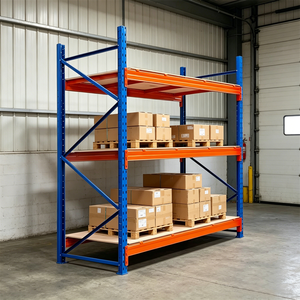
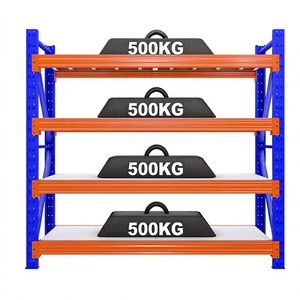
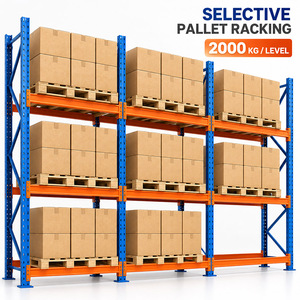
100% direct access to every pallet — the baseline system for mixed-SKU warehouses and the ideal complement to high-density push back lanes.
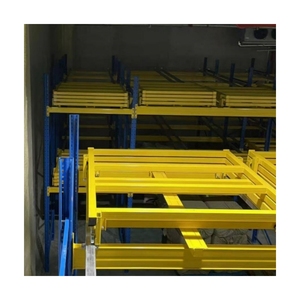
View productPush back pallet racking is a high-density storage system where pallets rest on nested carts that roll back along inclined steel guide rails. When one pallet is retrieved, the pallets behind it roll forward automatically under gravity — delivering LIFO storage with two to six pallets deep per lane and typical floor-utilization gains of 35–60% compared with selective pallet racking.
For distributors, 3PL operators and private-label racking brands sourcing from Asia, the real question is not "who sells push back racking," but who can engineer it, brand it, and ship it without creating rework, customs delays or warranty disputes. Lottot Storage Solutions Co., Ltd. has manufactured industrial racking since 2007 from its own facility in Nanjing, China — exporting at least 600 containers per year and completing more than 3,500 warehouse projects across 60+ countries, including Mexico, Central America and South America.
This guide explains how OEM and ODM push back racking projects are actually structured, what to specify in a technical brief, which procurement and product trends are reshaping the category in 2025 and beyond, and how to compare manufacturers on the criteria that matter after the container arrives.
Push back racking rarely works alone. These are the systems most frequently paired with push back lanes in high-density warehouses — each available as OEM (your brand, our design) or ODM (our design, your brand).

100% direct access to every pallet — the baseline system for mixed-SKU warehouses and the ideal complement to high-density push back lanes.
View product
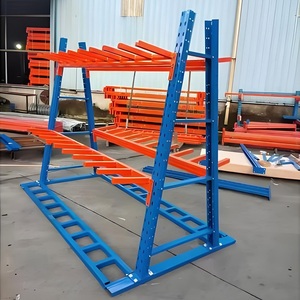
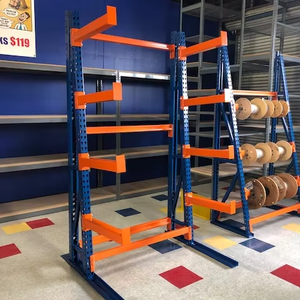
Side-loading arms for pipes, timber, profiles and steel bar — clear frontal access without obstruction for long-load operations.
View product
Engineered for pipe, tube and bar stock where vertical storage maximizes floor space and avoids surface damage during retrieval.
View product
Adjustable beam levels and electrostatic powder coating — a workhorse system for distributors requiring flexible reconfiguration.
View product
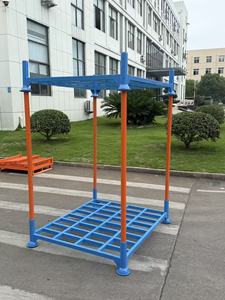
Stackable and collapsible for high-volume tire storage and return logistics — a common OEM accessory for automotive aftermarket clients.
View product
Factory-direct medium duty shelving with corrosion protection — suited to spare parts, retail backrooms and light picking zones.
View product
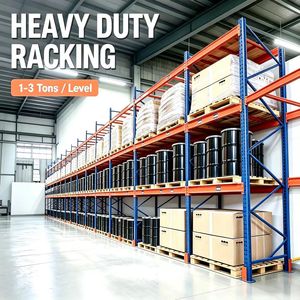
High-load uprights and beams for pallet weights beyond standard selective racking — often specified alongside deep push back lanes.
View product
The core push back system — nested rolling carts, LIFO access, 2–6 pallets deep, and the OEM/ODM entry point for most high-density projects.
View productBuyers often use the terms interchangeably. They are not the same, and the difference directly affects your engineering cost, lead time and legal liability.
You supply the drawings, profile specifications, RAL color and branding. We roll-form, weld, powder-coat and inspect to your tolerances. Best for established racking brands with in-house engineering that need reliable, high-volume production capacity in Asia.
Our engineers develop the push back racking design — including cart geometry, rail inclination, load calculations and seismic detailing — and manufacture it under your label. Fastest route to market for distributors and 3PLs entering the category.
You provide the brief and market requirements; we handle engineering, prototyping and certification support. Most common in Latin America, where seismic codes and local installer preferences shape final design details and certification expectations.
These are the engineering directions shaping new push back racking designs in 2025 and beyond — and the specifications smart buyers are already writing into tenders.
RFID tags and load sensors on rolling carts enable real-time lane occupancy data — turning push back racking into a measurable asset rather than a passive structure.
Refined cart stacking geometry pushes practical lane depth from four to five or six pallets while keeping retrieval effort within acceptable operator limits.
Hot-dip galvanizing and pre-galvanized profiles for cold-chain, coastal and tropical facilities — increasingly standard in Latin American and Southeast Asian tenders.
Reinforced base plates, heavier bracing and row spacers calculated against site-specific seismic zones and soil classes — driven by stricter enforcement in Chile, Peru and Mexico.
Bolt-together frames and standardized cart modules support warehouse relocations and phased expansion — critical for lease-based 3PL operations.
Load test reports, weld inspection records and material certificates packaged with every OEM/ODM shipment — rising buyer expectation in regulated markets.
Procurement patterns in the racking category have shifted meaningfully since 2022. These four trends explain why more buyers are consolidating around fewer, more capable OEM/ODM manufacturers.
Buyers increasingly evaluate landed cost including container fill efficiency, damage rate, installation rework and warranty claims — not the FOB price per ton. Container loading optimization now decides more contracts than a 3% price difference.
Instead of splitting racking across 4–5 traders, procurement teams consolidate with one manufacturer that can supply selective, push back, cantilever and shelving under a single quality system and single bill of lading.
Distributors and 3PLs are launching their own racking brands using ODM production — capturing margin currently held by regional importers and controlling their own after-sales narrative.
Seismic calculations, load test certificates, material trace reports and installation manuals are now requested during RFQ — not after the order. Vendors unable to provide them are being filtered out early.
Manufacturing shifts toward Mexico and Central America are driving new DC construction — and with it, demand for high-density systems that maximize square footage in expensive, well-located buildings.
CAD uploads, video layout reviews and 48-hour digital quotations have replaced week-long email exchanges. Manufacturers that cannot respond within two business days are losing shortlisted positions.
Four verifiable commitments that matter when your supplier operates an ocean away from your warehouse.
CE and ISO certified materials, controlled roll-forming tolerances and quality recognized by clients in 60+ countries — including patented racking products with independent intellectual property.
Free consultation with professional engineers, free 2D/3D warehouse layout design, load calculations and accurate itemized quotation within 48 hours.
Factory-direct supply with no trading layers — transparent, itemized quotations for distributors, project contractors and private-label racking brands.
20+ automatic roll-forming lines and 30,000 tons of annual output secure delivery in 10–15 days after drawing approval — with optimized container loading plans.
10-Year Warranty Insurance. All racking products are covered for ten years against quality issues caused by our design, manufacturing, transportation or installation guidance — the same commitment applied to OEM and ODM production under your brand.
A five-step workflow refined across 3,500+ international projects and 600+ exported containers per year.
Building plan, pallet data, handling equipment, seismic zone and brand requirements.
Free 2D/3D layout, load calculations and itemized quotation within 48 hours.
Manufacturing in 10–15 days with inspection, load check and branding confirmation.
Optimized container loading and full export documentation prepared for customs.
Installation drawings, manuals, remote guidance or on-site supervision.
The questions procurement teams ask most often when sourcing OEM/ODM push back racking from a Chinese manufacturer.
Send your floor plan, pallet data and brand requirements. Our engineers will return a free 2D/3D layout, load calculation and itemized OEM/ODM quotation within 48 hours.
Get a Quote