OEM/ODM Racking Pallet Systems Are Engineered Products, Not Commodity Lists
Pallet racking is not a catalog commodity. When a distributor in Mexico, a 3PL in Colombia, or an end user in Chile buys an OEM/ODM racking pallet system, the real product is engineering certainty: upright load tables that match the building slab and seismic zone, beam deflection data, coating specifications for humidity, container loading plans that reduce damage, and documentation that clears customs. This is why the difference between a low quoted price and a low total landed cost is usually hidden in the details.
Lottot Storage Solutions Co., Ltd. has manufactured industrial storage systems since 2007. We export at least 600 containers every year and have completed more than 3,500 warehouse solutions across 60+ countries. Our engineers work directly with distributors, project contractors, and warehouse end users, so the team calculating your load capacity is the same team that builds, checks, and ships your racking. This guide shares the information gain buyers need to evaluate an OEM/ODM racking pallet system supplier — not just compare price per kilogram.
OEM vs. ODM matters. OEM programs usually require private-label packaging, buyer-specific drawing numbers, localized load tables, and document control. ODM programs benefit from proven designs, faster engineering cycles, and lower tooling risk, but the buyer still owns final specification review. In both cases, request the upright section properties, beam load-deflection tables, anchor calculations, coating specification, and installation drawings before approving the purchase order.
For export buyers, the most valuable supplier is not the one that can merely form steel. It is the one that can translate a warehouse plan into a buildable, code-aware, container-efficient package with clear assumptions. That standard separates a project-ready OEM/ODM supplier from a trading intermediary.
Information Gain: What to Demand Before You Approve the PO
Use this short list as a technical due-diligence screen for any racking pallet system exporter.
- Upright and beam load tables, including deflection limits
- Seismic calculation basis, slab data, and anchor assumptions
- Powder coating thickness, pretreatment, and corrosion options
- Container loading plan and export packing method
- Spare parts list, frame protector plan, and warranty exclusions
- Installation drawings, manuals, and supervision scope
8 Racking Pallet System Configurations for OEM/ODM Programs
The eight configurations below are practical starting points for warehouse projects. Final design must be checked against pallet size, weight, lift height, aisle width, floor slab, local code, and operating temperature. Product links are preserved so your procurement team can review the specification directly.
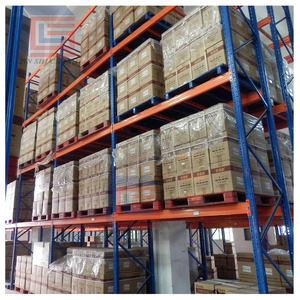
Industrial Heavy Duty Steel Pallet Rack Warehouse Shelving System
Selective racking for distribution centers, factories, and multi-SKU warehouses. Direct access to every pallet.
View specifications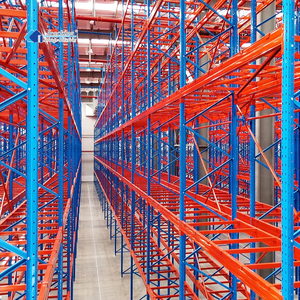
High Density Steel Storage Racks EU Standard Adjustable Pallet Racking
Adjustable beam levels and EU-standard profiles for flexible warehouse storage and export programs.
View specifications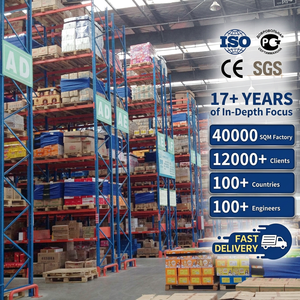
High Capacity Selective Pallet Racking System — AS 4084-2023
High-capacity selective racking engineered for projects requesting Australian compliance and industrial loads.
View specifications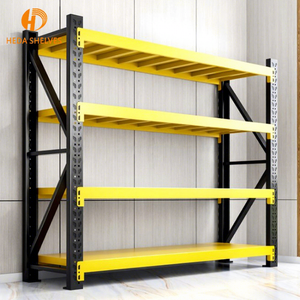
Boltless Adjustable Heavy Duty 500 kg/Layer Steel Racking
Boltless assembly with adjustable levels for fast-moving industrial storage, shelving, and warehouse organization.
View specifications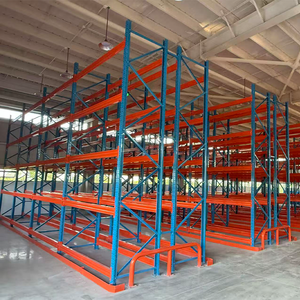
Engineering Design Pallet Rack System with Wire Deck
Engineered selective racking with wire deck options for sprinkler performance, product protection, and safer storage.
View specifications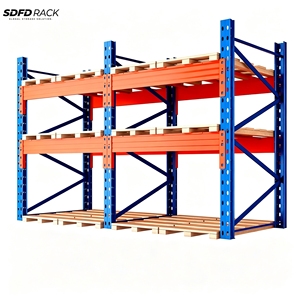
Heavy Duty High-Load Industrial Pallet Racking — 3,000 kg/Level
For bulk distribution and manufacturing where pallet loads reach 3,000 kilos per level.
View specifications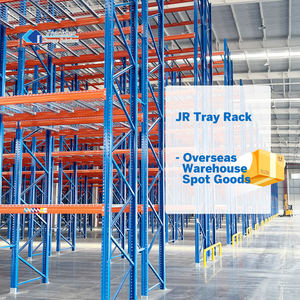
Customized Euro Standard Steel Pallet Racking System
Tailored Euro-standard racking for logistics centers, with custom dimensions, colors, and export documentation.
View specifications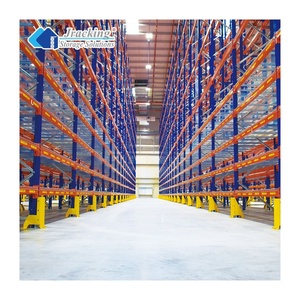
Heavy Duty Selective Pallet Racking System — Euro Standard
Vertical warehouse storage with direct access, adjustable beams, and export-ready steel profiles.
View specificationsNeed a different height, load rating, coating, color, or private-label drawing package? Share your pallet data and building plan — our engineers will recommend the right configuration instead of forcing a catalog item.
Product Recommendations: Match the Racking Pallet System to the Storage Profile
A supplier can quote any system, but a qualified OEM/ODM partner should recommend the configuration that fits turnover, SKU count, building height, and local compliance. These six starting points help procurement teams frame the technical conversation.
Selective Pallet Racking for Maximum SKU Access
Best for distributors, retail DCs, spare-parts warehouses, and operations with a broad SKU mix. Every pallet is directly accessible, making selective racking the most flexible choice when inventory changes frequently.
- Verify beam load-deflection data and upright capacity
- Plan forklift aisle width against the actual truck model
Drive-In and Double-Deep Racking for Dense, Low-SKU Storage
Use drive-in or double-deep designs when pallet selectivity is less important than cubic utilization. They are common for homogeneous goods, seasonal stock, and high-volume products where aisle space is expensive.
- Confirm FIFO or LIFO inventory rules before layout
- Check forklift reach, lane depth, and rail strength
Radio Shuttle Racking for Cold Chain and Beverage Throughput
Radio shuttle systems reduce forklift travel inside lanes and are well suited to cold rooms, beverage plants, and agro-export warehouses where labor time and temperature control are critical.
- Confirm shuttle load, battery strategy, and maintenance access
- Review cold-room steel grade and coating compatibility
Carton Flow and Mezzanine Systems for Picking Productivity
E-commerce, pharmacy, and retail replenishment operations often combine carton flow for fast-pick SKUs with a structural mezzanine for picking, packing, or light storage. This separates picking from reserve storage and shortens travel.
- Validate live-load capacity and stair/guardrail scope
- Coordinate sprinkler, lighting, and fire-safety review
Cantilever Racking for Long Loads and Building Materials
For pipes, timber, steel bars, profiles, and oversized building materials, cantilever racking removes front uprights and allows long loads to be stored and retrieved safely. It is widely used in mining, construction, and metals distribution.
- Confirm arm capacity and load center distance
- Review base stability and outdoor coating options
AS/RS-Ready Racking for an Automation Roadmap
Even manual warehouses should reserve space and structural tolerances for future automation. AS/RS-ready racking requires tighter interface control, dynamic load data, and integration with WMS, stacker cranes, or shuttle systems.
- Define interface coordinates and tolerance stack-up
- Clarify controls, safety, and commissioning responsibilities
OEM/ODM Racking Pallet System Procurement Trends for 2025–2030
Buyer intent is shifting from "who has the lowest FOB price" to "who can deliver a compliant, buildable, and lifecycle-managed racking package." These six trends are reshaping RFQs from Mexico and Central America to South America and other export markets.
Nearshoring Is Reshaping Racking Demand
Mexico, Central America, and parts of South America are attracting manufacturing and distribution investment. Buyers now ask for faster engineering response, mixed-pallet layouts, bilingual labels, and spare-parts availability rather than one-off container prices.
Semantic intent: nearshoring warehouse rackingSeismic and Local-Code Proof Is Moving from Optional to Required
Projects in Chile, Peru, Ecuador, Mexico, and the Central American corridor increasingly require site-specific seismic assumptions. A credible supplier should document anchor design, bracing, row spacers, and the calculation basis, with final validation by a locally licensed engineer.
Semantic intent: seismic pallet racking supplierTotal Landed Cost Replaces the FOB Price
Procurement teams now compare freight, packing damage, installation support, spare parts, warranty, and downtime risk. A lower ex-works price can become expensive if the shipment arrives with damaged uprights or incomplete anchor data.
Semantic intent: pallet racking total costContainer Optimization Becomes an Engineering Task
Long ocean routes make packaging quality and container fill rate part of the commercial proposal. Better suppliers provide loading plans, bundle drawings, anti-rust protection, and nesting logic for beams and uprights to reduce freight cost and transport damage.
Semantic intent: racking container loadingAutomation-Ready Layouts Are Requested Earlier
Warehouse owners now ask for racking that can support a future shuttle, AMR, or AS/RS phase without rebuilding the entire storage field. This requires coordination between rack geometry, WMS data, and materials-handling equipment.
Semantic intent: AS/RS ready pallet rackingESG and Corrosion Life Enter RFQ Scoring
Hot-dip galvanizing, recyclable steel, durable powder coating, and longer service life are becoming measurable criteria in humid, coastal, and cold-chain environments. Buyers want fewer repainting cycles and lower lifecycle waste.
Semantic intent: galvanized warehouse rackingProduct Development Trends Buyers Should Write Into the RFQ
These design directions are not marketing extras. They affect load safety, installation time, maintenance cost, and the ability to expand the warehouse without replacing the entire system.
High-Strength Steel and Optimized Sections
Optimized upright and beam profiles can reduce steel weight while maintaining capacity. Buyers should compare actual section properties and load tables, not just total tonnage of the shipment.
Hot-Dip Galvanized and Pre-Galvanized Finishes
For coastal ports, high humidity, and cold rooms, coating selection matters as much as steel thickness. Specify pretreatment, coating thickness, and whether hot-dip galvanizing is required.
Modular Bolted Frames and Damage Protection
Modular frames simplify shipment and future expansion. Frame protectors, end guards, and replaceable components reduce downtime in busy loading and picking areas.
Digital Drawing Packs and Layout Data
Buyers increasingly request DWG, PDF, itemized BOM, and installation drawings that can be shared with local contractors and structural reviewers before shipment.
Sensor-Ready Inspection and Rack Protection
Rack safety depends on inspection discipline. Design layouts with clear inspection routes, replaceable damage zones, and future sensor mounting points for smart warehouse programs.
Interfaces for Shuttle, AMR, and AS/RS
Even if automation is years away, reserve tolerance space, power/data pathways, and clear interface responsibilities. Retrofitting automation into a non-compatible rack is far more expensive than planning for it.
What Procurement Teams Weigh in OEM/ODM Racking RFQs
Use this scoring framework to compare suppliers beyond price. The weighting should be adjusted to your project risk, site location, and local code requirements. It is a discussion tool, not a warranty statement.
Why Lottot Racks Is a Qualified OEM/ODM Racking Pallet System Supplier
Since 2007, Lottot Storage Solutions Co., Ltd. has manufactured industrial storage systems in its own facility. With 20+ automatic roll-forming lines, 30,000 tons of annual output, at least 600 containers exported per year, 3,500+ projects delivered, and 60+ export countries, we operate as a manufacturer rather than a trading layer.
High Quality
CE and ISO certified materials and quality management, patented products with independent intellectual property, controlled roll-forming tolerances, and inspection before packing.
Engineering Service
Free consultation with professional engineers, free warehouse layout design, 2D/3D drawings, load calculations, and itemized quotations within 48 hours.
Competitive Price
Factory-direct supply without trading layers, transparent quotations for distributors and project contractors, and container-optimized packaging to reduce landed cost.
Fast Delivery
20+ production lines and 30,000 tons of annual capacity secure standard production in 10–15 days after drawing approval, with export documents prepared accurately.
10-Year Warranty Insurance. We cover all racking products for ten years and resolve quality issues caused by our design, manufacturing, transportation, or installation guidance.
RFQ Checklist for OEM/ODM Racking Pallet System Buyers
Incomplete data is the most common cause of re-quotes, delay, and unsafe assumptions in overseas racking projects. Send these details upfront to receive a buildable layout instead of a price-only sketch.
Frequently Asked Questions from OEM/ODM Racking Buyers
These answers address the practical questions distributors, contractors, and warehouse owners ask before selecting an export racking pallet system supplier.
What is the difference between an OEM and ODM racking pallet system supplier?
An OEM supplier manufactures to your drawing, brand, packaging, and documentation requirements. An ODM supplier offers a proven design that can be customized for your project. Both require clear load data, approval drawings, and final specification review before production.
Can racking be designed for seismic zones in Chile, Peru, Mexico, and Central America?
Yes. Our engineers calculate upright, beam, bracing, and anchor requirements using the seismic zone, soil class, and floor slab data of the site. We typically review reinforced base plates, heavier bracing, row spacers, and chemical anchors. Final validation by a locally licensed structural engineer is recommended.
What is the minimum order quantity for OEM/ODM pallet racking?
MOQ is project-specific. Because racking ships by container, the economic order quantity is usually driven by container fill, product mix, and project phasing. We quote small replacement orders and full-container OEM/ODM programs separately.
How long is production and delivery to Latin America?
Production usually takes 10–15 days after drawing approval. Indicative ocean transit from China is about 18–25 days to Mexican Pacific ports and about 30–45 days to South American ports, depending on carrier, routing, and customs clearance.
How do you protect racking from humidity, salt air, and cold-chain conditions?
Standard components receive phosphating pretreatment and electrostatic powder coating. For coastal, high-humidity, or cold-chain facilities, we offer hot-dip galvanized or pre-galvanized components to improve corrosion resistance and service life.
What documents are included for export and customs clearance?
Commercial invoice, packing list, bill of lading, and certificate of origin are prepared for the shipment. Spanish or Portuguese part labels and other buyer-specific documents can be provided on request to support smoother clearance.
Can you customize colors, packaging, and load tables for our brand?
Yes. OEM/ODM programs can include private-label packaging, buyer drawing numbers, RAL color selection, localized load tables, and branded documentation. Customization scope should be confirmed in the approved drawing package before production.
What warranty and installation support do you provide?
Racking systems are covered by a 10-year warranty against quality issues caused by our design, manufacturing, transportation, or installation guidance. Installation support can include drawings, manuals, remote guidance, or on-site supervision depending on the project scope.
Planning an OEM/ODM Racking Pallet System Project?
Send your floor plan, pallet data, load requirements, and destination port. Our engineering team will return a racking layout, load calculation, and itemized quotation within 48 hours — with export packing and documentation matched to your project.