8 Industrial Shelving and Storage Systems Recommended for Global Procurement
These eight systems cover high-intent buying paths: FIFO pallet flow, selective pallet racking, cantilever storage for long loads, multi-tier steel shelving, teardrop racking, AS 4084 export racking, push-back high-density storage and custom cantilever arms. They are manufactured in our own facility and can be configured with corrosion protection, seismic detailing and export documentation.
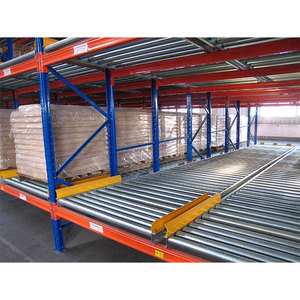
Q235 Steel 2000kg FIFO Pallet Flow Rack System
High-density gravity flow storage for FIFO inventory control, designed around 2,000 kg pallet loads and reduced aisle demand.
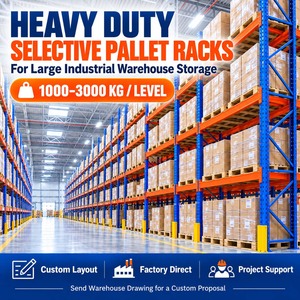
Heavy Duty Selective Pallet Racks
Direct access to every pallet with adjustable beams — the most flexible choice for distributors and warehouses with many SKUs.
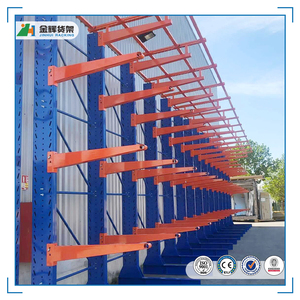
Heavy Duty Cantilever Pipe Storage Rack
Cold rolled steel cantilever racking for pipes, aluminum profiles, tubes and long materials that do not fit standard pallet beams.
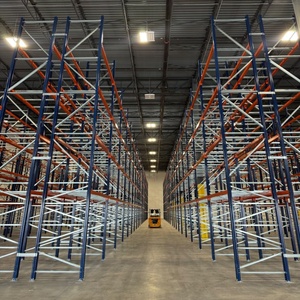
Adjustable 5-Layer Steel Pallet Storage Rack
Multi-tier steel beam rack for dense pallet storage, with 2,000 kg load options, custom colors and adjustable level spacing.
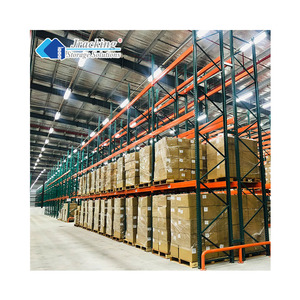
Teardrop Pallet Racking for Logistics Centers
JRACKING heavy duty steel teardrop pallet racking with scalable beams and uprights for logistics centers and distribution hubs.
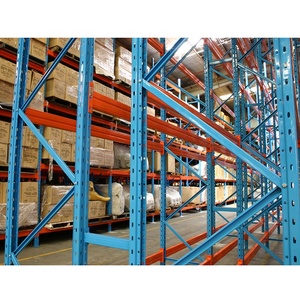
AS 4084 Steel Pallet Racking System
Australian standard pallet racking for garages, warehouses and export projects needing familiar AS 4084 configuration.
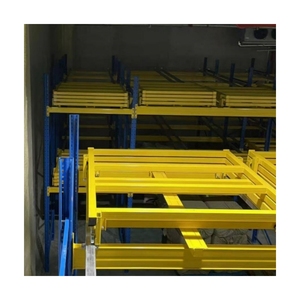
Heavy Duty Push Back Pallet Racking
High-density LIFO pallet storage that reduces aisle space while keeping multiple pallets accessible from the same face.
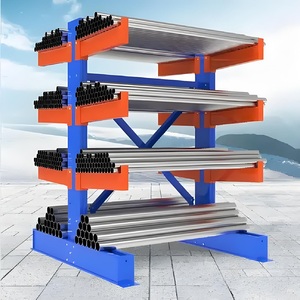
Custom Heavy Duty Cantilever Storage Rack
Adjustable-arm cantilever rack with CE corrosion protection options for long stock, pipe yards and building-material warehouses.
Why Buyers Trust Lottot Storage Solutions as a Manufacturer, Not a Middleman
Lottot Storage Solutions Co., Ltd. has manufactured industrial racking and warehouse storage systems since 2007. Our own facility runs more than 20 automatic roll-forming lines and exports at least 600 containers every year, with more than 3,500 warehouse projects delivered to 60+ countries.
A traceable engineering path from load calculation to container loading
For a buyer, the practical difference of working with a factory is traceability: the engineer who calculates beam deflection, upright capacity and anchor requirements is part of the same organization that controls roll-forming tolerances, powder coating, packing and shipment. That is a very different risk profile from buying catalog shelving through layers of traders.
We support distributors, project contractors, 3PLs and end users with free 2D/3D layout design, itemized quotations, load calculations, export packing and installation guidance. For humid, coastal or cold-chain warehouses, we also specify phosphated powder coating or hot-dip galvanized components based on the real operating environment.
- Patented racking products with independent intellectual property; CE and ISO certified materials and quality management.
- 20+ automatic roll-forming lines, 30,000 tons annual output and 10–15 day standard production after drawing approval.
- Free warehouse layout, load calculation and itemized quotation response within 48 hours.
- 10-year warranty against quality issues caused by our design, manufacturing, transportation or installation guidance.
- Export documentation, container loading plans and optional Spanish or Portuguese labels on request.
What Industrial Storage Buyers Now Evaluate Before They Approve a Supplier
Price per kilogram is no longer a reliable proxy for value. Sophisticated buyers evaluate storage as an engineered asset: how much usable pallet-position capacity it releases per cubic meter, how quickly it can be installed, how much freight it consumes and whether it can absorb future automation.
Total cost per usable pallet position
A lower quote can lose value if beams are over-specified, lanes are too wide or components cannot be reconfigured. Compare cost per usable pallet position, not only cost per tonne. Ask for a layout that tests selective, drive-in, push-back and pallet flow options against your SKU profile.
Seismic and safety documentation
In Chile, Peru, Ecuador, Mexico and Central America, seismic demand changes upright bracing, base plates and anchor requirements. Provide zone, soil class and slab data; ask for calculations; and validate the final design with a locally licensed structural engineer.
Automation-ready racking design
Even manually operated warehouses now reserve power, network and clear height for shuttle, AS/RS or WMS-guided picking. Modular beams and standardized uprights protect future expansion options while keeping today’s capital spend focused on current throughput.
Corrosion and cold-chain performance
Coastal humidity and chilled or frozen rooms change coating decisions. Phosphated powder coating is standard; hot-dip galvanized or pre-galvanized components are the correct conversation for ports, seafood, dairy, fruit and cold-chain facilities.
Container-optimized landed cost
Container loading plans, nesting accessories and mixed loads materially affect landed cost. Confirm Incoterms, destination port, unloading equipment and import labeling requirements before production, not after the container is booked.
Audit-ready supplier transparency
CE and ISO documentation, inspection photos, packing lists, certificates of origin and responsive engineering reduce clearance risk and rework. Trust is easier to verify when the supplier is the factory that formed, welded, coated and packed the steel.
How Industrial Shelving and Warehouse Storage Products Are Evolving
The strongest storage projects are not built around a single catalog item. They combine selective access, high-density lanes, multi-level picking and safety accessories into a system that can be maintained and expanded.
High-density systems with a selectivity trade-off
Radio shuttle, drive-in and push-back racking continue to displace pure selective layouts where SKU counts are low and pallet volumes are high. The design question is not “which system is most advanced” but which system maximizes pallet positions without creating an unacceptable selectivity penalty.
Multi-tier mezzanine and micro-fulfillment
Rack-supported mezzanines and multi-tier shelving turn vertical height into pick faces for e-commerce, spare parts, pharma and retail replenishment. Structural integration, stair access, guardrails, fire strategy and floor loading matter more than component price alone.
Modularity and adjustable beam pitch
Buyers prefer adjustable beam pitch, demountable frames and standardized accessories because product profiles change. Components that can be reconfigured reduce future stranded capital and make phased warehouse expansion easier to budget.
AS/RS and WMS-ready interfaces
Automation-ready racking is becoming a procurement requirement in larger distribution centers. Accurate interface tolerances, clear height verification and digital load data reduce commissioning risk when a manual warehouse later adds shuttle or AS/RS technology.
Durable, lower-maintenance coatings
Powder coating is increasingly evaluated for durability, repairability and process control. Hot-dip galvanizing competes on life-cycle corrosion cost in humid and coastal environments, while repairable touch-up systems extend service life after forklift contact.
Safety accessories as standard scope
Column guards, row spacers, pallet stops, corner alarms, anchor inspection signage and load notices are moving from optional extras into standard project scope. This is especially important in high-traffic 3PL and cold-chain warehouses.
Factory-Direct Quality, Engineering Support and Delivery Control
Four commitments matter when your supplier is an ocean away: verifiable quality, responsive engineering, transparent pricing and production capacity that protects your installation schedule.
High Quality
CE and ISO certified materials, controlled roll-forming tolerances and quality recognized by clients in 60+ countries. Inspection before packing helps catch dimensional or coating issues before shipment.
Engineering Service
Free consultation with professional engineers, free warehouse layout design and the optimal storage solution for your operation — including load calculations, accessory selection and installation drawings.
Competitive Price
Factory-direct supply with no trading layers — transparent, itemized quotations for distributors and project contractors, with clear component quantities, coating specifications and freight terms.
Fast Delivery
20+ production lines and 30,000 tons of annual output secure delivery in 10–15 days after drawing approval, supported by container loading plans that protect payload and reduce damage in transit.
Procurement Checklist for High-Value Racking and Shelving Projects
Use this checklist in your RFQ. It helps separate a genuine industrial shelving manufacturer from a trading company that cannot control tolerances, documentation or shipment quality.
| Evaluation Area | What to Ask the Supplier | Why It Protects Your Project |
|---|---|---|
| Load capacity | Who calculated the safe working load per beam pair and upright frame? Can you provide the load assumptions? | Prevents overloading, beam deflection and unsafe pallet placement after installation. |
| Seismic design | Which seismic zone, soil class, slab strength and anchor system are assumed for my site? | Reduces structural risk in Chile, Peru, Ecuador, Mexico and Central America; supports local engineering validation. |
| Coating specification | What pre-treatment, powder coating thickness or galvanizing option is proposed for my humidity and temperature? | Protects steel in coastal ports, cold rooms and tropical warehouses where corrosion shortens service life. |
| Factory verification | Are the uprights and beams roll-formed in your own factory? What CE or ISO documentation is available? | Confirms consistent profiles, welding quality, coating control and traceability. |
| Shipping plan | Can you provide a container loading plan, packing list, Incoterm and destination port confirmation? | Controls freight cost, unloading risk and damage claims on long ocean routes. |
| Warranty terms | Is the 10-year warranty written into the quotation? What is covered and what is excluded? | Clarifies total cost of ownership and protects against quality issues after installation. |
Frequently Asked Questions from Industrial Storage Buyers
These are the questions procurement teams, distributors and project contractors ask most when comparing industrial shelving manufacturers and storage suppliers.
What is the difference between industrial shelving and pallet racking?
Industrial shelving is typically used for cartons, spare parts and hand-picked items, while pallet racking is engineered for palletized loads and forklift access. Some projects combine both: pallet racking for reserve stock and shelving or carton flow for pick faces. The key is to match the system to the load type, handling equipment and order profile.
Can racking be designed for seismic zones such as Chile, Peru, Mexico and Central America?
Yes. Our engineers calculate upright, beam and anchor requirements using the seismic zone, soil class and floor slab data of your site, and typically specify reinforced base plates, heavier bracing, row spacers and chemical anchors. We recommend final validation by a locally licensed structural engineer.
How do you protect steel racking in humid, tropical or coastal warehouses?
Standard components receive phosphating pre-treatment and electrostatic powder coating. For coastal, high-humidity or cold-chain facilities we offer hot-dip galvanized or pre-galvanized components for longer corrosion resistance. The correct choice depends on salt exposure, cleaning practice and acceptable maintenance cycles.
What are the typical production and shipping lead times?
Production usually takes 10 to 15 days after drawing approval. Indicative ocean transit from China is about 18 to 25 days to Mexican Pacific ports and about 30 to 45 days to South American ports, depending on carrier and routing. Customs clearance and inland delivery should be added to the project schedule.
What information should I send for an accurate quotation?
Send your warehouse CAD or PDF drawing with columns, doors and clear height; pallet size, load weight and quantity; forklift type and lift height; floor slab thickness and concrete strength; seismic zone and local code requirements; temperature and humidity conditions; destination port and preferred Incoterm; required RAL color; and target installation date.
What shipping terms and warranty do you provide?
We ship full-container and consolidated loads to major Latin American ports under FOB, CFR or CIF terms, with DDP available on request. All racking products are covered by a 10-year warranty against quality issues caused by our design, manufacturing, transportation or installation guidance.
Get a Buildable Proposal, Not a Generic Catalog Price
Send your floor plan, pallet size, load weight, lift height, destination port and target installation date. Our engineers will return a 2D/3D layout, load check and itemized quotation within 48 hours. If your project includes seismic zones, cold-chain rooms or coastal humidity, tell us at the start so the right bracing, coating and anchor strategy is included in the first proposal.