Boltless
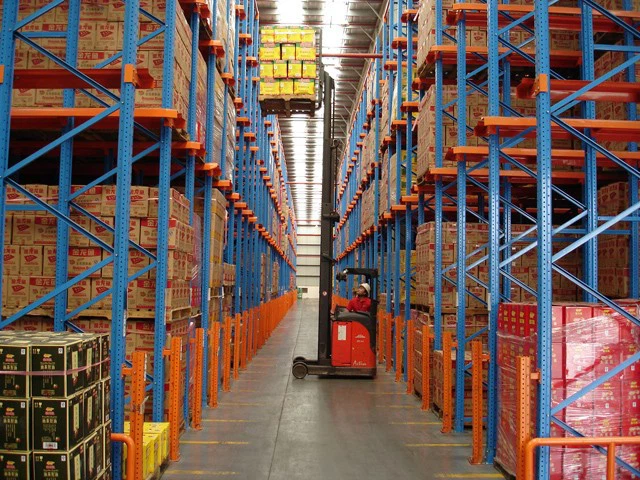
Push back racking is a LIFO high-density pallet system that stores two to five pallets deep on nested carts riding on inclined rails. Instead of dedicating a full aisle to every pallet position — the way selective racking does — push back racking merges storage depth into a single working face, freeing floor space for more pallets without expanding your building envelope. It is the practical middle ground between the 100% selectivity of selective pallet racking and the lane-commitment of drive-in racking.
Each configuration is engineered to your pallet footprint, forklift reach and building height — not pulled from a catalogue shelf size.
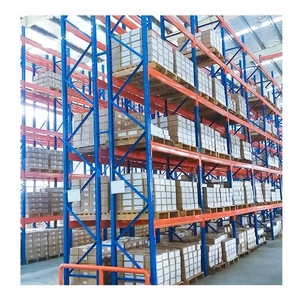
Buyers are no longer comparing price per pallet position alone. They are scoring suppliers on lifecycle cost, seismic compliance, speed to first pick, and the transparency of engineering documentation.
Distributors increasingly model lifetime cost — including rack repair, forklift damage and reconfiguration — rather than unit price. Push back systems that ship with certified load plates and clear maintenance guides increasingly outbid cheaper imports on 10-year TCO.
Latin American and Southeast Asian buyers now ask for documented seismic calculations before purchase orders. Suppliers that can hand over upright and anchor calculations tied to local codes are winning regional tenders even at higher unit cost.
The shift toward modular cart-based push back designs lets warehouses grow capacity in place without re-specifying uprights. Buyers increasingly require that any additional 3–5 pallets of depth be field-upgradable by their own maintenance team.
Forward-thinking warehouses now layer push back racking around AS/RS pockets, using high-density LIFO bays for slow-movers while keeping fast SKUs in shuttle systems. Warehouse layout RFPs increasingly demand this hybrid vision from the supplier.
Cold-storage operators are driving push back adoption in chilled and frozen rooms because the cart design reduces forklift entry into deep lanes — lowering energy loss. Zinc-rich coatings and hot-dip galvanizing are increasingly standard on procurement specs.
Invoices, packing lists, B/L and origin certificates are now scored tender criteria. Wholesalers that deliver customs-ready documentation, Spanish/Portuguese labels and install guides reduce buyer risk and shorten clearance time by days.
Engineering trends that are already shaping specs, drawings and tender documents for high-density pallet storage.
As pallet loads rise and bay heights pass 11 metres, push back uprights increasingly move from Q235B to higher-strength grades with heavier section modulus. This trims steel weight per pallet position while keeping deflection within code.
Second-and third-generation push back carts now use sealed precision roller bearings and galvanized cart frames — reducing push forces by up to 30% and improving reliability in cold-chain applications where lubricants thicken.
Newer push back installations assign lane addresses inside the WMS with bay-level granularity, letting pickers know the sequence of SKUs within a nested lane and reducing search time on slower LIFO moves.
Warehouses in noise-sensitive areas are specifying polymer-coated rail surfaces that reduce metal-on-metal noise by 10–15 dB. This trend matters in urban DCs and in food facilities adjoining processing areas.
Insurers increasingly require intumescent-coated or fire-rated bracing for high-density storage above 12 metres. Push back suppliers now ship certified fire-performance documentation alongside the racking as standard.
Flat-packed, container-optimised kits that reduce damage in transit and improve landed cost per pallet position are becoming standard. Suppliers now design container loading plans first, then build the racking drawing around them.
We are a manufacturer first. Every beam, upright and cart you receive is engineered, formed and tested in our own facility — the same team that answers your technical questions builds your system.
Quality recognised by clients across 60+ countries, with CE and ISO material traceability and controlled roll-forming tolerances from beam profile to upright perforation.
Free consultation with professional engineers, free 2D/3D warehouse layout, and a fully itemised quotation — delivered within 48 hours of receiving your pallet data.
No trading layer between you and the production line. Distributors, contractors and end users compare the same engineered drawings and the same factory cost base.
20+ production lines and 30,000 tons annual output secure delivery in 10–15 days after drawing approval, with container-loading plans optimised for damage-free transit.
Every racking product is covered for ten years against quality issues arising from our design, manufacturing, transportation or installation guidance.
Commercial invoice, packing list, bill of lading and certificate of origin prepared accurately — with Spanish or Portuguese labels available on request.
Plan your project realistically. Total lead time = production (10–15 days) + ocean transit + local customs clearance.
| Destination | Main Ports | Ocean Transit | Typical Push Back Demand |
|---|---|---|---|
| Mexico | Manzanillo, Lázaro Cárdenas, Veracruz | 18–30 days | Nearshoring DCs, retail distribution, 3PL |
| Central America | Puerto Quetzal, Acajutla, Puerto Cortés | 25–35 days | FMCG, textiles, coffee export warehouses |
| Costa Rica / Panama | Caldera, Limón, Balboa, Colón | 25–35 days | Free-zone logistics, medical device cold chain |
| Colombia / Ecuador | Buenaventura, Cartagena, Guayaquil | 25–38 days | Flowers, food processing, e-commerce fulfilment |
| Peru / Chile | Callao, San Antonio, Valparaíso | 28–40 days | Seismic-rated high-density, wine, agro-export |
| Brazil / Argentina | Santos, Paranaguá, Buenos Aires, Montevideo | 32–45 days | Beverage, automotive, large distribution centres |
Transit times are indicative from main Chinese ports and vary by carrier, transshipment and season. Final schedules are confirmed with each quotation.
Send us your floor plan, pallet footprint and destination port. Our engineers will return a free 2D/3D layout, load calculation and an itemised quotation within 48 hours.