Why Drive-In Racking Is Winning in Food and Beverage Warehouses
Food and beverage warehouses rarely have the luxury of spare space. Whether the facility stores ambient groceries, canned beverages, flour, sugar, rice, edible oils, dairy, frozen protein, imported specialty foods or ingredients for food manufacturing, the pressure is the same: more pallet positions, reliable stock rotation, strict hygiene and a lower cost per usable pallet. That is why drive-in racking for food and beverage warehouses is no longer a niche choice. It is a high-density storage strategy that lets buyers use the full cube of a cold room, freezer or dry distribution center without adding building area.
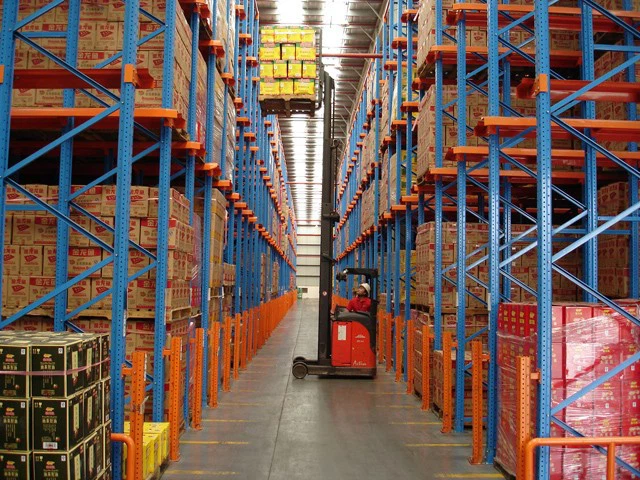
Drive-in racking works by arranging pallet rails in deep lanes inside a steel structure. Forklifts enter the lane to place or retrieve pallets. Because the system removes most working aisles, it can devote a much higher share of the floor to storage. For food and beverage operations with repeated pallets of the same SKU, the result is simple: more pallets in the same building, lower refrigeration volume per pallet, and a shorter average travel path within the storage block.
Best-fit conditions for drive-in racking
- High-volume, low-variety SKUs: bottled water, soft drinks, canned goods, flour, rice, sugar, cooking oil, frozen vegetables, packaged meat, dry ingredients and private-label products.
- Space-constrained cold rooms and freezers: fewer aisles means less refrigerated air volume to cool and fewer square meters to rent or build.
- Uniform pallet profiles: standard pallets with stable loads, consistent overhang and predictable weight are easier to handle in deep lanes.
- Managed stock rotation: LIFO can work for non-date-sensitive or batch-controlled products; drive-through FIFO is better for perishables, dairy, chilled foods and recall-sensitive items.
- Projects with high land or construction cost: when the building shell is expensive, increasing pallet density often delivers a stronger return than expanding the warehouse footprint.
When selective or radio shuttle racking is better
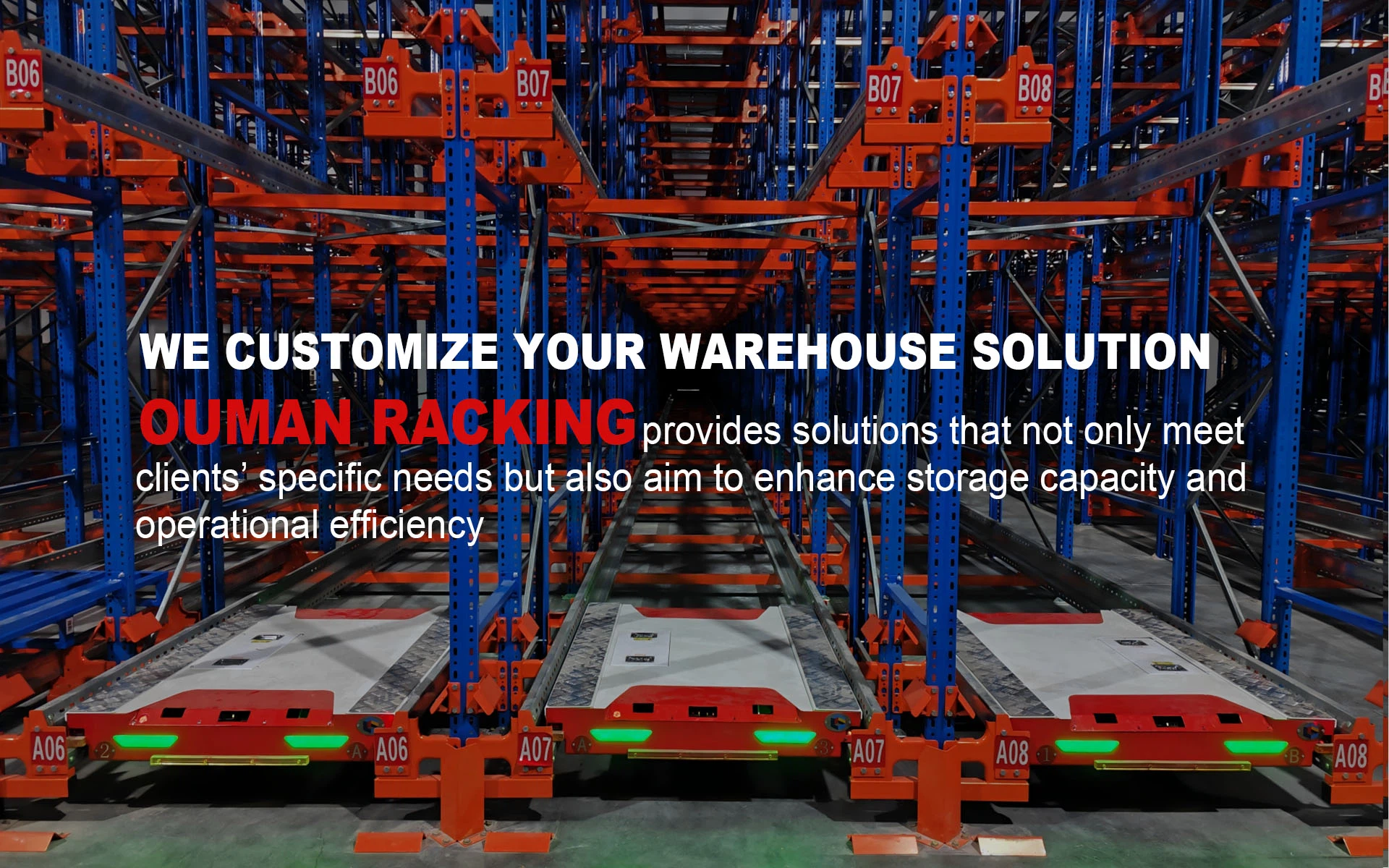
Drive-in racking is not a universal answer. If every pallet must be accessible immediately, selective pallet racking remains the most flexible option. If you need high density plus higher throughput, semi-automation or precise inventory control, radio shuttle racking may justify a higher capital cost. The right decision depends on SKU velocity, pallet count, truck cycle time, temperature, labor availability and the cost of a wrong pick. A credible supplier should be willing to compare all three options instead of forcing one product into every project.
Product Recommendation: Configure Drive-In Racking Around Your Food & Beverage Storage Profile
For food and beverage buyers, we recommend starting with a lane-by-lane analysis, not a catalog number. The following configuration choices usually decide whether the project meets its payback target:
LIFO single-entry drive-in racking
Single-entry drive-in racking is the classic high-density choice for frozen food, canned beverages, dry groceries and other stable SKUs. Forklifts enter from one side. Because the last pallet loaded is usually the first one retrieved, LIFO works best when batch identity, production lot or date code can be managed within the lane. It is efficient for seasonal stock, imported containers and products with long shelf life.
Drive-through FIFO racking
Drive-through racking opens the lane at both ends. Pallets move in from one side and are retrieved from the other, which supports first-in, first-out rotation. This is often the preferred configuration for dairy, chilled ready meals, fresh ingredients, perishable foods and any product subject to strict recall traceability. It reduces the risk of old stock being trapped behind new stock, but it requires clear traffic planning so that loading and unloading do not conflict.
Cold-room and freezer detailing
Cold storage is where small specification choices become expensive mistakes. Condensation, ice build-up, washdown chemicals and low temperatures all affect steel, fasteners and floor anchors. For food and beverage warehouses we recommend hot-dip galvanized or pre-galvanized components where humidity is high, sealed base plates where washdown occurs, and powder-coated finishes for dry or ambient areas. The layout should also account for forklift battery performance, traction, door openings, defrost cycles and operator visibility.
| Storage System | Best Food & Beverage Use | Pallet Access | Buyer Trade-off |
|---|---|---|---|
| Selective Pallet Racking | Mixed SKUs, fast-moving retail, 3PL and distribution centers | 100% direct access to every pallet | Highest flexibility, but lower storage density and more aisle space |
| Drive-In LIFO | Frozen goods, canned drinks, flour, rice, sugar and same-SKU blocks | LIFO; not every pallet is immediately accessible | High density, but requires strict lane discipline and inventory control |
| Drive-Through FIFO | Dairy, chilled food, perishables, date-coded products and recall-sensitive items | FIFO from opposite ends of the lane | Better rotation for food safety, with more traffic coordination than LIFO |
| Radio Shuttle Racking | High-throughput cold chain, beverage plants and large distribution centers | Semi-automated deep-lane storage | Higher capital cost, but stronger throughput and less forklift time in the lane |
The best system is the one that matches pallet count, SKU policy, temperature, operators and total cost per usable pallet position. Lottot Storage Solutions Co., Ltd. can compare drive-in, drive-through, selective and radio shuttle options from the same warehouse plan.
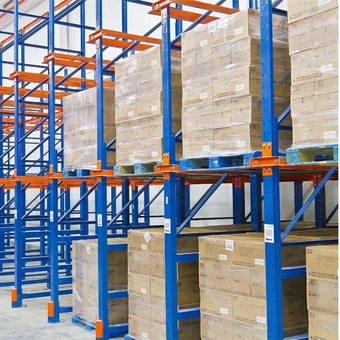
Warehouse Drive-In Racking System
Deep-lane storage for palletized food, beverages and cold-chain goods. Engineered with rails, guides, protectors and safety accessories for reliable forklift access in high-density blocks.
View drive-in racking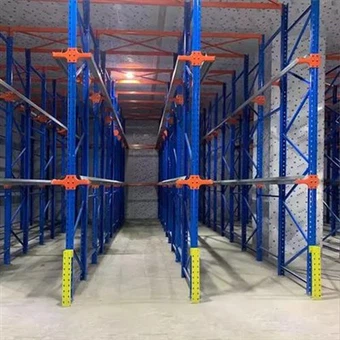
Space-Saving Drive-In Racking
For high-volume SKUs, seasonal food stock and beverage plants where floor area must be squeezed. A practical solution for buyers targeting high pallet density with controlled access.
Explore space-saving optionProcurement Trends: What Global Buyers Are Asking Before They Buy
Search behavior has changed. Procurement teams no longer ask only for a price per kilogram or a product photo. They compare total cost, lead time, documentation, warranty, installation support and risk. These are the procurement themes we see in serious drive-in racking inquiries for food and beverage warehouses:
- Total cost per usable pallet position. Buyers want to know how many pallets fit after accounting for aisle loss, forklift turning radius, column spacing, roof height, sprinklers and local code. A lower steel price can be false economy if the layout wastes floor area.
- Cold-chain capacity and energy cost. Every unused aisle in a freezer costs energy. Drive-in racking reduces refrigerated volume per pallet, but the design must still preserve safe traffic, defrost access and emergency egress.
- Nearshoring and fast-track projects. Food and beverage capacity is moving closer to consumers. Buyers want verified production capacity, short drawing approval cycles, container loading plans and predictable delivery to the destination port.
- Seismic proof and insurability. In Chile, Peru, Ecuador, Mexico, Central America and other active zones, buyers ask for seismic calculations, reinforced base plates, heavier bracing, row spacers and chemical anchors before the project can be insured and signed off.
- Food safety and cleanable design. Auditors look for debris traps, open profiles, fasteners, damaged paint, standing water and pest access. A food warehouse racking layout should be designed with washdown, cleaning access and inspection routines in mind.
- Incoterms, port pairs and documents. Buyers compare FOB, CFR, CIF and DDP, and request Spanish or Portuguese labels, packing lists, certificates of origin and installation manuals that match local requirements.
- 2D/3D layout before purchase order. More buyers expect a buildable drawing and itemized quotation before they issue a PO. AI-assisted research has raised the standard for technical clarity.
- Spare parts and long-term support. Food and beverage facilities operate for years. Purchasing teams now ask about replacement uprights, beams, safety clips, row spacers, protectors and how quickly spare parts can be shipped.
Development Trends: What the Next Generation of Drive-In Racking Looks Like
The core idea of drive-in racking will remain valuable because high land costs, cold-chain growth and energy efficiency are not temporary trends. The system itself, however, is developing:
- Hybrid drive-in and shuttle designs: projects with high throughput may combine drive-in lanes for slow-moving SKUs with radio shuttle lanes for fast movers, balancing capital cost and productivity.
- Better corrosion protection for cold and humid plants: galvanized steel, high-performance coatings, sealed anchors and moisture-aware detailing are becoming standard topics in food and beverage specifications.
- Modular components and faster installation: buyers want fewer site modifications, clear installation manuals, labeled parts and faster commissioning so that cold rooms can begin operating sooner.
- Smart safety accessories: lane guide systems, impact protection, pallet stops, signage and inspection points reduce forklift damage and support food-safety audits.
- Higher-bay design with structural validation: as clear heights rise, seismic and wind calculations, slab strength and sprinkler coordination become more important before fabrication begins.
- Sustainability and lower embodied carbon: procurement teams increasingly compare steel weight, recyclability, coating durability and transport optimization, not only the invoice price.
- Digital layout data and BIM coordination: warehouse planners want 3D drawings that can be checked against racking, forklift aisles, fire protection and building structure before steel is ordered.
- Local engineering alignment: global buyers expect a supplier to support local licensed engineers with design data, anchor calculations and documentation for final approval.
How Lottot Storage Solutions Co., Ltd. Supports Food & Beverage Warehouse Projects
Lottot Storage Solutions Co., Ltd. has manufactured industrial storage systems since 2007. For food and beverage buyers, the advantage is direct access to the engineers who calculate loads, design lanes, prepare export documents and support installation — without trading-company layers. Our team exports at least 600 containers every year and has completed more than 3,500 warehouse solutions across 60+ countries.
Every drive-in racking project begins with the actual warehouse plan, pallet data, load weight, forklift type, temperature range, floor slab and seismic zone. From there, our engineers prepare a 2D/3D layout and itemized quotation within 48 hours. Production typically takes 10–15 days after drawing approval. For cold rooms and coastal facilities, we specify hot-dip galvanized or pre-galvanized components where required, and we provide installation drawings, manuals and remote guidance for local installers.
Food and beverage buyers also need documentation that clears customs and satisfies internal quality teams. We prepare commercial invoices, packing lists, bills of lading and certificates of origin accurately, and can provide Spanish or Portuguese part labels on request. The result is a factory-direct supply package designed for global procurement, not a catalog shipment with unanswered technical questions.