Double Deep Racking for Cali: Density, Selectivity and Seismic Safety in One Decision
The Cali market is not a generic warehouse market. A racking system specified for a dry distribution center in another Latin American city may fail the commercial test in Yumbo, Palmira, Candelaria or Acopi if it ignores land cost, seismic demand, reach-truck availability, SKU velocity and the practical reality of receiving containers through Buenaventura. Double deep pallet racking is one of the most effective answers for importers and 3PLs that need more pallet positions inside an existing building, but it is also one of the easiest systems to over-specify or misapply.
The right decision is not “more density at any cost.” It is the point where density, selectivity, safety and total landed cost balance for the Cali operation. A Colombia-bound project should be evaluated as an engineered system: pallet quality, beam loads, upright protection, anchor design, double-deep reach truck clearances, fire protection, floor slab strength and the receiving plan at the Pacific port. As a China-based manufacturer and exporter with direct factory supply, Lottot Storage Solutions supports that evaluation with layout drawings, load calculations, itemized quotations and export documentation rather than selling a catalogue module without context.
Where Double Deep Racking Creates Real Value in Cali Warehouses
Double deep racking stores pallets two positions deep and removes one aisle for every two rows compared with conventional selective racking. That extra density matters most when land is expensive, building height is fixed and the SKU profile is disciplined.
More pallet positions without adding floor area
For a 3PL or distributor in Cali with a fixed lease, double deep can lift usable pallet capacity significantly compared with selective layout. The gain is strongest where the building is already efficient, the rack height is well used and the product mix has repeatable fast movers rather than thousands of slow SKUs.
Best fit for medium-SKU, high-volume inventory
Double deep works well for beverage, dry food, sugar, coffee, packaging, household goods, spare parts and imported consumer products with stable replenishment. It is less suitable for a high-SKU spare-parts warehouse where every pallet must be accessible at all times, because the rear pallet in each pair is reached only after the front pallet is removed.
Efficient for port-linked and 3PL operations
Cargo entering through Buenaventura often moves in full pallet loads before breaking down for Cali, Palmira, Yumbo and southwest Colombia. Double deep supports inbound container staging, reserve storage and replenishment zones where throughput is planned by pallet load rather than by individual carton picking.
Seismic and safety planning is not optional
Cali and the wider Valle del Cauca require seismic awareness in structural design. Racking must be specified with site-specific loads, anchor design, row spacers, bracing and installation checks, and the final design should be validated by a locally licensed structural engineer in line with Colombian requirements such as NSR-10 principles.
Where Double Deep Warehouse Racking Fits the Local Economy
The Cali market sits at the intersection of Pacific import logistics, agro-industrial processing, consumer distribution and regional healthcare. Each scenario demands a different balance between pallet access and storage density.
3PL and consumer-goods distribution
In Yumbo and Acopi, third-party logistics providers handle retail replenishment, imported consumer goods and regional distribution. Double deep reserve storage allows more pallets per square metre while keeping fast-moving SKUs in selective picking faces.
Agro-food, sugar, coffee and dry goods
Valle del Cauca’s food and agro-industrial supply chains need robust pallet storage for bagged, boxed and packaged products. Double deep is useful for homogeneous batches, seasonal stock and products with predictable rotation, especially where warehouse land near Cali is costly.
Cold chain and temperature-controlled storage
Cold rooms are expensive to build and expensive to operate. High-density double deep layouts can reduce aisle space and improve cubic utilization in chilled or frozen storage, but the design must account for condensation, galvanizing or coating choices, safety and product rotation rules.
Import staging from Buenaventura
For companies importing from China and Asia, Buenaventura is the gateway to Cali. Double deep reserve racking can support container unloading, quality checks, labelling and dispatch to retail, wholesale or industrial customers while keeping the receiving dock clear.
What Is Changing in Cali Warehouse Procurement
Buyers in Cali are not only comparing price per pallet. They are comparing landed cost, installation risk, documentation quality, seismic accountability and the supplier’s ability to support a Spanish-speaking operation.
Nearshoring and Pacific trade growth
As importers diversify supply chains, Pacific ports and inland hubs such as Cali become more strategic. Warehouses near Buenaventura require layouts that can absorb container surges, handle mixed pallet sizes and scale without rebuilding the entire racking system.
E-commerce and faster replenishment
Retail and e-commerce fulfillment in Cali increasingly separates fast-pick carton areas from reserve pallet storage. Double deep, selective and carton flow systems are often combined so that density is concentrated in reserve stock while speed is protected at the pick face.
Humidity, hygiene and corrosion protection
Cali’s tropical climate and the proximity of coastal logistics routes make coating quality important. Standard phosphating plus electrostatic powder coating is suitable for many dry warehouses, while hot-dip galvanized or pre-galvanized components may be preferred for cold rooms, coastal staging and high-humidity facilities.
Compliance, safety and traceable engineering
Procurement teams increasingly ask for load calculations, anchor details, drawing approvals and inspection records. This is a positive trend for serious manufacturers, because racking is a safety-critical asset and should not be purchased as an unengineered commodity.
| System | Relative Storage Density | Pallet Selectivity | Typical Cali Use Case | Key Consideration |
|---|---|---|---|---|
| Selective Pallet Racking | 100% direct access | High-SKU distributors, retail DCs, spare parts | Best flexibility; higher aisle demand | |
| Double Deep Racking | Two pallets per lane position | 3PL reserve storage, food, beverage, imported goods | Requires double-deep reach truck and disciplined SKU planning | |
| Radio Shuttle Racking | Deep-lane, FIFO or LIFO depending on system | Cold storage, high-volume beverage, agro-export | Higher investment; best where density and throughput justify automation |
Selection note: density bars are indicative for planning discussion only. Final pallet capacity depends on building dimensions, rack height, beam levels, pallet size, forklift type, aisle width, fire protection and local engineering requirements. A Cali project should always be confirmed by drawing and load calculation.
8 Factory-Direct Racking Options for Cali Warehouses and 3PL Operators
The eight systems below can be supplied as stand-alone projects or combined with double deep pallet racking to create a mixed layout: double deep reserve storage, selective picking faces, FIFO flow lanes and heavy-duty logistics zones. Product images are shown in full without cropping.
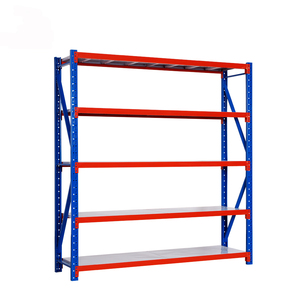
Dongguan Manufacturer Factory 500kg Loading Capacity Medium Duty Warehouse Rack for Sale
Suitable for light spare parts, packaging, retail backroom storage and small distribution warehouses in Cali where fast access and lower capital cost matter.
View product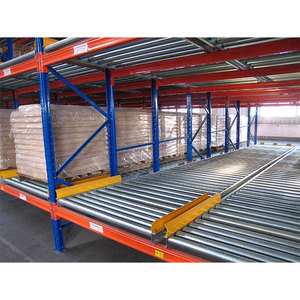
Q235 Steel 2000kg Capacity FIFO High Density Industrial Warehouse Storage Gravity Pallet Flow Rack System
Useful for food, pharmaceutical and batch-controlled inventory where FIFO rotation is required, especially alongside double deep reserve storage.
View product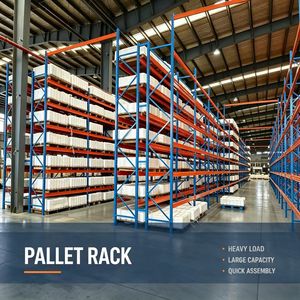
Selective Pallet Racking With Adjustable Steel Beam, OEM for Forklift Palletized Goods Warehouse Storage
A flexible selective system for high-SKU distributors that need direct access to every pallet, with beam adjustability for changing product profiles.
View product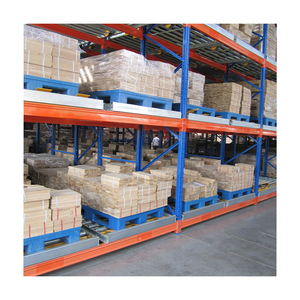
Steel Pallet Rack System Heavy Shelving Storage Shelf Selective Heavy Duty Rack Steel Shelving Warehouse Racking for Wholesale
Heavy-duty selective racking for wholesalers, retail distribution and industrial warehouses requiring robust beams and uprights.
View product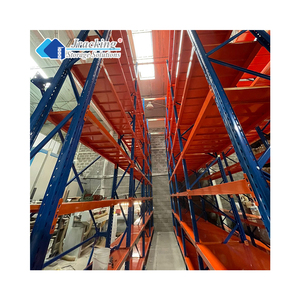
Jracking Warehouse Storage Equipment Pallet Racking Beams Heavy Duty Pallet Racking for Logistics Transfer Center
Designed for logistics transfer centers and busy distribution operations where beam strength, repeatable production and spare-part availability are important.
View product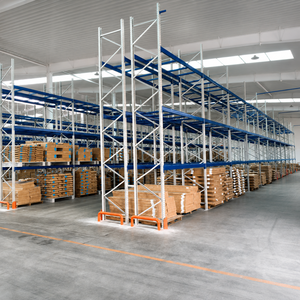
Warehouse Storage Rack Selective Heavy Duty Steel Pallet Racking 1000kg Industrial Factory Storage Solution
An industrial storage option for factories and manufacturing plants in Cali that need organized palletized raw materials, WIP and finished goods.
View product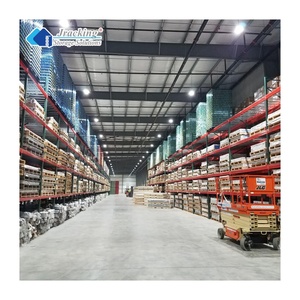
Jracking US Standard Steel Warehouse Storage Racks in Stocks Heavy Duty Teardrop Pallet Racking System
Teardrop-style pallet racking is practical where standard beam connections, familiar maintenance and easy replacement are preferred by warehouse teams.
View product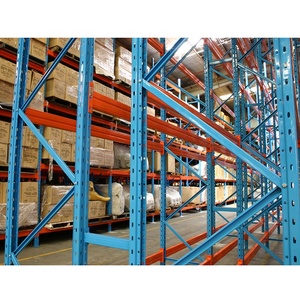
Factory Supply AS 4084 Pallet Racking System Australian Standard Steel Storage Pallet Racking for Garages and Warehouses
A dedicated standard racking option for projects requiring AS 4084-style engineering, useful for organized garages, warehouses and export projects.
View productWhat a Double Deep Racking Project Must Prove Before Production
For a safe and buildable Cali project, the manufacturer should convert local building data into a racking drawing that can be reviewed, installed and inspected. The following four topics should be settled before a purchase order is released.
Seismic and structural interface
Provide the site seismic zone, floor slab information, clear height and local code requirements. The racking design should use reinforced base plates, bracing, row spacers and anchors as appropriate, with final validation by a Colombian licensed engineer.
Pallet, beam and upright loads
Confirm pallet dimensions, maximum load, overhang, beam levels, load per bay and dynamic forklift impact. Double deep systems must be calculated for the correct pallet pattern and rear-position handling, not simply copied from a selective racking quotation.
Double-deep reach truck clearances
Double deep racking normally requires a double-deep reach truck or an appropriate handling solution. Check lift height, collapsed mast height, aisle width, turning radius, battery shift life and operator visibility before finalizing the layout.
Fire protection and operational safety
Confirm sprinkler design, flue spaces, aisle clearances, impact protection at corners and fast-moving pick faces. Double deep density should not compromise sprinkler performance, evacuation routes or forklift traffic in a Cali warehouse.
Information to send for a fast Cali double deep proposal
- Warehouse CAD or PDF plan with columns, doors and clear height
- Pallet length, width, height, load weight and pallet quantity
- Required number of pallet positions and future growth plan
- Forklift or reach truck model, lift height and aisle width
- Floor slab thickness, concrete strength and flatness data
- Seismic zone and any local engineering requirements
- Ambient, chilled or frozen operating temperature
- Destination port, Incoterm and target installation date
Commercial questions worth asking every exporter
Ask whether the quotation includes anchor bolts, row spacers, upright protectors, beam locks, installation drawings and container loading plans. Ask who prepares the packing list and bill of lading, whether Spanish labels are available, and how spare parts will be supplied after installation. A low unit price can hide missing safety components or unclear installation responsibility.
Also ask for the production lead time after drawing approval, the expected transit to Buenaventura and the final delivery arrangement from port to Cali. These details influence the real project schedule more than the factory’s standard production speed alone.
Send an InquiryShipping Double Deep Racking from China to Buenaventura and Cali
Most Colombia-bound racking projects ship from Chinese ports to Buenaventura, then move inland to Cali, Yumbo, Palmira or nearby free-zone and industrial parks. The table below gives indicative planning ranges; final schedules are confirmed per quotation.
| Planning Item | Typical Range | Cali Project Note |
|---|---|---|
| Production after drawing approval | 10–15 days | Standard for roll-formed uprights, beams, bracing and accessories, subject to project size and coating requirements. |
| Ocean transit to Buenaventura | About 25–38 days | Varies by carrier, routing, transshipment and season. Buenaventura is the main Pacific gateway for Cali cargo. |
| Incoterms | FOB, CFR, CIF; DDP on request | Confirm whether the supplier handles ocean freight and final inland delivery or only loads at the Chinese port. |
| Export documents | Invoice, packing list, B/L, CO | Accurate documentation reduces customs friction. Spanish part labels can be prepared on request for local receiving teams. |
| Container loading | Full container or consolidated | Loading plans should maximize payload while protecting powder-coated beams and uprights during ocean transport. |
| Installation support | Drawings, manuals, remote or on-site support | Installation drawings and anchor plans are essential for safe erection and local inspection. |
Important: double deep racking must be installed on a suitable concrete slab and anchored according to the approved design. Before installation, verify the final layout and load data with a locally licensed structural engineer, especially for seismic areas in and around Cali.
Why Lottot Is a Credible China Manufacturer & Exporter for Cali Buyers
When the supplier is an ocean away, credentials should be practical and verifiable: factory capacity, engineering response, quality control, export documentation and post-installation support.
Factory-direct manufacturing since 2007
Lottot Storage Solutions Co., Ltd. designs and manufactures in its own facility rather than acting as a pure trading layer. With 20+ automatic roll-forming lines and 30,000 tons of annual capacity, production is controlled from profile forming to packing.
Free layout design and engineering response
Send your building plan, pallet data and handling equipment; our engineers can provide layout drawings, load calculations and an itemized quotation within 48 hours. The same engineering team supports double deep configuration, mixed selective layouts and export packing plans.
Quality system and 10-year warranty
CE and ISO certified materials and quality management support consistent profiles, powder coating and inspection before packing. Racking products are covered by a 10-year warranty against quality issues caused by our design, manufacturing, transportation or installation guidance.
Export experience with Latin American projects
More than 3,500 projects and 60+ export countries have refined our packing, documentation and installation guidance. For Cali buyers, this means clearer communication on Buenaventura routing, container loading, spare-part planning and post-shipment support.
10-Year Warranty Insurance. We cover all racking products for ten years and resolve quality issues caused by our design, manufacturing, transportation or installation guidance. The goal is not only to ship steel, but to give Cali buyers a traceable, buildable and maintainable storage asset.
A Four-Step Route from Cali Warehouse Plan to Installed Racking
A structured process reduces the risk of re-quotes, production delays, port demurrage and installation problems.
Share requirements
Send the building plan, pallet data, load weight, forklift information, seismic zone and destination port.
Layout and quote
Receive a free 2D/3D layout, load calculation and itemized quotation, usually within 48 hours after complete data.
Production and QC
Manufacturing in 10–15 days after drawing approval, with inspection before packing and export loading.
Shipping and installation support
Container loading plans, export documents and installation drawings or remote guidance for the Cali project team.
Common Procurement Questions About Double Deep Racking in Cali
These are the questions international buyers and local project teams most often ask before importing racking into Colombia.
What is double deep pallet racking, and is it suitable for a Cali warehouse?
Can you ship double deep racking to Buenaventura and arrange delivery to Cali?
Does your racking design consider Colombian seismic requirements?
What forklift is required for double deep racking?
What is the minimum order quantity and lead time?
How do you protect racking in humid or cold-chain environments?
Can you provide drawings, labels and installation documents in Spanish?
What warranty and after-sales support do you offer?
Planning a Double Deep Racking Project in Cali?
Send your floor plan, pallet dimensions, loads and target capacity. Our engineering team can review the layout, recommend selective, double deep or mixed-density racking, and prepare a factory-direct quotation with export planning to Buenaventura and Cali.
Send an Inquiry