0+
Projects Delivered
0+
Export Countries
0+
Tons Annual Capacity
0-Year
Racking Warranty
Drive-Through Racking · Salto Focus
What Drive-Through Racking Really Delivers for Salto Warehouses
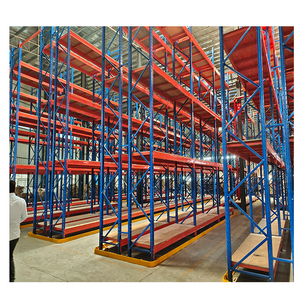
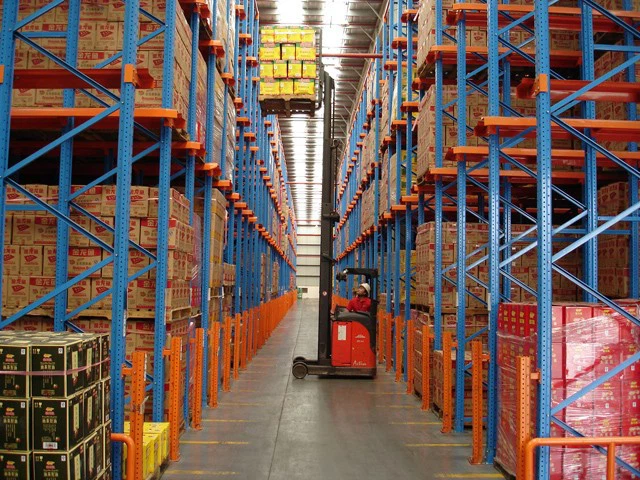
Drive-through (also written drive-thru) pallet racking is a high-density storage system in which forklifts enter the rack structure from one side and exit from the opposite side. For Salto’s agricultural, food-processing and distribution operations, it removes working aisles, cuts cycle time on uniform pallet loads and turns unused floor space into productive cubic space.
Where a selective pallet rack may dedicate 40–50% of the building footprint to aisles, a drive-through configuration eliminates most of them, lifting storage density to roughly 80–85% of usable floor area. That figure matters in Salto, where land prices near industrial corridors continue to rise, cold-room energy is billed by cubic meter, and warehouse rents are quarterly-indexed. Drive-through racking is not a single product — it is a mode of storage. It sits alongside drive-in (LIFO) and radio shuttle (semi-automated FIFO/LIFO) systems in our portfolio, and it is the correct choice when pallets are homogeneous, SKU counts are low, and first-in-first-out rotation is a hard operational requirement (for example dairy, chilled meat, boxed citrus, dairy derivatives, grain-based packaged goods and export cartons).
As a Salto-facing exporter and wholesaler with in-house roll-forming, welding, pre-treatment and powder-coating lines, Lottot Storage Solutions upgrades your layout from a catalog drawing to an engineered 2D/3D design that respects your pallet dimensions, forklift clearances, slab bearing capacity and local seismic class. Our engineers work from load calculations in accordance with the principles of EN 15512 and the FEM 10.2.02 racking codes, and we recommend a final sign-off from a locally licensed structural engineer before installation — because in Salto, both wind-load on high-bay racking and seismic action must be addressed in the same drawing set.
Recommended Products
Warehouse Racking Systems We Recommend for Salto Projects
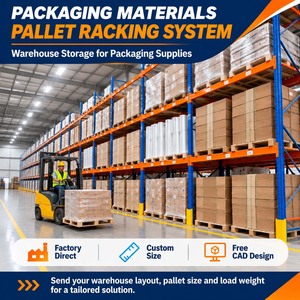
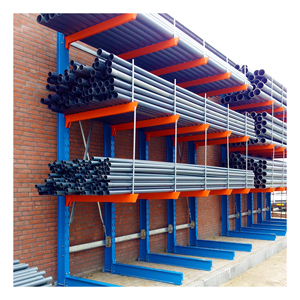
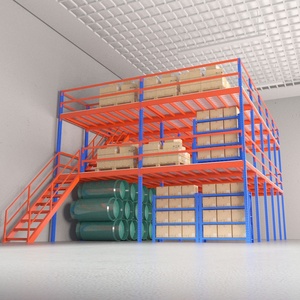
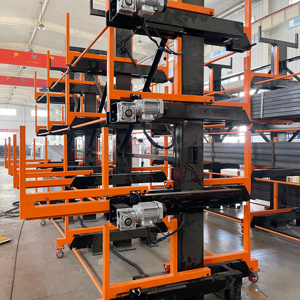
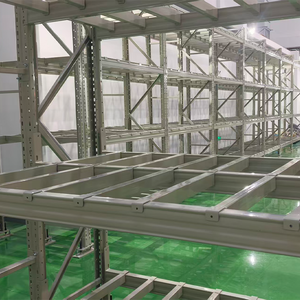
Every system below is available in drive-through, drive-in, selective, cantilever or mezzanine configuration. Our engineers will specify the correct one after reviewing your pallet dimensions and rotation profile.
18+Years of Manufacturing
About Lottot Storage Solutions
A Racking Manufacturer, Not a Middleman — Serving Salto Directly
Founded in 2007, Lottot Storage Solutions Co., Ltd. designs, manufactures and exports industrial storage systems from its own facility in Nanjing, China. We ship at least 600 containers per year and have completed more than 3,000 warehouse projects across 60+ countries. Distributors, 3PL operators and end-users in Salto and the wider region work directly with our engineers — the team that calculates your load capacity is the same team that builds and ships it.
- Patented racking products with independent intellectual property
- 20+ automatic roll-forming lines for consistent profiles and 10–15 day production
- CE and ISO certified materials and quality management systems
- Free 2D/3D layout drawings and itemized quotations in 48 hours
- 10-year warranty on all racking products
Localized Application in Salto
Where Drive-Through Racking Wins in Salto’s Warehousing Landscape
Salto’s commercial and industrial base is shaped by agriculture, food processing, cold-chain export and cross-border distribution. Each of these operations pushes a different limit onto the rack structure — density, temperature or load profile. Our systems are specified accordingly.
Citrus, Blueberry & Agro-Export Packhouses
Salto’s produce sector palletizes and stages cartons before container loading. Drive-through racking keeps pallets on a first-in-first-out path, prevents produce from being re-handled, and reduces damage from forklift shuffling in peak-load weeks.
Cold Rooms & Chilled Distribution
Cold storage in Salto is billed by cubic meter and refrigerated by compressors that do not care how your rack is built. Drive-through racking in galvanized finish packs more pallets per cubic meter while resisting condensation-driven corrosion — critical for dairy, meat and frozen-fruit operators.
Cross-Border & 3PL Distribution
Third-party logistics providers in Salto need mixed-SKU flexibility without abandoning density. We pair a drive-through block for slow-moving homogenous pallets with selective bays for fast-moving pick faces — a hybrid layout designed around your SKU curve, not ours.
FMCG & Beverage Distribution
Bottled drinks, dairy derivatives and consumer goods palletize in highly uniform patterns. Drive-through lanes push the pallet in one end and pull FIFO from the other — a natural fit for regional distributors serving Salto’s retail and hospitality channels.
Manufacturing & Long-Profile Storage
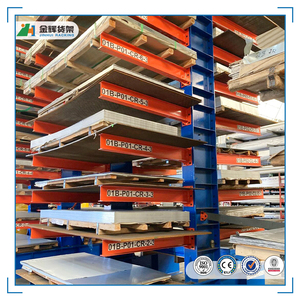
Metal, pipe, timber and profiles cannot be palletized effectively. Our cantilever and powder-coated cantilever-on-wheels racks store long loads off the floor with safe vertical stacking — a common requirement in Salto’s fabrication and construction-supply yards.
Retail, Pharmacy & Spare Parts
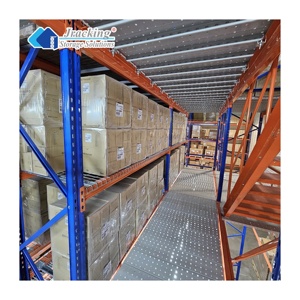
Where pallet density is not the problem, but small-item picking is, mezzanine and multi-level systems turn vertical space into picking and storage floors without building works, planning delays or new foundations.
Localized Trends
Four Trends Reshaping Warehouse Racking Demand in Salto
Understanding where the market is going helps buyers justify capital decisions and avoid over- or under-specifying their next rack installation.
Density Over Footprint
With industrial land near Salto’s logistics corridors priced upward, operators are maximizing cubic utilization rather than expanding floor area. Drive-through and radio shuttle racking deliver the density that selective racking cannot.
Cold-Chain Expansion
Exports of chilled meat, dairy and frozen fruit continue to grow across the region. Galvanized and pre-galvanized racking components are increasingly specified to extend service life inside sub-zero and high-humidity chambers.
Semi-Automation First
Rather than leap to full AS/RS, many Salto operators are adopting radio shuttle and PLC-controlled cantilever systems — mid-cost automation that reduces labour dependency without a full retrofit of the building.
Seismic-Ready Specification
Structural engineers and insurers increasingly require documented seismic design for racking installed in high-risk zones. Our drawings include anchor sizing, bracing and base-plate reinforcement for local code review.
Our Advantages
Factory-Direct Quality You Can Verify Before You Order
Four commitments that matter when your racking supplier is an ocean away from Salto.
High Quality
CE and ISO certified materials, controlled roll-forming tolerances and quality recognized by clients in 60+ countries.
Engineering Service
Free consultation with professional engineers, free warehouse layout design and the optimal storage solution for your operation.
Competitive Price
Factory-direct supply with no trading layers — transparent, itemized quotations for distributors and project contractors.
Fast Delivery
20+ production lines and 30,000 tons of annual output secure delivery in 10–15 days after drawing approval.
10-Year Warranty Insurance. All racking products are covered against quality issues caused by our design, manufacturing, transportation or installation guidance.
Shipping to Salto & Region
Indicative Lead Times and Port Routing for Salto Buyers
Total lead time = production (10–15 days) + ocean transit + local customs clearance. Use the table below to plan your project timeline with realistic figures.
| Country / Region | Main Destination Ports | Indicative Ocean Transit | Typical Racking Demand |
|---|---|---|---|
| Uruguay (Salto) | Montevideo, Nueva Palmira | 32–45 days | Citrus packhouses, cold chain, 3PL |
| Argentina | Buenos Aires, Rosario, Zárate | 32–45 days | Agro-export, automotive, FMCG |
| Brazil | Santos, Paranaguá, Rio Grande | 32–45 days | Beverage, cold chain, large DCs |
| Chile | San Antonio, Valparaíso | 30–40 days | Seismic-rated racking, wine, agro-export |
| Paraguay | Asunción (via Montevideo/Buenos Aires) | 35–48 days | Grain-based packaged goods, retail |
| Mexico | Manzanillo, Lázaro Cárdenas, Veracruz | 18–30 days | Nearshoring, retail DCs, 3PL |
| Colombia / Peru / Ecuador | Cartagena, Callao, Guayaquil | 25–38 days | Flowers, seafood, food processing |
Transit times are indicative from main Chinese ports and vary by carrier, transshipment and season. We ship FOB, CFR or CIF, with DDP available on request. Final schedules are confirmed in each quotation.
FAQ
Frequently Asked Questions from Salto Buyers
Do you ship drive-through and pallet racking to Salto, Uruguay?
Yes. We ship full-container and consolidated loads to Montevideo and Nueva Palmira, with inland delivery to Salto arranged on request. Terms are FOB, CFR or CIF from main Chinese ports, and DDP is available for project buyers who prefer a landed-cost quotation.
Can your racking be designed for seismic zones like Uruguay, Chile and Peru?
Yes. Our engineers calculate upright, beam and anchor requirements using the seismic zone, soil class and floor slab data of your site, and typically specify reinforced base plates, heavier bracing, row spacers and chemical anchors. We recommend final validation by a locally licensed structural engineer before installation.
How do you protect steel racking in Salto’s humid, coastal-adjacent warehouses?
Standard components receive phosphating pre-treatment and electrostatic powder coating. For coastal, high-humidity or cold-chain facilities we offer hot-dip galvanized or pre-galvanized components, which provide substantially longer corrosion resistance in the presence of condensation and agricultural dust.
What is the minimum order quantity for a Salto project?
We supply everything from single-bay replacements to multi-thousand-pallet installations. For small projects, we can consolidate your racking into a shared container with other buyers in the region, keeping freight cost per ton reasonable while preserving our factory-direct pricing.
What documentation and language support do you provide?
We provide commercial invoice, packing list, bill of lading and certificate of origin, with Spanish part labels and installation manuals on request. Engineering drawings are supplied in English and Spanish to make on-site assembly and local customs inspection straightforward.
What warranty do you provide on racking systems?
All racking products are covered by a 10-year warranty against quality issues caused by our design, manufacturing, transportation or installation guidance.
Planning a Drive-Through or Pallet Racking Project in Salto?
Send us your floor plan, pallet dimensions and handling equipment details. Our engineers will return a free 2D/3D layout, load calculation and itemized quotation within 48 hours.