High Density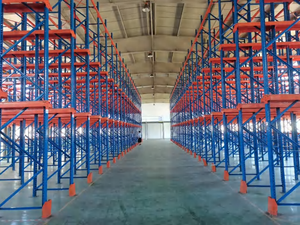
Custom Drive-in Pallet Racking System
Forklift-access deep lanes that eliminate aisles — ideal for high-volume, low-SKU stock in Santa Ana distribution centers.
View productEvery system below is engineered, manufactured and quality-checked in our own factory, then shipped direct to ports serving the Santa Ana, Orange County and Southern California market.
Forklift-access deep lanes that eliminate aisles — ideal for high-volume, low-SKU stock in Santa Ana distribution centers.
View product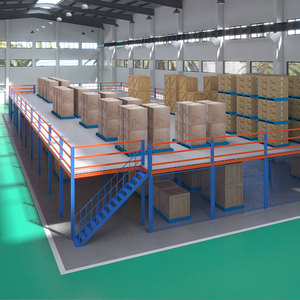
Rack-supported upper floors that double usable square footage without expanding the building footprint.
View product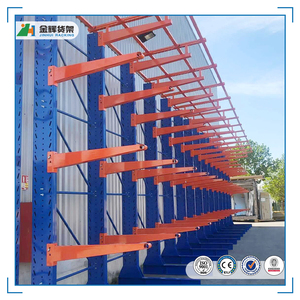
Cold-rolled steel arms for pipes, tubing, aluminum profiles and long stock — no front uprights blocking access.
View product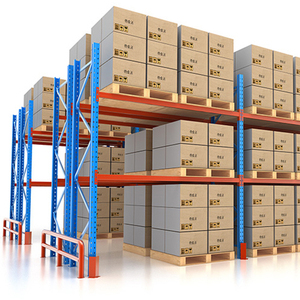
100% direct access to every pallet — the most versatile high-bay choice for multi-SKU Santa Ana DCs.
View product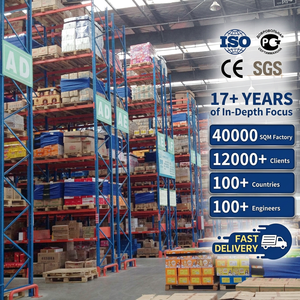
Engineered to meet Australian compliance standards — a benchmark that reassures specifiers in seismic-aware regions.
View product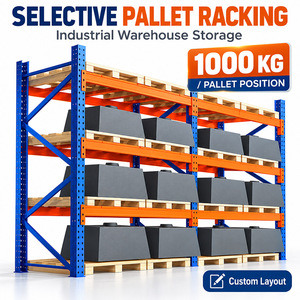
3-level adjustable warehouse rack with factory-direct pricing — a fast, reliable starting point for growing warehouses.
View product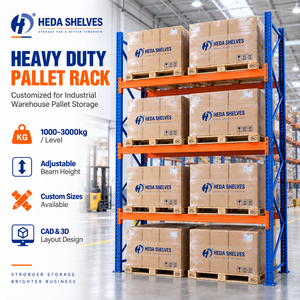
Reinforced uprights and beams engineered for high-load pallet storage and tall high-bay racking configurations.
View product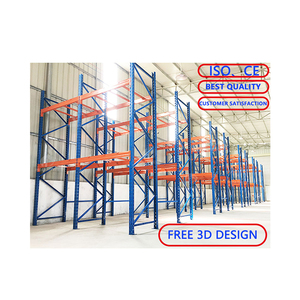
Multi-level steel storage combining maximum pallet density with safe access for high-throughput industrial facilities.
View productWhat warehouse owners and project contractors in Santa Ana, Orange County and the broader Southern California market should verify before choosing a high-bay racking factory or supplier.
The Santa Ana submarket sits at the heart of one of the densest industrial warehouse clusters in Southern California. With land values and lease rates among the highest in the country, the economics of a Santa Ana warehouse are dictated almost entirely by vertical cubic utilization — the ability to store more pallets in the same footprint by building upward. That is precisely the job of high-bay storage racks, and why the choice of racking factory or supplier matters more here than in lower-cost regions.
A high-bay storage rack is typically defined as a selective or drive-in pallet racking system with usable beam heights above roughly 30 feet, often reaching 40 feet or more with the correct turret or reach truck. Designing for that height is not simply a matter of extending uprights — it demands engineered beam-to-upright connections, precise plumb tolerances, correct floor slab loadings, and for Southern California specifically, seismic-aware bracing and anchoring. A supplier who treats a 40-foot high-bay system the same as a 12-foot starter rack is a liability, not a partner.
Three regional realities shape how warehouse racking is specified here. First, land scarcity and high rents mean that even small and mid-sized tenants are pushed toward higher bays to justify the square footage. Second, Santa Ana and the surrounding Orange County and Los Angeles basin sit within a seismically active region — anchors, base plates, row spacers and bracing all affect the structural design. Third, the market's proximity to the Ports of Long Beach and Los Angeles means most Santa Ana buyers are accustomed to importing goods, so they evaluate racking suppliers using the same due-diligence framework as any overseas vendor.
The same high-bay racking family performs very different jobs depending on the downstream business. Santa Ana is a mixed industrial market; the same street may host a 3PL running a high-turnover retail replenishment operation next to a food distributor and an importer of auto parts. The racking brief follows closely from that mix.
Multi-SKU, fast-turn stock demands selective pallet racking with clear SKU-level access and a stable pick-face.
Homogeneous stock and long runs favour drive-in and radio-shuttle deep lanes for maximum density.
High humidity and chilled rooms require galvanized or pre-treated steel and careful aisle ventilation.
Cantilever and selective systems for mixed pallets and long stock, combined with mezzanine floors.
Cantilever and heavy-duty pallet racks handle pipe, lumber and long-format goods.
Clean, labelled racking with modular shelving for controlled picking and compliance-friendly layout.
Three trends are consistently visible in the Southern California industrial market as of the mid-2020s. First, retrofitting height rather than expanding footprints. Where lease costs make new construction unviable, existing tenants invest in re-engineering racking layouts to capture another 25–40% of cubic capacity without leaving the building. Second, semi-automation. Radio shuttle racking has moved from a niche product into a mainstream choice for pallet-heavy operations looking to reduce forklift travel and labour exposure. Third, supply-chain resilience. Buyers increasingly prefer factories that can supply drawings, documentation and a coherent ten-year warranty rather than drop-shippers with no engineering depth.
Equally, seismic design discipline has tightened. Even where the local code places structural responsibility on a licensed engineer of record, racking manufacturers are now expected to supply coherent load tables, anchor specifications and installation drawings that a local engineer can review rather than re-derive. A factory that hands over a generic catalogue sheet is, in practice, offloading design risk onto the buyer.
The gap between a competent high-bay racking factory and a trading intermediary is visible in four places: the drawing pack, the material specification, the documentation, and the warranty. A genuine factory can generate a fit-for-purpose layout drawing from your slab and pallet data within 48 hours, specify the actual steel section profiles and coating system, prepare export documents aligned with U.S. customs requirements and support your building’s engineer of record with the calculations they need.
The typical path for a Santa Ana warehouse owner is to gather three or four quotes — some from local integrators, some from overseas factories. Local integrators offer immediacy and installation labour but add a layer of cost. Direct-from-factory supply, when the supplier offers a credible drawing pack and warranty, generally delivers the same steel at a lower landed cost, provided the buyer is prepared to manage the import process. Our role, as a factory, is to make that import path straightforward: a single English-speaking engineering contact, a single drawing set, a single bill of lading, and installation guidance that a local crew can follow.
For buyers who require local engineering sign-off, we routinely provide anchor calculations and load tables that a licensed California engineer can review and stamp. We do not pretend to replace the engineer of record — we make their work faster and cheaper by removing ambiguity from the racking design itself.
Four commitments that matter when your racking supplier is an ocean away from your Santa Ana warehouse.
CE and ISO certified materials, controlled roll-forming tolerances and quality recognized by clients in 60+ countries.
Free consultation with professional engineers, free warehouse layout design and the optimal storage solution for your operation.
Factory-direct supply with no trading layers — transparent, itemized quotations for distributors and project contractors.
20+ production lines and 30,000 tons of annual output secure delivery in 10–15 days after drawing approval.
A proven five-step workflow refined over 3,500+ international projects — designed to shorten the path from drawing to delivery.
Send your building plan, pallet data, lift equipment and seismic zone.
Free 2D/3D layout, load calculations and itemized quotation in 48 hours.
Manufacturing in 10–15 days with inspection before packing.
Optimized container loading and full export documentation.
Installation drawings, manuals, remote guidance or on-site supervision.
Total lead time = production (10–15 days) + ocean transit + U.S. customs clearance + local delivery. Indicative figures below.
| Route | Main Destination Ports | Indicative Ocean Transit | Typical Racking Demand |
|---|---|---|---|
| China → Southern California | Los Angeles, Long Beach | 14–22 days | High-bay selective, drive-in, mezzanine, cantilever |
| China → U.S. West Coast via rail | Seattle, Tacoma, Oakland | 16–24 days | Selective pallet racking, multi-level shelving |
| China → Mexico | Manzanillo, Lázaro Cárdenas, Veracruz | 18–30 days | Nearshoring plants, retail DCs, 3PL |
| China → Central America | Puerto Quetzal, Acajutla, Puerto Cortés | 25–35 days | FMCG distribution, textiles, coffee |
| China → South America | Callao, San Antonio, Santos, Buenos Aires | 30–45 days | Seismic-rated racking, cold chain, agro-export |
Transit times are indicative from main Chinese ports and vary by carrier, transshipment and season. Final schedules are confirmed with each quotation.
Send us your building plan and pallet data. Our engineers will return a free 2D/3D layout, load calculation and itemized quotation within 48 hours.