Lottot Storage Solutions · Factory-direct to Ecuador
Industrial Storage Shelving Factories & Wholesalers for Ecuador
Seismic-aware pallet racking, cantilever storage, shuttle racking and warehouse shelving engineered for Guayaquil humidity, Quito floor limits and Ecuador’s growing cold-chain and distribution economy.
Product recommendation
Eight Industrial Storage Shelving Products Recommended for Ecuador
These systems cover the practical range of Ecuadorian warehouse demand: long-material yards, coastal distribution centres, cold-chain rooms, retail replenishment, manufacturing stores and safety-critical pallet storage. Every product below can be engineered around pallet data, seismic zone, slab conditions, humidity exposure and destination port.
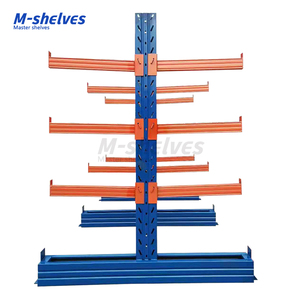
Freestanding Double Arm Storage Racks for Garage Heavy Duty Cantilever Racking for Large Workshop Tools Long Material Storage
Best for pipes, profiles, timber and long workshop materials where load lengths change by project. Double-arm flexibility suits construction yards and metal service centres in Quito, Cuenca and Ambato.
View product →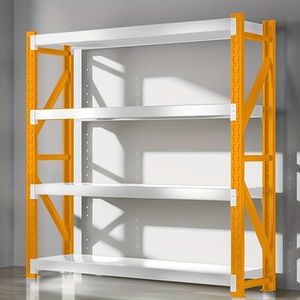
Customized Heavy-Duty Industrial Steel Pallet Rack System Multi-Level Warehouse Storage Metal Shelving Stacking Racks Shelves
Selective multi-level storage for distributors and 3PLs with mixed SKUs. Layouts can account for Ecuadorian slab data, forklift aisle widths, future expansion and export container fill ratios.
View product →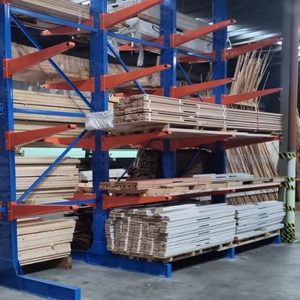
Cantilever Racking Wholesale Double-sided Heavy Pipe Warehouse Rack Industrial Heavy Duty Cantilever Racking Pallet Racking
Double-sided pipe storage for oilfield, mining, utility and industrial contractors. Wide load support and optional protective coatings are relevant for coastal yards and outdoor covered storage.
View product →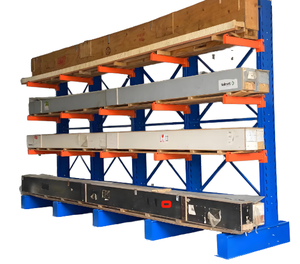
Heavy-Duty Industrial Steel Adjustable Corrosion Protected Cantilever Rack System Large Load Capacity for Warehouse
Designed for humid, coastal or cold-chain environments where finish quality affects service life. Adjustable arms and corrosion-protected steel help protect long-load storage in Manta, Guayaquil and Machala.
View product →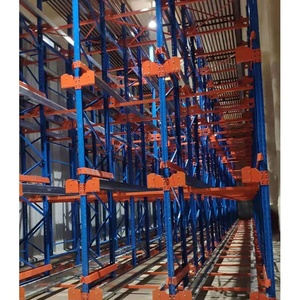
Customized Steel Pallet Rack Stacking Racks & Shelves Warehouse Storage Rack Heavy Duty Shuttle Racking for Industrial
Radio shuttle and high-density lane storage for cold rooms, FMCG and beverage warehouses. Fewer working aisles can increase pallet capacity where refrigerated space is expensive or land is constrained.
View product →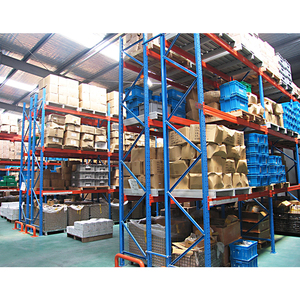
Standard Pallet Rack Warehouse Pallet Rack Assemble Racks Reliable Quality Heavy Duty Warehouse Pallet Racking System
A practical fit for retail, e-commerce and distribution warehouses needing direct access to every pallet. Clear bay planning supports fast picking, stock rotation and later reconfiguration.
View product →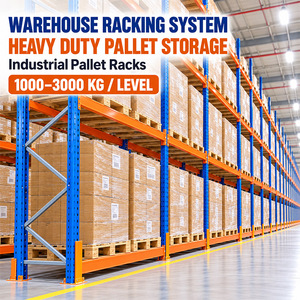
Warehouse Racking System for Heavy Duty Pallet Storage Industrial Pallet Racks
Scalable industrial pallet storage for manufacturing, automotive aftermarket and project-cargo warehouses. Components can be planned for phased expansion rather than one-time overbuilding.
View product →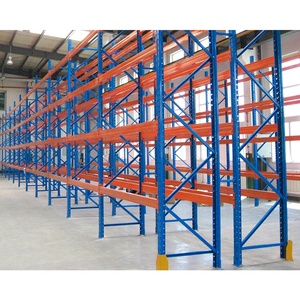
Customized Pallet Rack for Warehouse with Rack Safety
For high-traffic warehouses that need column guards, row spacers, load signs and safer forklift interaction. Useful where insurers, safety teams or 3PL clients require visible rack protection.
View product →Market context
Why Industrial Storage Shelving in Ecuador Is a Specification Problem, Not a Catalog Purchase
Ecuador’s warehouse investment is shaped by four forces: the cost of imported steel, the physical realities of coastal humidity and seismic activity, the growth of cold-chain and agro-export logistics, and the need to do more inside existing buildings in Quito, Guayaquil and Cuenca. A racking quotation that treats those issues as footnotes is difficult to compare with one that engineers around them. That is why a useful wholesale discussion should begin with the operating environment, not simply the number of uprights and beams.
Lottot Storage Solutions Co., Ltd. has manufactured industrial storage systems since 2007 and has delivered more than 3,500 projects in 60+ countries, exporting at least 600 containers each year. Our factory-direct model is built for buyers who need a clear layout, a load-calculated structure, export documentation and a shipping plan that respects container economics. We are not a local trading layer adding a margin after the fact; the engineering team that reviews your pallet data is part of the same manufacturer that roll-forms, finishes and packs the steel.
At the same time, Ecuador-specific validation matters. We recommend that final seismic and foundation assumptions be reviewed by a locally licensed structural engineer, and we supply the calculations, drawings and component data needed to support that review. This is the practical meaning of E-E-A-T in this category: real manufacturing experience, transparent engineering assumptions and documentation that a local project team can verify.
Information-gain note: two quotations can look identical at the line-item level while differing sharply in base plate design, bracing, anchor specification, coating system, container fill ratio, Spanish documentation and spare-part planning. Compare those items before comparing price per bay.
Ecuador-specific questions that change the design
- What seismic zone, soil class and local validation route apply to the site?
- Is the warehouse slab adequate for point loads and chemical anchors?
- How humid or salt-laden is the air in Guayaquil, Manta or the cold room?
- Are there wash-down, hygiene or condensation-control requirements?
- Which port, Incoterm and container size will make landed cost sensible?
- Are Spanish labels, drawings and installation manuals required?
Localised application scenarios
Where Industrial Storage Shelving Creates Value in Ecuador
The right system depends less on industry labels than on how stock moves. These are the scenarios we see most often when Ecuadorian buyers compare selective racking, cantilever racks, shuttle systems and multi-level shelving.
Port-led distribution and 3PL
In Guayaquil, Posorja and Manta, importers need fast put-away after container drayage and reliable access for mixed SKUs. Selective pallet racking, mezzanine picking and clearly labelled bay plans help 3PLs protect service levels while scaling with client demand.
Cold-chain, seafood and agro-export
Shrimp, banana, cocoa, coffee, flowers and fruit supply chains reward dense, disciplined storage. Radio shuttle and drive-in racking reduce aisle space, while corrosion protection and condensation-aware detailing support chilled and frozen rooms.
Retail, e-commerce and pharmacy
Quito, Guayaquil and Cuenca retailers need fast replenishment and high SKU visibility. Selective pallet racking, shelving and carton-flow concepts can be combined so that fast movers stay at the pick face while reserve stock remains organised above or behind.
Construction materials, steel and pipes
Cantilever racking is often the difference between a safe yard and a congested one. Pipes, profiles, timber and steel bars can be stored by length and weight class, with double-sided layouts improving access for project contractors and hardware wholesalers.
Manufacturing and automotive aftermarket
Factories and parts distributors need heavy-duty pallet racks that can absorb new product lines without a full warehouse rebuild. Adjustable beams, clear load signage and protection accessories support changing SKU profiles and forklift traffic.
High-altitude and constrained urban warehouses
Quito and Cuenca sites can face floor-limit, clear-height and access restrictions. Mezzanine racking and high-bay selective systems make better use of vertical space, but only after slab capacity, seismic bracing and forklift circulation have been checked.
Localised development trends
Trends Reshaping Warehouse Shelving Demand in Ecuador
Buyers are becoming more precise. The most competitive tenders now ask for engineering evidence, corrosion detail, container plans and Spanish-language installation support, not just a price list.
Seismic documentation is moving into the tender pack
Project owners and insurers increasingly expect bracing, anchor and base-plate assumptions to be visible. We design with seismic zone, soil class and slab data in mind, while recommending final validation by a locally licensed engineer.
Corrosion is treated as life-cycle cost
Coastal humidity and cold-room condensation make finish quality a maintenance issue. Phosphating plus powder coating is standard; hot-dip galvanized or pre-galvanized options are considered for harsh sites.
Density is replacing simple expansion
Where land near Guayaquil or Quito is costly, radio shuttle, drive-in and mezzanine solutions receive more attention. The objective is not maximum density at any cost, but the right balance of access, safety and throughput.
Container economics shape the design
Overseas buyers gain little from a design that ships poorly. Uprights, beams and accessories are planned around container fill, unloading sequence and site assembly so that steel arrives protected and complete.
Spanish-language after-sales material matters
Installation drawings, bay labels, load signs and manuals can be supplied in Spanish on request. This reduces site errors and helps local contractors follow the intended assembly sequence.
Rack safety is becoming visible
Column guards, row spacers, beam locks and load notices are increasingly requested by 3PL clients and safety teams. A racking system should be designed for forklift reality, not idealised traffic.
Factory-direct advantages
A Supplier That Can Engineer, Build, Inspect and Ship
Ecuadorian distributors and project buyers need more than a product photo. They need a manufacturer who can answer technical questions, prepare export-ready documentation and keep the design coherent from quotation to installation.
Manufacturing depth, not a trading layer
Lottot operates 20+ automatic roll-forming lines and 30,000 tons of annual output, with patented products and a factory team involved from layout to packing. Buyers speak to the source of engineering, not an intermediary.
Engineering support before price
Free consultation, 2D/3D warehouse layout, load assumptions and itemised quotations are typically returned within 48 hours after complete data is received. The goal is a buildable design, not a fast but incomplete number.
Quality control and a 10-year warranty
CE and ISO-certified materials and quality management support consistent profiles, controlled tolerances and pre-shipment inspection. Racking products are covered by a 10-year warranty against design, manufacturing, transportation or installation-guidance issues.
Export logistics built for Ecuador
We support full-container and consolidated loads, FOB, CFR or CIF terms, and DDP on request. Export documents, packing lists, loading plans and Spanish labels can be prepared to reduce friction at destination.
See how the product is made before it ships
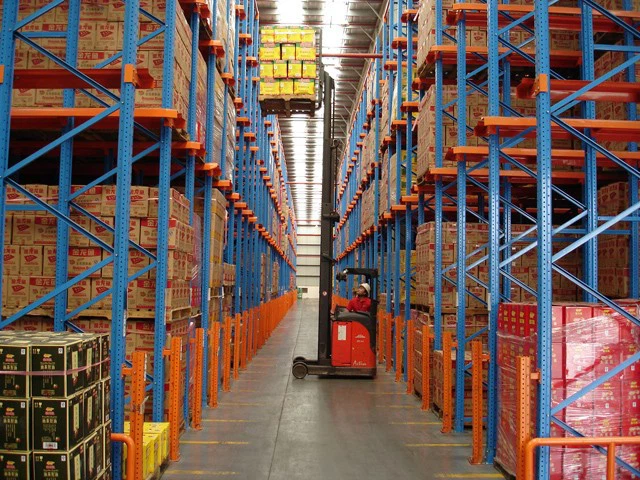
Every upright and beam is roll-formed, welded, pre-treated, powder-coated and checked against the approved drawing on our own lines. For Ecuadorian projects, that control matters because a missing connector or mislabelled beam can delay installation until the next shipment.
- 20+ automatic roll-forming lines
- 10–15 days standard production after drawing approval
- Pre-shipment inspection before packing
- Container loading plan and packing list alignment
- Installation drawings and manuals supplied
- Spanish labels available on request
10-Year Warranty Insurance. We cover racking products for ten years and work to resolve quality issues caused by our design, manufacturing, transportation or installation guidance.
Procurement path
A Clear Four-Step Route from Floor Plan to Installation
Ecuadorian buyers often need to align factory production, ocean booking, customs clearance and site labour. A disciplined sequence reduces the risk of re-quotes, incomplete containers and installation delays.
Share requirements
Send the warehouse plan, pallet size and weight, lift height, slab details, seismic zone, humidity exposure, target port and preferred Incoterm.
Engineer and quote
Receive a 2D/3D layout, recommended system comparison, itemised quotation and container-loading plan, usually within 48 hours after complete data is received.
Manufacture and inspect
Production typically takes 10–15 days after drawing approval. Components are checked, labelled where agreed and packed to match the shipment sequence.
Ship and support
We coordinate export documents, loading and delivery terms. Installation drawings, manuals and remote guidance help your local team assemble the system correctly.
| Destination | Indicative ocean transit | Planning note for racking importers |
|---|---|---|
| Guayaquil / Posorja | About 28–38 days | Main gateway for many distributors and 3PLs. Plan containers around drayage, unloading space and phased installation. |
| Manta | About 30–40 days | Relevant for coastal projects. Corrosion protection and outdoor or covered-yard detailing deserve early attention. |
| Quito via Guayaquil | Ocean plus inland leg | High-altitude destination. Confirm slab capacity, clear height, road access and forklift aisle before finalising the layout. |
| Cuenca / Ambato via Guayaquil | Ocean plus inland leg | Common for agricultural distribution, construction materials and regional wholesalers. Mixed-load planning can help first orders. |
Transit times are indicative from main Chinese ports and vary by carrier, routing, season and customs. Final schedules and Incoterms are confirmed with each quotation.
FAQ
Questions Ecuadorian Buyers Ask Most
These answers are written for distributors, 3PLs, contractors and factory owners comparing factory-direct racking supply to local resellers.
Can you ship industrial storage shelving directly to Ecuador, and what terms do you offer?
Yes. We ship full-container and consolidated loads to Ecuadorian destinations through ports such as Guayaquil, Posorja and Manta, subject to carrier routing and cargo. Common terms are FOB, CFR or CIF, with DDP available on request. The best Incoterm depends on whether your team has a customs broker, drayage arranged and a site ready to receive steel.
How long does delivery to Guayaquil usually take?
Production usually takes 10–15 days after drawing approval. Indicative ocean transit from main Chinese ports to Ecuador is roughly 28–38 days, depending on carrier, transshipment and season. Add customs clearance, drayage and site installation. For project planning, treat the total as a sequence rather than a single shipping number.
Can the racking be engineered for Ecuador’s seismic requirements?
Yes. Our engineers calculate upright, beam and anchorage requirements using the seismic zone, soil class and floor slab data provided for the site, and typically consider reinforced base plates, heavier bracing, row spacers and chemical anchors. We recommend final validation by a locally licensed Ecuadorian structural engineer, especially for high-bay or high-value installations.
How do you protect racking in Guayaquil humidity or coastal salt air?
Standard components receive phosphating pre-treatment and electrostatic powder coating. For coastal, high-humidity or cold-chain facilities, we offer hot-dip galvanized or pre-galvanized components for longer corrosion resistance. The right choice depends on exposure, cleaning routines, budget and expected service life.
Do you provide Spanish drawings, labels and customs documents?
Spanish-language drawings, labels and manuals can be prepared on request. We also prepare commercial invoices, packing lists, bills of lading and certificates as applicable. Customs clearance itself is handled by your licensed broker in Ecuador, but accurate factory documents make the process smoother.
What information do you need for an accurate quotation?
Send the warehouse CAD or PDF with columns, doors and clear height; pallet dimensions and maximum load; pallet quantity; forklift type, lift height and aisle width; floor slab thickness and concrete strength; seismic zone; temperature and humidity conditions; required colour; destination port; preferred Incoterm; and target installation date. Incomplete data is the most common reason overseas racking projects receive re-quotes.
Can you supply a mixed container for a first order or growing distributor?
Project quotations can include mixed racking components, accessories and different bay configurations within a container plan. The objective is to use the container efficiently while keeping the installation sequence clear. Share your phased plan so the packing list can match how you intend to receive and install the steel.
What warranty and after-sales support do you provide?
Racking products are covered by a 10-year warranty against quality issues caused by our design, manufacturing, transportation or installation guidance. We support buyers with installation drawings, manuals, spare-part planning and remote guidance. On-site supervision can be discussed for larger projects, subject to scheduling and commercial terms.
Planning an Industrial Storage Project in Ecuador?
Send your floor plan, pallet data, seismic zone, humidity conditions and destination port. Our team can compare the right shelving and racking systems, prepare a layout and return an itemised factory-direct quotation within 48 hours after complete information is received.