Pallet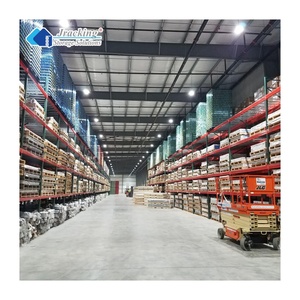
The Cap-Haïtien market — the commercial gateway of northern Haiti and a growing hub for cross-border trade, food imports and construction materials — puts unique pressure on warehouse infrastructure. Humidity from the Caribbean coast, limited indoor footprint, non-standard pallet sizes arriving from the Dominican Republic and Florida, and the need to move containers efficiently through Port International de Cap-Haïtien all demand racking engineered for the reality on the ground, not for a European template.
Lottot Storage Solutions Co., Ltd. has manufactured industrial storage systems since 2007, exporting at least 600 containers every year and completing more than 3,500 warehouse projects across 60+ countries. For importers, distributors and 3PL operators serving Cap-Haïtien, this means working directly with the factory that roll-forms the uprights, punches the beams and calculates your load capacity — no trading layers, no re-quoted dimensions, and no ambiguity between the drawing you approve and the steel you receive.
Our engineers routinely design for two distinct realities in the Cap-Haïtien supply chain. The first is the dense urban warehouse in the city center, where ceiling height is fixed, aisles are narrow and every square meter of floor must convert into pallet positions. The second is the peri-urban distribution center along the Route Nationale, where forklifts, reach trucks and manual handling all coexist and racking must be robust enough to absorb occasional impact while remaining easy to inspect, repair and expand in phases. Both scenarios are addressed with the same engineering discipline: a layout drawing derived from your actual pallets, a load calculation based on your real products, and a shipping plan that keeps freight cost per pallet low.
Because Cap-Haïtien lies in a seismically active region and sits directly on a humid coastline, we treat corrosion protection and base-plate stability as non-negotiable defaults rather than optional upgrades. Standard components receive phosphating pre-treatment and electrostatic powder coating; coastal and cold-room applications can be specified with hot-dip galvanized or pre-galvanized steel. Anchor specifications, bracing patterns and row spacers are sized to your slab and your local seismic assumptions, with a recommendation that final validation is confirmed by a locally licensed structural engineer — a professional practice that international racking standards expect and that serious buyers in Haiti increasingly demand.
Information Gain Commitment. Every Lottot quotation for the Cap-Haïtien market includes an itemized bill of materials, upright and beam load tables, base-plate and anchor specification, container loading diagram and an indicative landed-cost breakdown — information that lets you compare suppliers on engineering, not just on price per kilogram.
Selected by turnover, pallet weight and building height. Each system ships as a complete kit with beams, uprights, bracing, safety locks and anchors.
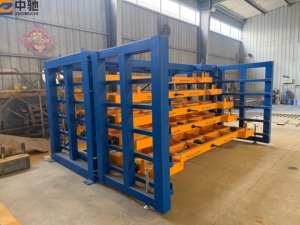
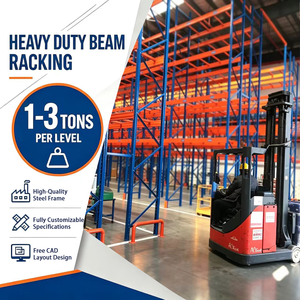
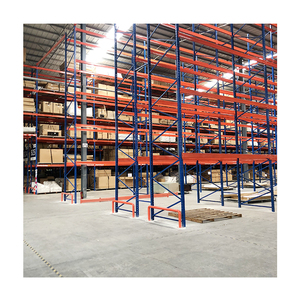
Understanding where your racking will stand — and what it will hold — determines nearly every engineering decision.
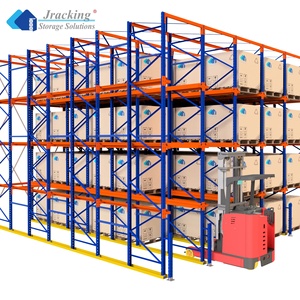
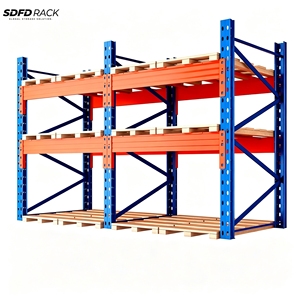
Rice, cooking oil, flour, canned goods and bottled beverages arriving in mixed containers. Selective pallet racking with 100% SKU access suits fast-moving importers; drive-in lanes suit high-volume seasonal stock.
Multi-client operations require flexible reconfiguration. Boltless shelving and selective pallet racking allow fast re-slotting, while mezzanine systems convert vertical space into additional pick faces.
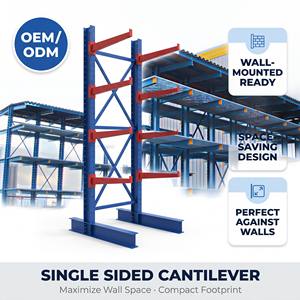
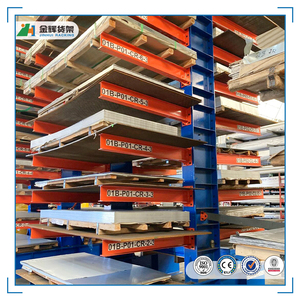
Rebar, steel sections, pipes and profiles demand cantilever racking. Long-load arms avoid damage, and heavy-duty bases accommodate the irregular weights typical of construction supply chains.
Seafood, dairy and pharmaceutical cold rooms need galvanized or pre-galvanized steel and dense, high-turnover layouts. Radio shuttle and drive-in lanes maximize cube per cubic meter.
Carton flow and light-duty shelving keep picking aisles productive. Small cartons, high SKU counts and narrow aisles all favor gravity-fed picking lanes with minimal travel time.
With container flow concentrated at Port International de Cap-Haïtien, transload warehouses need rapid pallet turnover and unimpeded forklift access — a case for wide-aisle selective systems and heavy-duty pallet racking.
What reputable suppliers should be prepared to discuss with buyers in northern Haiti in the coming years.
Following regional earthquake events, buyers increasingly request documented anchor specifications and bracing calculations. This trend accelerates demand for engineering-grade documentation.
Hot-dip galvanizing is transitioning from an expensive extra to a standard requirement as facilities near the harbour experience faster powder-coat deterioration due to salt-laden air.
Buyers now verify suppliers via BIM, CAD files and itemized BOMs before committing to container-sized orders. Information transparency is becoming a decisive competitive factor.
Importers who cannot commit to a full build-out prefer boltless and selective systems that expand row by row — ensuring capital is deployed against realized growth rather than forecast.
Six commitments that differentiate a genuine manufacturer from a trading intermediary.
CE and ISO certified materials, controlled roll-forming tolerances and quality recognized by clients in 60+ countries including the Caribbean and Latin America.
Free consultation with professional engineers, free 2D/3D warehouse layout design and the optimal storage solution for your operation within 48 hours.
Factory-direct supply with no trading layers — transparent, itemized quotations that make landed cost comparable across suppliers for the Cap-Haïtien market.
20+ production lines and 30,000 tons of annual output secure delivery in 10–15 days after drawing approval — critical for time-sensitive import cycles.
Container loading plans that maximize payload, FOB/CFR/CIF terms and DDP on request to Port International de Cap-Haïtien and neighbouring Caribbean gateways.
All racking products carry a decade-long warranty, with remediation for any quality issue arising from our design, manufacturing, transport or installation guidance.
A proven workflow refined over thousands of international shipments.
Send your building plan, pallet data and handling equipment.
Free 2D/3D layout, load calculations and quotation in 48 hours.
Manufacturing in 10–15 days with inspection before packing.
Optimized container loading and complete export documentation.
Drawings, manuals, remote or on-site supervision for your team.
Total lead time = production (10–15 days) + ocean transit + local customs clearance at Port International de Cap-Haïtien.
| Route | Main Gateways | Indicative Transit | Typical Racking Demand |
|---|---|---|---|
| Direct to Cap-Haïtien | Port International de Cap-Haïtien | 28–40 days | Selective pallet racking, boltless shelving |
| Via Dominican Republic | Puerto Plata, Santo Domingo (overland to Cap-Haïtien) | 24–34 days | Mixed SKU, cross-border distribution |
| Via Miami Transshipment | PortMiami / Port Everglades to Cap-Haïtien | 30–42 days | Urgent replenishment for 3PL clients |
| Via Kingston, Jamaica | Kingston Container Terminal to Cap-Haïtien | 30–40 days | Regional consolidators and re-export |
| Consolidated FCL/LCL | Any listed gateway with LCL option | + 7–14 days | Smaller importers, phased builds |
Transit times are indicative from main Chinese ports and vary by carrier, transshipment and season. Final schedules are confirmed with each quotation.
Yes. We regularly ship full-container and consolidated loads to Port International de Cap-Haïtien as well as to Puerto Plata and Santo Domingo in the Dominican Republic for overland transfer. We quote under FOB, CFR or CIF terms, with DDP available on request where local customs arrangements permit.
Yes. Our engineers calculate upright, beam and anchor requirements using the seismic zone, floor slab data and local code guidance for your site, and typically specify reinforced base plates, heavier bracing, row spacers and chemical anchors. We recommend final validation by a locally licensed structural engineer — a practice serious buyers in Haiti increasingly expect.
Standard components receive phosphating pre-treatment and electrostatic powder coating. For coastal warehouses, high-humidity rooms or cold-chain facilities we specify hot-dip galvanized or pre-galvanized components for longer corrosion resistance, and adjust fastener and anchor coatings accordingly.
Production usually takes 10 to 15 days after drawing approval. Indicative ocean transit from China is about 28 to 40 days to Cap-Haïtien directly, and 24 to 34 days when routed via the Dominican Republic with overland transport to the north.
Yes. Our engineers routinely design phased layouts for importers who cannot commit to a full build-out. Uprights, beams and accessories can be manufactured as repeatable kits, and we retain the original drawings so future batches match earlier shipments precisely.
All racking products are covered by a 10-year warranty against quality issues caused by our design, manufacturing, transportation or installation guidance. We provide spare parts and replacement components for the life of the system.
Send us your floor plan, pallet dimensions and target storage capacity. Our engineers deliver a free racking layout, load calculation and itemized quotation within 48 hours — no trading layers, no ambiguity.