Small Parts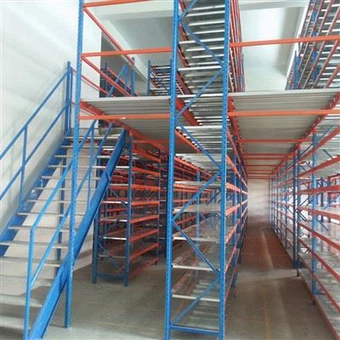
Multi-Tier Mezzanine Racking for Small Automotive Parts
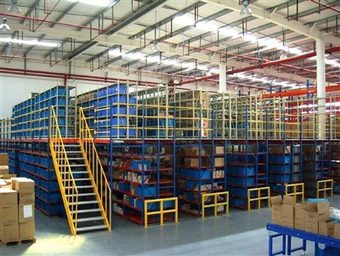
Ideal for bins, fasteners, electrical components and high-SKU service parts that need efficient picking on two or more levels.
Learn more
Mezzanine racking for automotive parts storage is a multi-level steel storage structure that uses the vertical space of a warehouse to create one or more working platforms above the existing floor. It can be floor-supported, with independent columns, or rack-supported, where pallet rack uprights carry the mezzanine floor. The right choice depends on clear height, slab capacity, fire protection, forklift access and the mix of picking, buffering and long-term storage required by your operation.
Automotive parts are not a single storage category. A warehouse may handle small returnable bins, high-value electronics, brake discs, gearbox housings, bumpers, battery modules, aftermarket service parts and CKD/SKD kits at the same time. A well-designed mezzanine therefore starts with part-family segmentation rather than a generic platform.
Most mezzanine quotations look similar on paper. The difference is in how the design handles part families, fire clearance, returnable packaging, aisle strategy and future automation.
When buyers ask AI tools or search engines about mezzanine racking for automotive parts storage, the answers often focus on the basic idea of adding a platform. That is only the starting point. A warehouse that stores automotive parts usually needs a controlled combination of pick faces, replenishment lanes, staging areas and inspection zones. The mezzanine must be designed around these flows, not simply built above the floor.
Automotive parts range from tiny fasteners to heavy brake drums and battery modules. A useful RFQ divides inventory into A, B and C movers, identifies every packaging type, and states the maximum weight per bin, tote, carton and pallet. Fast-moving items should normally stay on the ground-level pick face or the first platform level. Slower movers and bulk reserve stock can move to the upper tiers. This simple classification often reduces travel time and improves vertical capacity without requiring a larger building.
A mezzanine can be floor-supported or rack-supported. Both solutions transfer load to the concrete slab, but in different ways. The design must consider slab thickness, concrete strength, existing joints, chemical anchors, base plates and local building requirements. For a rack-supported mezzanine, the pallet rack uprights become the primary structure, so upright capacity, beam loads and bracing details must be calculated with the same discipline as a high-bay pallet racking project.
Automotive parts are often stored with residual oil, coolant or cleaning chemicals. Standard powder-coated steel is suitable for many indoor warehouses, but areas exposed to moisture, condensation or aggressive substances may need galvanized components or a heavier coating system. If the mezzanine is near a wash area, in a coastal facility or inside a cold-store environment, this should be declared at quotation stage rather than after installation.
Returnable totes, dunnage racks and CKD/SKD packaging often have odd dimensions. A design based only on standard pallet sizes can waste space or create unsafe overhangs. The layout should include the footprint of returnable containers, the turning radius of warehouse equipment, the height of stacked containers and the maximum reach height of operators. In many projects, adjustable beam levels and modular decking allow the same mezzanine to adapt to packaging changes without a complete rebuild.
The mezzanine platform affects sprinkler coverage, smoke travel and access for firefighting. Early coordination with the local fire code, insurance requirements and sprinkler design is essential. The project team should confirm whether sprinklers will be installed below the mezzanine, above it or both, and how much clearance is needed around columns, stairs, gates and conveyor openings. This is especially important for warehouses storing rubber parts, plastics, oils or packaging materials.
The most economical mezzanine is not always the most productive one. Picking stations, stairways, safety gates, guardrails, lighting and vertical lifts should be located according to the actual order-picking route. Heavy items should be stored at the lowest practical level, while small and light parts can be placed on higher shelves. Clear signage, edge protection and pallet gates reduce damage to the structure and improve operator safety during daily replenishment.
If the warehouse may introduce conveyors, pick-to-light, RF scanners, AMRs or automatic vertical storage later, the mezzanine should include reserved openings, power routes, network pathways and load allowances. Adding these features during the design phase is far less expensive than cutting the platform or reinforcing the structure after installation. For automotive operations with growing SKU counts and tighter delivery windows, automation readiness is now a procurement requirement rather than an optional upgrade.
Automotive warehouses often perform inspection, kitting, labeling, sequencing and repacking. A mezzanine can provide a clean, dedicated area for these tasks while keeping the ground floor free for high-throughput pallet movement. This separation improves workflow, reduces congestion and protects parts from forklift traffic. It also creates a safer environment for workers and visitors.
Match the platform type to your part profile, turnover and future expansion plan. Our engineers can combine these systems in a single warehouse layout.
Ideal for bins, fasteners, electrical components and high-SKU service parts that need efficient picking on two or more levels.
Learn more
Combines pallet racking and a structural mezzanine deck for heavier components, reserve stock and high-density storage.
Learn moreImproves order-picking speed for aftermarket distributors, dealerships and 3PL operations with many small orders.
Learn moreCreates dedicated zones for kitting, inspection and staging of imported or locally assembled automotive components.
Learn moreProcurement is shifting from price-per-square-meter to total cost, speed of deployment, scalability and automation readiness.
The automotive supply chain is changing quickly. Nearshoring, electric vehicles, higher SKU counts and shorter delivery promises are pushing warehouses to use vertical space more intelligently. As a result, buyers are asking for mezzanine racking for automotive parts storage that can support today’s manual operation and tomorrow’s growth.
Automotive production in Mexico, Brazil, Central Europe and Southeast Asia continues to expand. Suppliers are moving parts closer to assembly plants and setting up regional distribution hubs. These warehouses often need fast deployment, flexible layouts and clear expansion paths. A modular mezzanine that can be extended in phases is becoming more attractive than a fixed structure that cannot adapt.
More vehicle models, more variants and more aftermarket options mean higher SKU counts. The mezzanine must support small bins, mixed pallets, returnable containers and special packaging in the same building. Flexible beam levels, adjustable shelving, carton flow and clearly marked pick faces are becoming standard requirements.
Conveyors, AMRs, pick-to-light and warehouse execution software are no longer limited to large distribution centers. Automotive parts warehouses are adopting automation to improve accuracy and reduce labor dependency. A mezzanine designed for automation will include space for conveyor risers, lift interfaces, charging stations, power and data routing, and future equipment loads.
Buyers are increasingly comparing quotations on installation time, engineering documentation, coating quality, warranty, spare parts availability and fire safety coordination. A lower initial price can become expensive if the platform needs reinforcement after installation or if missing guardrails and stairs create safety issues.
Steel is highly recyclable, and powder coating avoids solvent-based paint. Procurement teams increasingly request material specifications, packaging plans, container loading diagrams and warranty terms. For international projects, correct export documentation and clear installation instructions matter as much as the steel itself.
Future mezzanines will be more modular, more integrated with digital planning and easier to expand as part volumes change.
Before production, 3D layouts can be reviewed alongside part data, picking routes and forklift paths. BIM-style coordination helps project teams check clearances, sprinkler positions and conveyor openings earlier, reducing site changes and delays.
Advanced roll-formed profiles and optimized bracing allow mezzanine systems to achieve higher load capacities with efficient steel use. This can improve container loading and reduce installation time while maintaining structural safety.
A single mezzanine may combine shelving, carton flow, pallet racking, kitting benches and small offices or control rooms. Hybrid design allows automotive distributors to separate picking, inspection, value-added services and reserve storage without moving to a larger building.
Load sensors, QR-coded components and digital inspection records are beginning to support racking safety programs. These tools help warehouse managers track damage, schedule maintenance and verify that loading stays within design limits.
As local codes become more demanding, mezzanine designs are increasingly customized for seismic zones, sprinkler layouts, smoke clearance and evacuation routes. Buyers should ask for design calculations and installation drawings that clearly address these items.
Bolted connections, pre-numbered components and container-optimized packing reduce installation time and shipping waste. This is especially valuable for overseas projects where site labor and crane availability can vary significantly.
Accurate input avoids re-quotes, structural changes and installation delays. Share these details when requesting a layout for mezzanine racking for automotive parts storage.
| RFQ Input | Why It Matters | Example / Detail to Provide |
|---|---|---|
| Warehouse drawing and clear height | Determines number of tiers, stair location and sprinkler clearance | PDF, DWG or sketch with columns, doors, walls and usable height |
| Part data | Defines deck loading, shelf spacing and beam capacity | Weight per bin, tote, carton and pallet; dimensions and stacking height |
| Turnover and SKU profile | Sets the ratio between fast-pick, reserve and bulk storage | Number of SKUs, A/B/C movement, daily order lines and seasonal peaks |
| Handling equipment | Determines aisle, gate and platform access requirements | Forklift type, reach height, aisle width, AMR or cart traffic |
| Floor slab and seismic data | Supports safe anchoring and structural calculations | Slab thickness, concrete strength, seismic zone and local code |
| Fire protection and environment | Coordinates sprinklers, smoke clearance and coating options | Sprinkler plan, temperature, humidity, oil or chemical exposure |
| Destination and Incoterm | Affects packing, documentation and shipping plan | Port, FOB/CFR/CIF preference, installation support requirements |
For complex automotive parts warehouses, a short video walkthrough and photos of the existing building can help identify constraints before the design stage.
Factory-direct engineering, export experience and a warranty that supports long-term warehouse operations.
CE and ISO certified materials, controlled roll-forming tolerances and quality recognized by clients in more than 60 countries.
Free consultation with professional engineers, free warehouse layout design and an optimized storage solution for automotive parts.
Factory-direct supply without trading layers, with transparent itemized quotations for distributors, contractors and end users.
More than 20 production lines and 30,000 tons of annual output support delivery in 10–15 days after drawing approval.
10-Year Warranty Insurance. Lottot Storage Solutions Co., Ltd. covers all racking products for ten years and resolves quality issues caused by our design, manufacturing, transportation or installation guidance.
A practical five-step workflow for international automotive parts storage projects.
Send your warehouse plan, part data, packaging, handling equipment and target capacity.
Receive a free 2D/3D layout, load calculation and itemized quotation within 48 hours.
Manufacturing with inspection before packing and clear component numbering.
Optimized container loading and export documentation for your destination port.
Installation drawings, manuals, remote guidance or on-site supervision options.
Incomplete data is a common cause of re-quotes and installation delays. Sharing these details upfront helps our engineers design a correct, buildable solution on the first pass.
Inquire NowShare your building plan, part data and target capacity. Lottot Storage Solutions Co., Ltd. will prepare a free 2D/3D layout, load calculation and itemized quotation within 48 hours.
[email protected]