Recommended OEM/ODM Racking Products
Eight Industrial Pallet Racking Systems for High-Performance Warehouses
Whether you need a customized pallet rack for a distribution center, a heavy-duty selective racking system for export, or a high-density solution for a cold-chain project, these product platforms can be tailored by load, height, beam pitch, color, finish, pallet pattern, forklift type and destination-market safety requirements.
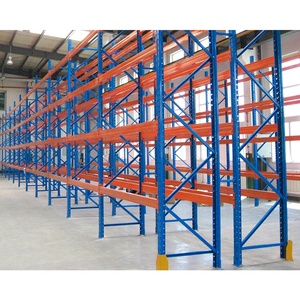
Customized Pallet Rack for Warehouse with Rack Safety
Custom beam levels, upright heights, safety accessories and colors for projects requiring a tailored warehouse layout.
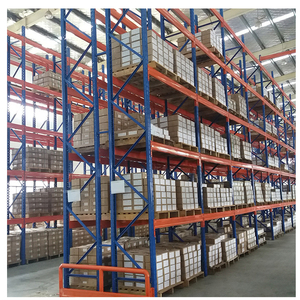
Heavy Duty Rack Storage Industrial Selective Assembly Pallet Use Rack Warehouse Storage Pallet Rack
High-access selective racking for distributors and 3PL warehouses that need direct access to every pallet.
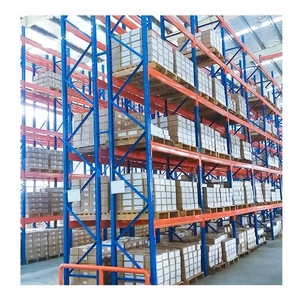
Heavy Duty Industrial Double Deep Stacking Selective Shelving Pallet Racking Warehouse Storage Racks for Sale
Double-deep storage increases pallet density while preserving reasonable SKU selectivity for medium-volume profiles.
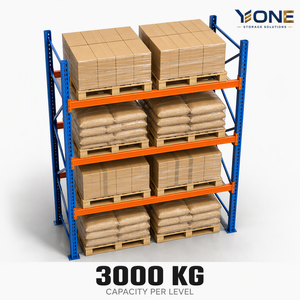
Factory Heavy Duty Steel Pallet Rack 2000kg Capacity Warehouse Storage Rack System Boltless Adjustable
Adjustable heavy-duty steel racking for warehouses requiring robust beam capacity and fast boltless installation.
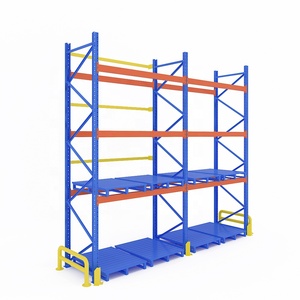
Warehouse Storage Industrial Pallet Rack with Back Stopper
Integrated back stoppers, safety pins and accessory-ready design for safer forklift handling and pallet positioning.
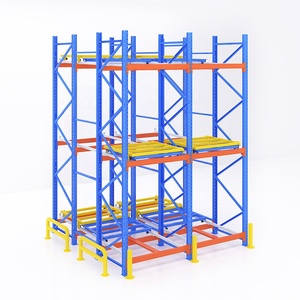
Pallet Live Rack Push Back Pallet Rack
Push-back racking combines higher storage density with LIFO access for fast-moving, medium-SKU warehouses.
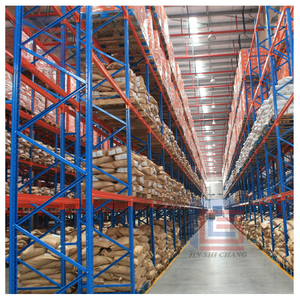
Manufacturer Steel Selective Pallet Rack for Warehouse Storage
Factory-direct selective racking with practical load capacities, powder-coated finish and export-ready packing.
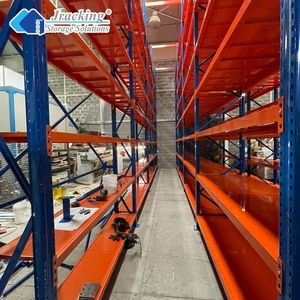
Jracking EURO Standard Warehouse Storage Racks Heavy Duty Steel Pallet Racking System for Distribution
EURO-standard heavy-duty pallet racking configured for distribution centers, logistics hubs and export projects.
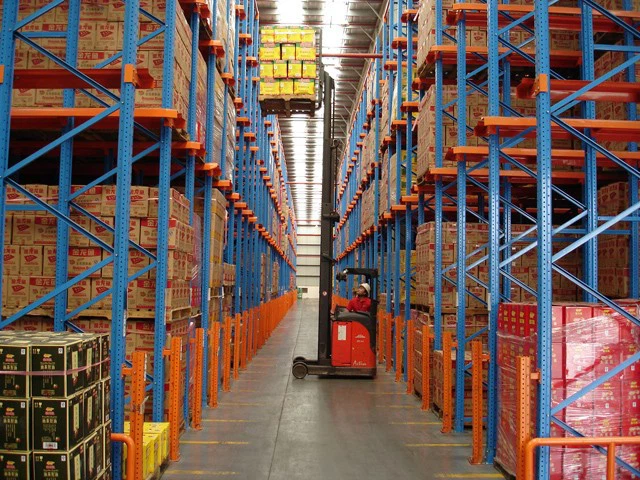
Manufacturer, Not a Middleman
Why Lottot Racks Is a Reliable OEM/ODM Pallet Racking Partner
Lottot Storage Solutions Co., Ltd. has manufactured industrial pallet racking and warehouse storage systems since 2007. Instead of acting as a trading layer between buyers and unknown factories, we control the key steps that affect project quality: engineering review, roll-forming, welding, surface treatment, packing, container loading and export documentation. This matters for OEM buyers who need consistent specifications, for ODM buyers who need design support, and for project contractors who cannot afford re-quotes, fitment problems or delayed shipments.
Our factory has 20+ automatic roll-forming lines, at least 600 containers exported every year and more than 3,500 warehouse solutions completed. We support distributors, 3PLs and end users across 60+ countries, with strong experience in export packing, port-to-port logistics and engineering communication for projects in Latin America and other growth regions.
- Patented racking products with independent intellectual property
- CE and ISO certified materials and quality management
- Free 2D/3D layout drawing and itemized quotation within 48 hours
- 10–15 day production lead time after drawing approval
- 10-year warranty against quality issues caused by design, manufacturing, transportation or installation guidance
OEM and ODM Clarified
What Industrial Buyers Should Expect From an OEM/ODM Pallet Racking Manufacturer
OEM and ODM are often used interchangeably, but the difference affects cost, lead time, engineering responsibility and brand risk. A trustworthy supplier should be transparent about both models.
OEM: Build to Your Drawing or Approved Design
If you already have a racking specification, pallet profile, beam capacity, upright height, color code and packing method, OEM manufacturing focuses on tolerance control, material verification, coating consistency, labeling and on-time delivery.
ODM: Engineering and Product Design Support
If you need a pallet racking system developed around a building plan, storage density target and forklift strategy, ODM support includes section selection, load calculations, layout arrangement, safety accessory planning and export-ready drawings.
Supplier Verification Before You Commit
Ask for factory video verification, production line photos, raw material traceability, coating thickness checks, load test records, export packing images and references relevant to your project size, destination market and racking type.
Company Advantages
Factory-Direct Capabilities That Reduce Project Risk
When your supplier is an ocean away, reliability is not a slogan. It is measured in drawing accuracy, production consistency, packing quality, documentation and responsive communication.
High Quality, Verified Through Production
CE and ISO certified materials, controlled roll-forming tolerances and quality recognized by clients in 60+ countries. Uprights, beams, bracing, base plates and safety accessories are checked against the approved drawing before packing.
Engineering Service and Free Layout Design
Professional engineers review your warehouse plan, pallet size, load weight, forklift type and seismic requirements, then provide a free 2D/3D layout and a practical storage solution tailored to your building.
10-Year Warranty and Quality Commitment
All racking products are covered by a 10-year warranty against quality issues caused by design, manufacturing, transportation or installation guidance. This supports distributors and end users with long-term accountability.
Fast Delivery and Export Experience
20+ production lines and 30,000 tons of annual output support a typical 10–15 day production lead time after drawing approval. Container loading plans maximize payload and reduce shipping waste.
Competitive Factory-Direct Price
Direct manufacturing removes unnecessary trading layers. Buyers receive transparent, itemized quotations that help distributors and project contractors compare materials, accessories and delivery scope accurately.
ODM Customization for Local Markets
Custom colors, load capacities, upright heights, beam profiles, labels, manuals and packaging can be adapted for local codes, distributor brands, installation crews and destination-market documentation.
Future Procurement Trends
Pallet Racking Procurement Trends to Plan for in 2025–2030
Purchasing decisions are shifting from lowest unit price toward total lifecycle value. For OEM/ODM buyers, the strongest suppliers will be those that combine engineering, production transparency and logistics reliability.
Nearshoring and Regional Distribution Hubs
More buyers are planning multi-country rollouts and regional distribution centers. They need suppliers who can keep a modular racking design consistent across several warehouses while adapting to local load rules, labels and installation teams.
Total Cost of Ownership Beats Unit Price
Procurement teams are evaluating freight utilization, installation speed, accessory quality, spare-part availability and replacement cost. A racking system with a lower purchase price can be more expensive if it creates delays or maintenance issues.
Data-Driven Specification and BIM Readiness
Warehouse developers increasingly request CAD blocks, load charts, component schedules and BIM-ready models. Suppliers that provide reliable digital data reduce design conflicts and speed up permitting and installation planning.
Sustainability and Compliance Documentation
Buyers now ask about recyclable steel content, coating systems, packing waste, supplier environmental practices and compliance documents. Clear material declarations and export documentation help buyers manage audits and customer requirements.
Product Development Trends
How Industrial Pallet Racking Is Evolving
The next generation of pallet racking is not only stronger. It is more modular, more data-enabled, easier to inspect and better aligned with high-density, safety-critical and sustainability-focused warehouses.
High-Density and Semi-Automated Systems
Radio shuttle, push back, double deep and drive-in configurations continue to grow where land cost is high and building expansion is difficult. Buyers are increasingly open to semi-automated pallet movement that improves density without the capital intensity of full automation.
Seismic-Ready and Safety-First Design
In Mexico, Chile, Peru and parts of Central America, seismic design has become a core procurement requirement. Reinforced bracing, row spacers, base plates and anchor specifications are being reviewed earlier in the project cycle.
Corrosion Protection for Humid and Cold-Chain Sites
Phosphating plus electrostatic powder coating remains the standard for many warehouses. Coastal, tropical and frozen-store projects increasingly specify hot-dip galvanized or pre-galvanized components to extend service life and reduce maintenance.
Modularity, Boltless Assembly and Faster Installation
Warehouse operators want racking that arrives clearly labeled, installs quickly and can be reconfigured when SKU profiles change. Boltless adjustable systems and standardized accessories reduce installation labor and future modification costs.
Inspection, Sensors and Digital Maintenance
Racking safety is moving from periodic visual checks toward structured inspection records and, in advanced facilities, sensor-assisted monitoring. Even for conventional racking, serial labeling, component traceability and damage reporting help protect long-term asset value.
Space Multiplication With Mezzanines and Multi-Levels
Instead of moving to a larger building, buyers are adding rack-supported platforms, multi-tier picking and mezzanine areas. These systems help maximize vertical space while keeping future expansion and picking workflow in mind.
White-Paper Perspective
Engineering the Specification: What a Credible OEM/ODM Supplier Should Document
A pallet racking quotation is only as useful as the engineering assumptions behind it. In a well-managed OEM/ODM project, the supplier should confirm pallet dimensions, maximum load per pallet, load position, beam span, upright height, clear height, forklift type, aisle width, floor slab capacity and the relevant local code requirements. If any of these inputs are missing, the quotation becomes a rough price estimate rather than a buildable design.
For heavy-duty industrial pallet racking, buyers should ask for the beam and upright capacity relationship, not just a single load figure. Capacity changes when the beam span increases, when load is placed unevenly, when pallets are damaged, or when the rack is installed in a seismic or high-humidity environment. Professional engineering should therefore include a safety factor appropriate to the application and clear operating limits for the warehouse team.
Materials, Coating and Lifecycle Performance
Steel quality and coating performance directly affect racking life. Common specifications use Q235B or equivalent structural steel with controlled yield strength and forming quality. Surface treatment should include pre-treatment and electrostatic powder coating for standard indoor warehouses, while coastal, tropical or cold-room facilities may require hot-dip galvanized or pre-galvanized components. The finish should be specified in writing, including coating thickness and color requirements such as RAL codes, because this affects both appearance and corrosion resistance.
Safety Accessories That Should Not Be Treated as Optional
Safety is a system, not an accessory. Depending on the application, the specification may include upright protectors, frame guards, end barriers, guide rails, back stoppers, row spacers, safety pins, beam locks, floor anchors, pallet stops and load signage. For high-traffic warehouses, protective accessories should be planned at the same time as the racking layout. Adding them after installation is usually more expensive and less effective.
Buyer Checklist
What to Send for an Accurate Pallet Racking Quotation
Incomplete information is one of the most common causes of re-quotes and project delays. Sharing these details at the beginning helps our engineers deliver a correct, buildable design on the first pass.
- Warehouse CAD or PDF drawing with columns, doors and clear height
- Pallet length, width, height, maximum load and quantity
- Forklift type, lift height and required aisle width
- Floor slab thickness and concrete strength
- Seismic zone, wind exposure and local code requirements
- Temperature, humidity and whether the facility is a cold room
- Preferred surface finish, RAL color and branding requirements
- Destination port, preferred Incoterm and target installation date
Frequently Asked Questions
OEM/ODM Pallet Racking FAQ for Industrial Buyers
These are the questions distributors, contractors and warehouse owners most often ask before starting an OEM/ODM racking project.
What is the difference between OEM and ODM pallet racking?
OEM usually means the buyer provides the design, drawing or specification, and the factory manufactures to that requirement. ODM means the manufacturer helps develop the product or system solution—such as layout design, section selection, safety accessories and packaging—before production. Many projects combine both models: the buyer controls the commercial specification while the factory provides engineering and customization support.
Can you customize dimensions, load capacity, colors and packaging?
Yes. Pallet racking can be customized by upright height, beam length, beam pitch, load capacity, steel thickness, surface treatment, color and accessory configuration. For OEM/ODM programs, we can also support private labels, manual language, packing marks and container loading plans. The key is to provide pallet data and a building plan so the design is buildable rather than just visually similar to a catalog photo.
What information is required for a fast quotation?
Send your warehouse drawing, pallet dimensions and weight, required number of pallet positions, forklift type, clear height, floor slab information, seismic zone and destination port. If you have a target budget or a preferred racking type, include that as well. With complete information, our engineers can typically provide a layout and itemized quotation within 48 hours.
What is the minimum order and production lead time?
Minimum order requirements depend on the racking type, customization level and shipping method. For standard pallet racking export projects, production usually takes 10–15 days after drawing approval. Larger projects, special colors, galvanized finishes or complex accessories may require additional time. Container loading and ocean transit are planned separately based on the destination port and Incoterm.
How do you validate load capacity and safety?
Load capacity is determined by the beam span, upright section, steel thickness, bracing design, load pattern and site conditions. We prepare a specification based on your pallet weight and layout, then review the component configuration before production. Buyers should also confirm local code requirements, floor slab capacity and installation quality. For seismic regions, reinforced bracing, base plates, anchors and row spacers may be recommended.
Can the racking be designed for seismic zones and humid coastal warehouses?
Yes. For seismic areas, our engineers consider the seismic zone, soil class and floor slab data, and may specify heavier bracing, reinforced base plates, row spacers and chemical anchors. Final validation by a locally licensed structural engineer is recommended. For humid or coastal warehouses, we can provide hot-dip galvanized or pre-galvanized components in addition to standard phosphating and powder coating.
What certifications and warranty do you provide?
Our materials and quality management follow CE and ISO requirements, and we can provide relevant documents based on project scope. All racking products are covered by a 10-year warranty against quality issues caused by our design, manufacturing, transportation or installation guidance. Normal wear, damage from forklift impact or improper loading is handled through inspection and replacement guidance.
How do you pack and ship industrial pallet racking for export?
Uprights, beams, bracing and accessories are packed in bundles with labels and shipping marks to support efficient container loading and site sorting. We prepare container loading plans, packing lists and export documents, and can support FOB, CFR, CIF or DDP discussions depending on the destination. For Latin America and other long routes, packing quality and moisture protection are especially important.
Start Your OEM/ODM Racking Project
Send Your Pallet Data and Warehouse Plan for a Free Layout and Quote
Our engineers will review your storage requirement, recommend the right industrial pallet racking system and provide a factory-direct quotation with layout drawings, loading plan and export packing guidance.