Best Seller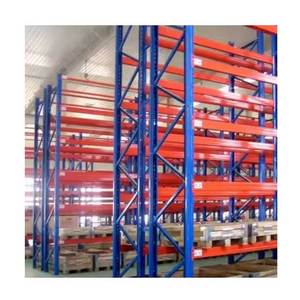
A field guide for distributors, 3PLs, agro-processors and retail chains specifying industrial racking for a small-island, import-dependent economy.
The Commonwealth of Dominica is not a typical warehouse market. With a population of roughly 73,000 people, a mountainous interior, and virtually all palletised goods arriving by sea through the ports of Roseau and Woodbridge Bay, storage decisions carry an outsized impact on landed cost. A single under-specified racking order can mean months of lost throughput — and in a hurricane-exposed island economy, it can mean inventory loss when the roof fails and the steel must hold.
This brief is written for buyers who are sourcing industrial warehouse shelving and pallet racking from overseas factories and exporters for the Dominica market. It sets out what to specify, how the local operating environment reshapes standard designs, which systems perform best across Dominica's retail, cold-chain, agro-processing and construction-supply sectors, and the questions our engineers answer most often from Caribbean importers.
Lottot Storage Solutions has shipped steel racking into more than 60 countries since 2007, and we have learned that island markets are decided by details: salt-laden air, cyclone-rated building envelopes, limited laydown space at the port, and customs documentation that must be flawless on the first pass. Everything below reflects those realities rather than a generic catalogue.
Every system below is engineered to Caribbean load, corrosion and seismic criteria and can be shipped FCL or LCL to Roseau, Portsmouth or a regional transshipment hub.
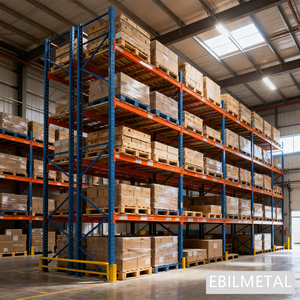
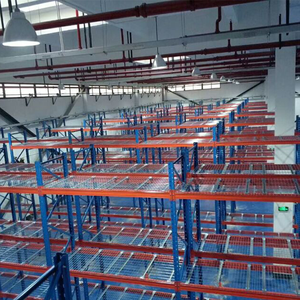
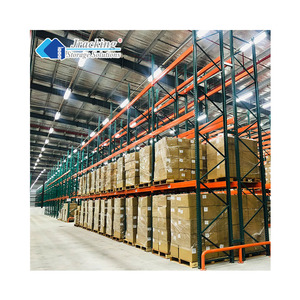
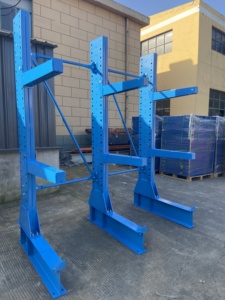
Each sector below faces a different storage constraint. The right system is a function of cube, SKU count, import frequency and climate exposure.
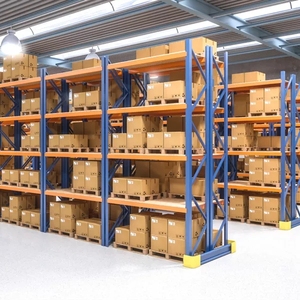
Roseau and Portsmouth retail supply chains run on mixed palletised and cartonised goods with high SKU counts and narrow store footprints. Selective pallet racking plus gravity flow carton lanes gives direct access to every line and rapid replenishment.
Specify 3–4 beam levels, painted steel with a powder-coat finish, and a racking layout that fits a shipping-container-width building envelope typical of island warehouses.
Dominica's banana, citrus, dasheen and seafood export trade depends on chilled and frozen storage. Hot-dip galvanised or pre-galvanised uprights are strongly advised inside cold rooms to resist condensation-driven corrosion.
Drive-in and radio shuttle racking classically deliver the highest cube utilisation when pallet loads are homogeneous — ideal for seasonal produce bursts arriving from the field.
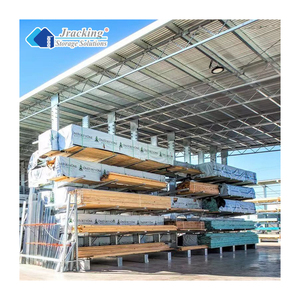
Cement, rebar, PVC pipe, galvanised sheeting and treated lumber dominate the construction import mix. Cantilever racking is the correct answer for long, awkward loads that cannot sit on standard pallet beams.
Movable cantilever units allow reorganisation of an outdoor yard without a forklift, helpful where site space is tight and slab quality is variable.
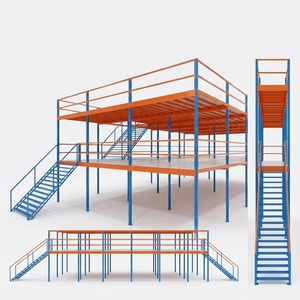
A small but growing e-commerce and 3PL presence around Canefield and Roseau is driving demand for fast-pick carton flow lanes and mezzanine platforms that double usable floor area without a new building lease.
Mezzanine systems engineered at 1000 kg/sqm support full pallet loading on the deck and integrate guardrails, staircases and pallet gates for safety.
Resorts, the Princess Margaret Hospital supply chain and government warehousing operate compact stores where medium- and light-duty shelving outperforms pallet racking. Modular boltless shelving offers adjustable decking and easier relocation.
Where seismic-sensitive equipment is stored, anchor specification matters — see our seismic commentary further down.
Marine spares, rigging, fasteners and yard materials create a mixed-size storage profile. A combination of cantilever racking for long stock and selective racking for boxed spares covers most yards facing salt-air exposure.
Galvanised finishes and correct roof geometry materially extend service life in coastal environments.
Several structural shifts inside Dominica's logistics landscape are changing what buyers should specify in their racking package.
1. Resilience-first building specification. After Hurricane Maria (2017) and subsequent storm events, new warehouses and refurbishments are being designed around higher wind ratings. Racking must integrate with a building envelope engineered for Category 5 winds, which in practice means taller and narrower buildings — a configuration that favours multi-level and mezzanine systems over wide, low layouts.
2. Container-driven SKU density. Nearly every product testifies to a containerised import. This creates characteristic loading shapes (mixed pallets within a single 20′ or 40′ box) that reward selective racking with flexible beam adjustability over fixed-configuration deep-lane systems.
3. Cold-chain build-out. Investment in chilled and frozen capacity to support food security and fresh-produce export is increasing. Racking supplied into these rooms benefits from galvanised finishes and wider flue spacing for airflow.
4. Inter-island and OECS logistics. As Dominica positions itself within the Organis